Oh, the places I’ve been … (Dec-2015 version)

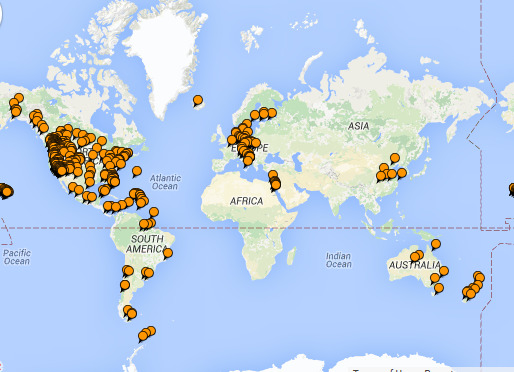
Today, since my to-do list is overflowing, I avoided doing anything productive and instead marked places I’ve been on the TripAdvisor.com map. According to them, I’ve seen 26% of the world. I’ve visited all 7 continents — although I did not set foot on Antarctica soil, sailing within sight of penguins on shore still counts, right? However, I’ve barely seen anything of Asia and Africa–obviously I have more traveling to do before I rest.

Places I've been (on TripAdvisor map) 2015-12-29

I guess I also need to write more travelogue posts, too …

#PatientsIncluded for @IASLC’s 16th World Conference on Lung Cancer (#WCLC2015)

 IASLC WCLC header 400

This coming week I will be attending the 16th World Conference on Lung Cancer in Denver’s Colorado Convention Center run by IASLC (the International Association for the Study of Lung Cancer). I’m looking forward to live tweeting some sessions (using #WCLC2015), hanging out with fellow patients and advocates, and connecting with many online friends–some I’ve not yet met in person. I’m also giving my first speech as a patient at a medical conference focused on lung cancer, and making some videos with nonprofits and media groups.

This conference is groundbreaking for the “Patients Included” movement–I believe it’s the first time any professional oncology conference has intentionally included the patient voice by scheduling several patient speakers. Registration fees are waived for patients and advocates, the advocacy track has scheduled events each day, and lung cancer survivor Emily Bennett Taylor will be the keynote speaker at the Opening Ceremonies on Sunday September 6.

WCLC is the world’s largest meeting dedicated to lung cancer and other thoracic malignancies. More than 7,000 delegates come from over 100 countries to discuss the latest developments in research. Attendees include clinicians surgeons, medical oncologists, radiation oncologists, pulmonologists, radiologists, pathologists, epidemiologists, basic research scientists, nurses, allied health professionals, advocates and patients.

If you’ll be attending and would like to meet me during the conference, below are some events where you can find me. Amazingly, all of my days begin with activities at 7:30 AM or earlier.

Sunday 9/6 7:30-11:00 AM
5 Card Pancake Stroll
Come walk with Team #lcsm to raise funds for Bonnie J. Addario Lung Cancer Foundation and IASLC.

Sunday 9/7 11:30-12:30
Speaker, WCLC Press Conference (room 108-110-112)
Yes, IASLC included a patient in a press conference—awesome!

Monday 9/7 4-19:00
#LCSM Tweetup at The Corner Office Restaurant (Sponsored by Cancer GRACE)
Meet others who participate in the biweekly Lung Cancer Social Media Chat on Twitter. This is the best place to catch me if you want to meet and chat for a few minutes—I expect to attend 4:30-6:00 PM.

Tuesday 9/8 10:45-12:15
Co-Chair, Oral Session 27: “Care” (rooms 708-710-712)
Together with my co-chair, I will introduce the scheduled speakers.

Wednesday 9/9 14:15–15:45 PM
Speaker, Mini Symposium 27: “Advocacy in Practice”(room 703)
My speech “Supporting Lung Cancer Survivors – Living with and Beyond Lung Cancer” is scheduled for 15:20-15:35. Friend and fellow lung cancer patient CraiginPA will also present in this session.

It’s going to be a great conference! Hope to see you there.

Brain fog: the subtle side of scanxiety

Image credit: Microsoft

Image credit: Microsoft

Tomorrow morning I fly out for another Monday PET-CT scan at University of Colorado (CU) in Denver. Tuesday I start cycle 35 of Xalkori on my clinical trial (cycle = 4 weeks). If my Tuesday clinic visit reports a clean scan, I’ll be almost 30 months NED on this targeted therapy.

Because my injured left shoulder is so inflamed, I asked my oncologist if I should have a CT instead of the usual PET-CT this time (inflammation shows up hot on a PET scan), but he says he will just ignore that shoulder. Since I had a detailed MRI of that area a couple of weeks ago when diagnosing my shoulder problem, I’m not concerned a metatasis might be missed. I do wonder how my shoulder will feel after having my arms over my head in the scanner for over 20 minutes, but that’s not a big concern either.

While at University of Colorado, I’ll also be meeting with a CU communications staffer (to discuss cancer center public relations), a molecular pathologist (to discuss ways to explain benefits of genomic testing), and Lung Cancer SPORE members (to discuss a SPORE project). I’m really enjoying my work and friendships with all of them, and love getting to learn about cutting edge science from those who are doing the research. Alas, Dr. Camidge is away on travel, so I won’t get to work on any videos with him this trip.

Interesting projects are definitely worthwhile distractions at scan time. I’ve been so busy with lung cancer advocacy and travel (26 days out of the last two months) that I haven’t had time to feel any conscious scanxiety. However, I still haven’t packed, completed household pre-trip tasks, or written items with impending deadlines, and I’m moving slower than usual. I find myself having difficulty thinking beyond my next cup of coffee. It’s sunny and clear outside, but gray and fuzzy inside my head. So maybe I’m not yet entirely immune to scanxiety’s influence.

Then again, the brain fog could simply be lack of sleep due to Seasonal Affective Disorder (the sun is up 16 hours of the day right now in Seattle), time zone tango, and travel schedules. The source of the fog doesn’t really matter, I suppose, as long as I warn my family of its presence. Otherwise they may wonder why the dirty dishes are in the microwave instead of the dishwasher.

Pavement Diving Is Not My Best Event

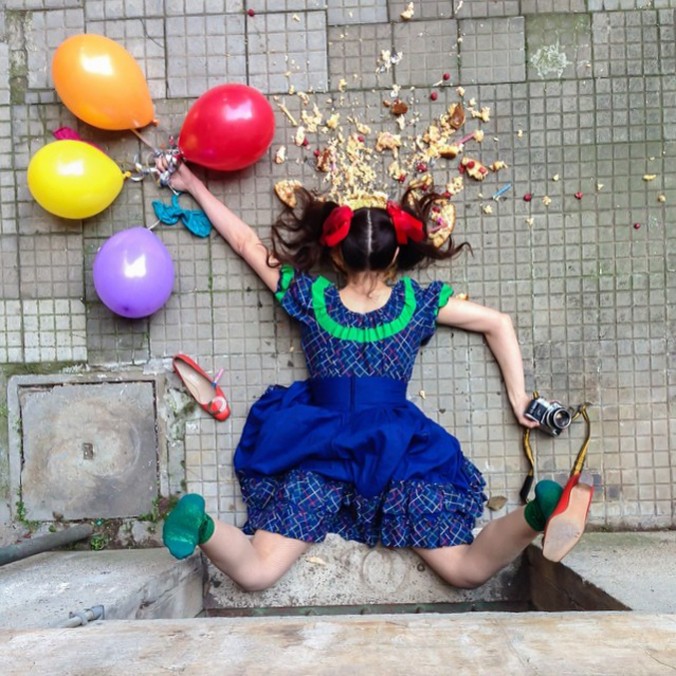
On May 28, I blithely strolled the streets of Chicago and stepped in a missing sidewalk square.  My right toe caught the edge as I stepped out, and momentum carried me forward.  I lunged several steps, trying to regain my balance, but my shoulder bag (with my iPad and other weighty items) threw me off balance.  All 230-ish pounds of me crashed in a face-down baseball slide, arms outstretched like Superman, onto the ChiTown pavement.

Credit: Sandro Giordano (Instagram)

Credit: Sandro Giordano (Instagram)

Fortunately my husband was only a step or two behind, and stayed with me as the dizziness of shock dispelled.  Eventually he pulled me to my feet with my left arm (I protect my right arm after radiation damaged its nerves) and he steadied me as we wandered to our hotel, followed by a solicitous street sweeper who insisted the pavement would be repaired immediately.

Heck of a way to end our anniversary celebration, much less start a five-day conference (ASCO) in which I daily log 3-4 miles of walking.

At the hotel, I discovered I’d skinned my bare left elbow as well as my right kneecap (despite being covered by jeans and compression hose), and my shoulder hurt.  I hadn’t noticed any pain before.  I wondered aloud if my neuropathic tootsies perhaps contributed to the fall, then applied bandaids over the raw skin and iced the joints.  The iPad seemed unfazed.

The next morning, my knee was bruised, but supported my weight and allowed me to walk comfortably. However, my shoulder didn’t want to move or be touched.  Putting on a bra became an Olympic challenge, only slightly more difficult than pulling on pants and a t-shirt. I didn’t use the arm much for the rest of the week.

Two days after we returned home from Chicago, I saw my primary care provider. He said the knee was healing, but suspected a rotator cuff tear in my left shoulder.  An orthopedic specialist  ordered an MRI.  

The good news:  the shoulder shows no torn tendons or muscles, just a bad bone bruise, tendon strain, and a ton of inflammation. I came very close to breaking my shoulder (the socket does have a tiny crack), but no surgery is necessary. The shoulder gets four weeks rest in a sling, then physical therapy.

The bad news: since I’m on warfarin, I can’t take anti-inflammatories (NSAIDs), and I can’t have a cortisone shot to reduce the inflammation because the bone won’t heal properly. I can have Tylenol and, if I need it, Vicodin (which, thankfully, my clinical trial allows me to take).

To celebrate, I bought myself a rolling case for my PC, and washed sports bras to wear the next few weeks.

Yet (despite my dramatic retelling) the entire episode seems no more disruptive than a scratch.  I will recover.  Life goes on, with only a temporary adjustments in activities and few hours lost in the clinic.  Compared to cancer, this is a minor bump in the road. Or a dip in the sidewalk.

So what if pavement diving isn’t my best event?  I’m damn awesome at living.

Can I fly when I have cancer?

Many patients with active cancer can fly safely.  If you have concerns about your fitness for flying, ask your doctor — some cancer patients (such as those who have had lung-related problems, edema, or recent surgery) might be at risk for complications if they fly.  Cancer Research UK’s brief list addresses situations when you shouldn’t fly.  The National Comprehensive Cancer Network’s online article offers general tips about traveling with cancer.  However, even though you and your doctor think you can fly safely, sometimes the airline might prevent you from flying … continue reading

Distraction is the better part of valor

Photo credit: Flickr user Francesco (Creative Commons)

Photo credit: Flickr user Francesco (Creative Commons)

Today I’m again boarding a flight to Denver, Colorado, for my bi-monthly scan and clinical trial check-in. Packing and traveling for my clinical trial is pretty routine after  2+ years. Despite the best effort of my conscious mind and having No Evidence of Disease for 28 months, some small part of me still gets nervous as scan time approaches.  Even seasoned cancer survivors can sometimes experience scanxiety.

Perhaps spending March dealing with pneumonia prompted this feeling. I caught an upper respiratory virus shortly after my husband did. Since I could see his symptoms were similar to mine, and my symptoms started only a few days after my last clean scan, I wasn’t worried the severe goopy cough might be lung cancer progression. However, the goop got caught in my radiation-scarred lower lobe of my left lung, and set up residence. It took me two Z-paks of antibiotics and a couple of extra weeks to knock it out.

I suppose that reminder that my lungs are vulnerable could be enough to explain my edginess and need for more hugs. It’s not overwhelming, it just slows me down a bit. I just wish my rational mind and faith had learned by now how to silence the vague unease.

Fortunately, a new science fiction story idea popped into my head yesterday and is vigorously trying to elbow out an article I’m struggling to finish this week. I’ll try to capture the concept on my flight to my Denver clinical trial today, before it fades in the chemobrain fog.  My mind will be productively preoccupied during this trip.  Maybe if they work together, the two writing projects can throttle this low-level scanxiety.

Distraction is the better part of valor.

The Phantom Scan

My bimonthly clinical trial appointment is this coming week. I typically fly from Seattle to Denver on Sunday, have my labs and scan on Monday, see my doctor Tuesday, and fly home Wednesday.  Scanxiety has a new twist for me this time around. I discovered late Friday that Monday’s scan doesn’t exist in the University of Colorado Hospital’s online schedule. Of course, it was too late in the day to contact anybody at the cancer center … continue reading

Escaping the Shadow

The holiday season can be difficult for cancer patients and their loved ones. It’s tough to be merry while dealing with treatment side effects or wondering whether one will be alive this time next year.
By the end of November this year, I’d hit a low point. My energy had waned, oppressed by the shorter days and gray skies of Seattle and a general sense of ill health. My cough had increased, stirring fears of recurrence. My writing muse had burned out after weeks of intensive Lung Cancer Awareness Month activities.

Then, within one week, two lung cancer buddies died, and a third friend died of metastatic breast cancer days after being diagnosed. I kept vigil with her family as her lungs failed from obstructive pneumonia–a scenario that was far too familiar. The shadow of my own Ghost of Christmas Future loomed, and holiday lights did nothing to brighten it.

In a rare moment of prescience last summer, my family had planned the perfect remedy for me … read more on my Cure Today blog

Club Regina balcony view

Image credit:
Creative Commons License
JFD20141220-CancunClubRegina by Janet Freeman-Daily is licensed under a Creative Commons Attribution-ShareAlike 4.0 International License.

Lessons Learned on a Yucatán Vacation

Tulum ruins and beach

  • Arriving at the Cancun airport requires tolerance for chaos.  On the other hand, it’s a great place to meet persuasive people who want to take you places.
  • Treat all red octagonal “ALTO” road signs as recommendations.
  • Hearing “Have Yourself a Merry Little Christmas” simultaneously with the pounding of ocean surf on fine sand creates serious cognitive dissonance.
  •  (air conditioning)+(incomplete door seal)+(tropical thunderstorm) = damp musty bedding
  • 92% relative humidity leaves fascinating streaks in excess sunscreen.
  • Uncontrolled experiments prove UBF50 swimwear protects you longer in the ocean than the waterproof sunscreen you put on your face.
  • Standing in the surf provides a feast of sensory delights — if you keep your mouth shut.
  • White sand beaches migrate into hotel rooms.
  • A Spanish-English dictionary app radically reduces time spent ordering and shopping for food.
  • When boiling tap water for drinking the next morning, the kitchen timer is your friend.
  • Tropical tours that depart early in the morning will reduce exposure to heat and cheap souvenirs.
  • Lisa Simpson becomes an alto in Spanish. That’s just wrong.
  • According to my blistered toes, those newly-rediscovered sandals I packed were lost for a reason.
  • Every breakfast buffet should feature chocolate sauce for omelets.
  • Departing from the Cancun airport requires running an upscale shopping gauntlet.
  • Ending a tropical vacation with an aerial view of the Northern Lights is pure awesomeness.

Image credit: Creative Commons License
Tulum Ruins and Beach by Janet Freeman-Daily is licensed under a Creative Commons Attribution-ShareAlike 4.0 International License.

Hyperintensities

Last Monday and Tuesday, September 8-9, I was in Denver for my clinical trial at University of Colorado Hospital (UCH). I had my once-every-eight-weeks PET-CT scan along with a once-every-six-months brain MRI.

I’m happy to report that both scans were clean. I’m now twenty months with No Evidence of Disease of metastatic lung cancer.  That Xalkori is great stuff for those of us with ROS1 NSCLC!

I’ve been in my clinical trial for 22 months, and the trial has been running for over three years. The medical journal article summarizing trial results is due out sometime in the next two weeks.  Judging from the response to Xalkori of several ROS1ers I’ve met online, I expect the news will be positive.  Can’t wait to read it–I’ll probably hustle to the University of Washington Library and download it first chance I get.  Yes, besides being a science geek, I’m an INTENSE science geek.  One of those “complete response” lines on the waterfall plot will be ME!

The scanxiety for this visit was different than my previous visits to Denver. It’s been a very busy summer for me.  As I posted previously, before flying to Denver I attended the Stanford Medicine X conference in Palo Alto September 4-7.  I gave my speech on lung cancer stigma on the main stage Sunday morning, left the conference a couple of hours early to fly to Denver Sunday night, and had my clinical trial labs and scans Monday.  I was so focused on the conference and my speech that I barely noticed any scanxiety –it was difficult to distinguish from the intensity that precedes my speaking publicly.  The only real indication of any anxiety was my increasing inability to focus during the conference and three hours of lost sleep the first night in Palo Alto (although my husband might have a different perspective about my intensity in the days before I flew to Palo Alto).

A few other things were different about this clinic visit:

  • On the day of my visit, I spent an hour talking with the American Lung Association of Colorado’s office about LUNG FORCE.
  • A pleasant UCH oncology Fellow conducted my clinic visit. My primary oncologist Dr. Camidge came in to chat with us both for a few minutes afterwards–he knows I always have a list of questions for him. We talked about an exciting new clinical trial design at UCH for FGFR-positive NSCLC (more on that in a future post).
  • UCH had recently installed new software for their MRI machine, so the report of my brain MRI was not available at the time of my clinic visit. However, Dr. Camidge and the Fellow both reviewed the scan itself and reassured me it was normal.
  • After Dr. Camidge completed his clinic hours on Tuesday, he joined me, Dora (an online friend of mine who is also his lung cancer patient), and Dora’s husband Bill for a chat at a restaurant near UCH. How many world-renown lung cancer doctors do that? Well, yes, I did bribe him with a cup of coffee and a pastry. Here’s a selfie we took:

selfie with Camidge

Something else was also new to me after this clinic visit. I had a headache after I arrived home.  Since I’d just had a clean brain scan two days before, I knew the cause could not possibly be a brain met.  Somehow this reinforced the feeling that I was more a normal person than a cancer patient at this point.  Sometimes a headache is just a headache.

The brain MRI report appeared in our mail yesterday. It didn’t say much except “normal,” but a few terms were new to me.  I was Googling the new terms when an infolinks box popped up with this message:

“Searching for T2 hyperintensities in white matter? Try Kelley Blue Book!”

Maybe Kelley Blue Book can tell me how my hyperintensities affect the resale value of my brain.