A patient perspective on the impact of a proposed OMB rule

The White House Office of Management and Budget (OMB) proposed a new rule that would drastically alter the federal grantmaking process. The proposed rule would give political appointees the power to approve or deny funding to scientific projects. Below is the comment I submitted regarding this proposed rule.


To: The Office of Management and Budget (OMB), Executive Office of the President (EOP)
RE: Docket OMB-2026-0034; Federal Register Number 2026-10817
Proposed Rule: Regulation for Federal Financial Assistance

I am writing to comment on the proposed rule “Regulation for Federal Financial Assistance” issued by the White House Office of Management and Budget (OMB). I urge you to not to finalize this proposed rule.

I am submitting this comment in my personal capacity. The views expressed are my own and do not represent the official position of my organization.

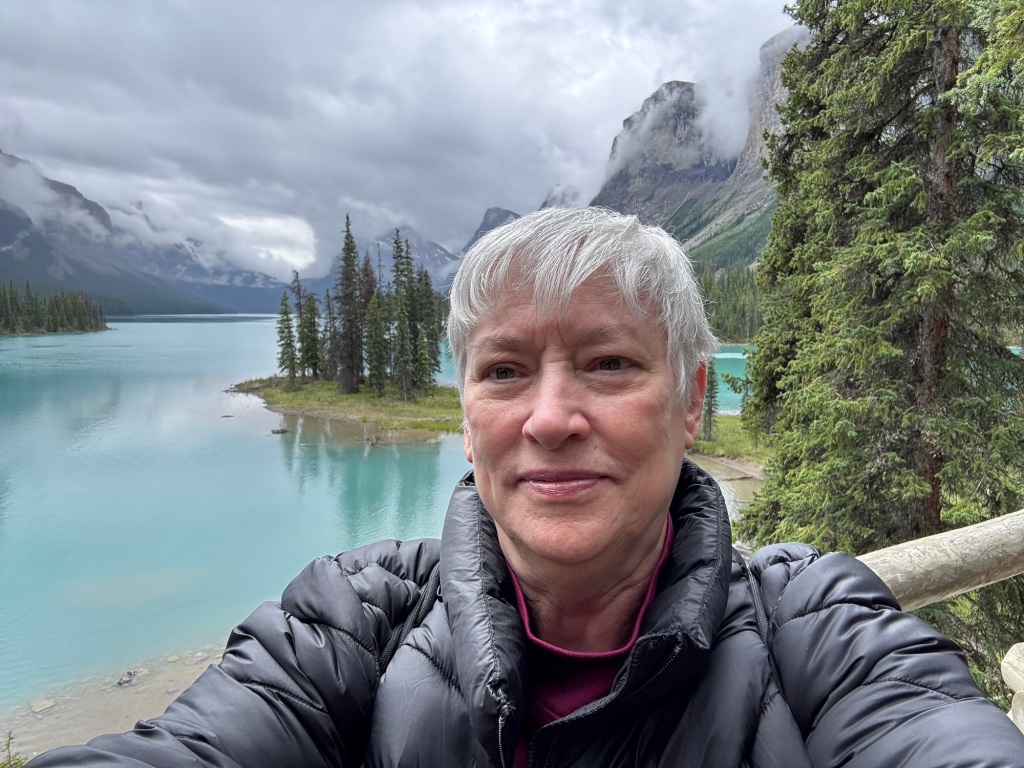
I am a person who has cancer and a cancer research advocate. I share patient perspectives with researchers, academic cancer centers, government agencies, and industry. I’ve been working in this space for over a decade. I’m currently co-founder and president of The ROS1ders, a global group of people living with ROS1+ cancer (I also guide this nonprofit’s research program). I’m also co-founder and admin team member for the IASLC STARS program, which trains patient advocates in science to help them evolve into research advocates. My degrees from MIT and Caltech are in engineering. I previously worked in aerospace new business, supporting customers in both private industry and government programs.

I was diagnosed with metastatic non-small cell lung cancer (NSCLC) in May 2011. At that time, most lung cancer patients died within a year of diagnosis. I am fortunate: basic and translational cancer research created an oral cancer drug that I take daily. This drug has provided me with no evidence of cancer in my body since January 2013. This allows me to continue contributing to society, taking care of family members, paying taxes, and enjoying life.

In my role as a patient research advocate, I work with cancer researchers, review grants from a patient’s perspective, and identify patient needs that could be addressed by research. Many people who have cancer are still waiting for an effective treatment. They need research progress to accelerate, not slow down.

My successful cancer treatment would not have been possible if a pathologist a major cancer center had not become curious about a particular experimental drug and investigated whether other types of lung cancers might respond to it. His discovery led to a clinical trial, in which I participated. No one could have predicted whether the pathologist’s curiosity would lead to such dramatically positive outcomes for so many cancer patients.

Scientists use their curiosity and observations to come up with research questions, design experiments, and share their findings. That’s how progress happens. Our current system of grant reviews allows researchers to submit research proposals for funding and have them reviewed by others in the field to assess which ideas have the best chance of having an impact. This system has allowed the USA to rise to the pinnacle of international research and attract some of the best minds to our research institutions.

Scientists who understand a field are the best qualified to make decisions about the potential impact of a proposed study. When research loses funding or is not awarded funding because those who make funding decisions do not understand the potential impact of a study, patients lose treatment options. Researchers lose interest and leave the field. Research organizations lose facilities, educators, and supports necessary to train the next generation of researchers. We patients already see this happening in biomedical research (as well as other scientific fields).

A review system that evaluates grants based on political agendas rather than sound scientific design and effective methodologies will impede research and harm patients. I urge OMB not to finalize the proposed rule “Regulation for Federal Financial Assistance.”

Sincerely,
Janet Freeman-Daily

REFLECTIONS ON 15 YEARS LIVING WITH LUNG CANCER

Today is a milestone I didn’t think I’d reach. Today I’ve been living with advanced lung cancer for FIFTEEN YEARS.  

That diagnosis redefined my life. I am now a full-time cancer research advocate who helps run a cancer nonprofit for ROS1+ cancer and manage an education program for lung cancer research advocates. Today seems a good time to look back on the miraculous progress in lung cancer research that helped me survive, and how I got to this place in my advocacy. I’m not as visible as I once was, but I think I’m making better use of my time and skills, and I’m more satisfied with life.

In 2011, when I learned I had lung cancer, most LC patients were diagnosed when their cancer had already spread beyond its original site. The majority of LC patients died within a year of diagnosis. I was fortunate that my cancer had not yet spread outside my chest, so my doctor and I decided to go for a cure. I received concurrent chemotherapy and radiation for two months. I had side effects from treatment, but they were manageable compared to what would likely happen without treatment—I wanted this cancer GONE. The treatment shrank my existing tumors, and initial scans looked hopeful. However, a new tumor popped up outside my chest a few months after treatment ended. A PET scan detected “hot” lymph nodes on my collarbone, and a biopsy confirmed they contained lung cancer.  

The reality hit hard: no one really knew how to cure me.  

I was a puddle of tears for about an hour. Then my science geek/writing research genes kicked in and I decided to learn as much as I could about my disease.

I was lucky. I had been diagnosed at the beginning of a revolution in lung cancer care. The Internet and social media had enabled online cancer communities that shared experiences and information. The Inspire community I had joined taught me about biomarker testing (called molecular testing back then) and clinical trials. The first FDA approval for a targeted lung cancer therapy guided by biomarker testing had come out just three months after I was diagnosed. Recent research talked about potentially curing oligometastatic disease—cancer that had spread to just one site outside the lungs.

My oncologist said we could try again for a cure. I had more chemo followed by radiation to the single site of cancer progression. All the known tumors disappeared, but alas, my cancer was particularly aggressive and spread again shortly after treatment stopped, this time appearing my other lung. My cancer was now definitely metastatic, and considered uncurable.

Again, I was lucky. About 8 months before, I had sent my biopsied lymph node tissue to a laboratory at the University of Colorado for biomarker testing. Unfortunately, my results did not show any actionable biomarkers. But a research paper published about the same time as I started my second line of treatment described a new biomarker called ROS1, and the amazing results obtained in a clinical trial for a new oral therapy targeting ROS1+ non-small cell lung cancer. As I’ve documented elsewhere, a series of amazing coincidences and good timing resulted in my cancer testing positive for the ROS1 biomarker and my getting one of the last slots in the associated clinical trial, which I started in November 2012 in Denver. I’ve been on the same oral therapy (with a couple of dose reductions) for over thirteen years. My scans have shown no sign of cancer since I started on that drug.  

In 2011, no one dreamed such a long survival was possible for a person living with lung cancer.

The first year or so after starting the trial, my energies were consumed with flying back and forth between Seattle and Denver for the trial, dealing with side effects, and coping with scanxiety every couple of months. After my body adjusted to the drug and my “new normal,” I started feeling better. I was incredibly grateful to still be alive, especially when so many others were not.  

I began looking for ways to give back. I realized I had skills that could be helpful to other patients. Among them were my geeky curiosity about LC science and research, my writing and communications training, and an ability to translate complex science, research and experience into language that made sense to other people.  Lung cancer research continued to accelerate, and many people did not understand all the new developments and how those could affect patient care.

I started blogging about topics that people asked about in my online communities. In 2013 I joined #LCSM (Lung Cancer Social Media) Chat on Twitter and moderated scheduled online chats with a wide variety of lung cancer stakeholders—people living with, treating, researching, and making products for the disease. I advocated for lung cancer screening and spoke about reducing stigma. I attended and spoke at oncology conferences. I engaged in volunteer activities for lung cancer advocacy nonprofits. I posted prolifically on social media. For years I was an active patient advocate, telling my story, increasing awareness, and fundraising for research. I accepted every advocacy opportunity I was offered. One year I traveled away from home more days than I was at home.

I also started interacting with researchers and research organizations. I found I really enjoyed learning about the science and explaining it to others. My systems engineering background came in handy for analyzing research questions and protocols to find ways the patient perspective and online communities could help improve outcomes.

New biomarkers were being discovered.  New targeted therapies and immunotherapies were being developed. Screening, diagnostic, and treatment options were evolving quickly. Many clinicians—even lung cancer oncologists—couldn’t keep current with all the changes.  Many patients hadn’t heard about or weren’t able to access the best care.

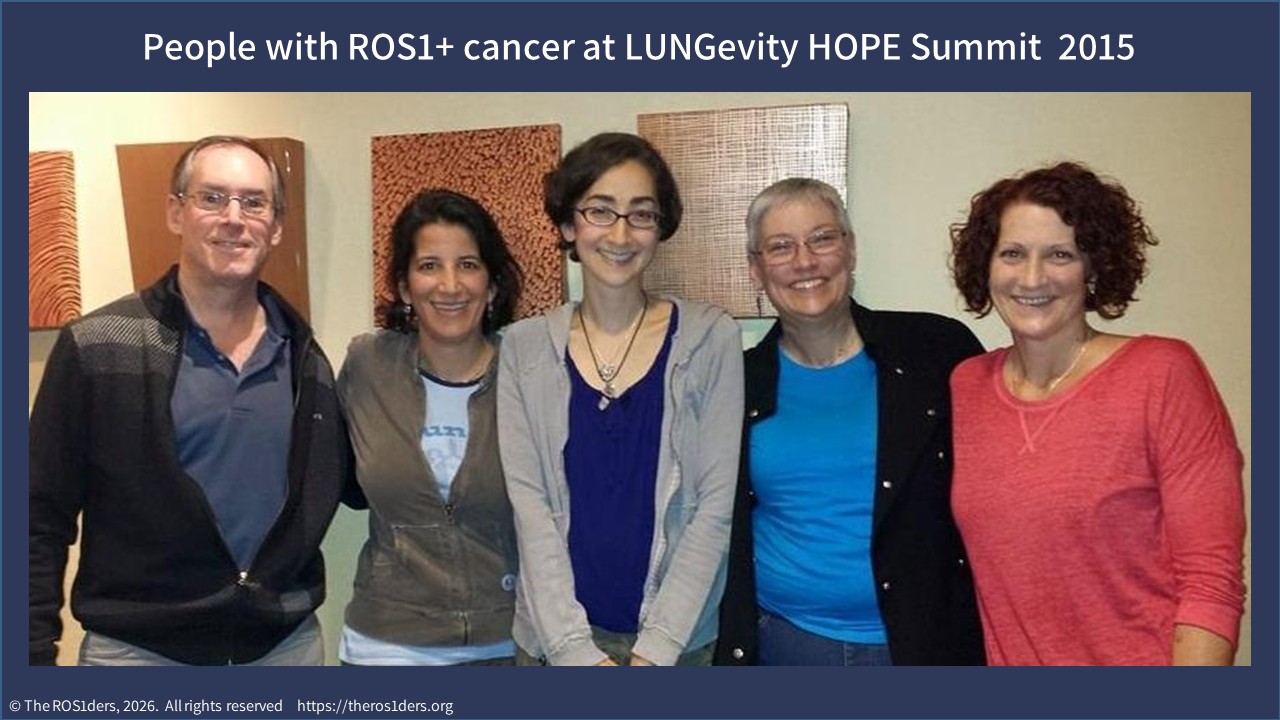
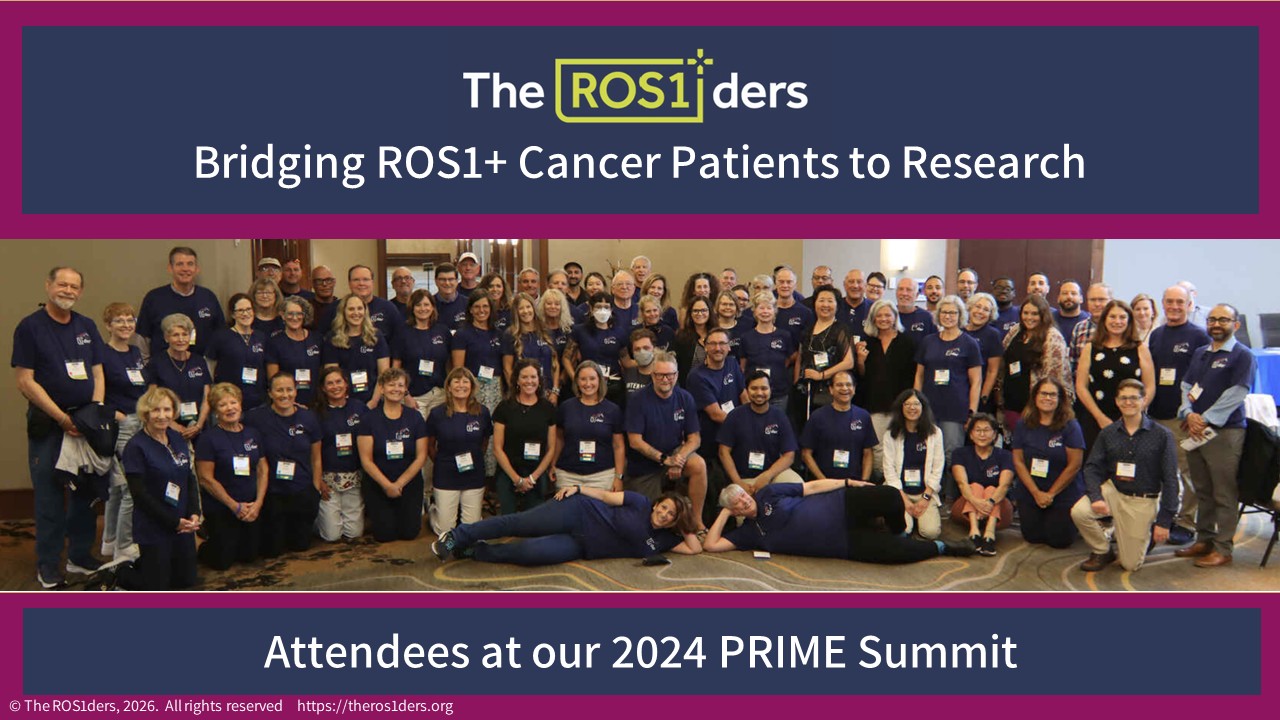
In 2015, I co-founded a small group that became The ROS1ders, a non-profit comprised of a global group of patients and caregivers living with ROS1+ cancer. We created a ROS1-focused online community, website, educational opportunities, and research focused on ROS1+ cancer. The medically vetted information we provide helps people find better treatment options and improve their quality of life (and sometimes even survival). Today it has thousands of members. Many have said the group gives them hope, as well as information that makes a positive difference in their cancer care.

In 2019, I co-founded the IASLC STARS program that empowers lung cancer survivors and their loved ones to evolve into active research advocates. To date dozens of people have completed the STARS PRA (Patient Research Advocate) and STARS Scholar programs. Participants have said the program helped them focus their advocacy and take on new challenges.

For many years my cancer advocacy kept me quite busy. Lung cancer research kept accelerating. But life evolved. Close friends who were long-time patient advocates ran out of time. Family and aging took more of my energies. COVID-19 devastated the lung cancer community and taught me hard lessons about public perceptions of science. The nature of Twitter and other social media changed, not always for the better. Unanticipated shifts in policy and financial support undercut cancer research and care.  

I was now receiving more requests for patient advocacy commitments than I could possibly fulfill. Which ones should I accept? Which ones should I turn down? I had frequent discussions with other long-term cancer advocates about how to decide which advocacy opportunities would move the needle the most. The answers required a careful assessment of my own skills, how much energy I had for advocacy, what brought me joy, and who else is available to take the opportunities that I turned down.

A long vacation with family made me realize I was not enjoying the frantic pace of my advocacy. I was not taking care of myself. My sleep was disturbed. I had developed heart arrythmias. Advocacy had begun to feel like a chore rather than a purpose.  

I had begun cancer advocacy with a simple goal: to give back and make a difference for others. Somewhere along the line, my subconscious drive had shifted to trying to stop lung cancer. The problem was bigger than me, and I was killing myself trying to tackle it.

I decided to reprioritize.  

I knew The ROS1ders and STARS were making a difference because patients and caregivers told me so. If I took time away from those projects, few other advocates were available to pick up the slack. In the meantime, many capable lung cancer patient advocates had arisen with a passion for telling their stories, creating awareness, and raising funds. I could in good conscience allow most non-research advocacy opportunities I was offered to pass to them while I focused on those projects for which I was uniquely well-suited. I would spend more time on family, my health, and exploring this one life that I alone can live.  

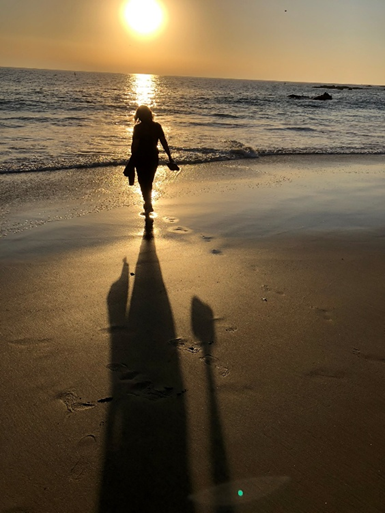
So here I am today, over a decade living a life I wasn’t really expecting to have. I still have side effects from cancer treatment, but I’m OK with them. I’m spending more time living. I’ve cut back on lung cancer advocacy travel, projects, and its more visible aspects. I’m healthier. I’ve found more joy.

And I’m still making a difference. That’s my purpose. I think having a purpose is part of why I’m still here.

In the end, all patient advocates must define goals for themselves:  the best way to use their unique set of energies, time, skills, and interests to make a difference for others. We can’t help everyone, but we help some. And we can do it without losing ourselves.

Here’s to more time for LIVING and making a difference—whatever that means to you.

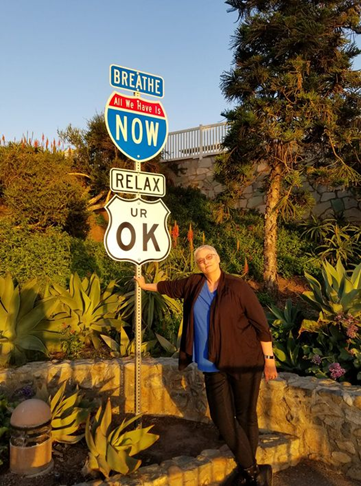
Image credits:  Janet Freeman-Daily

No AIs were used or harmed in creating this blog post.

Four minutes of fame

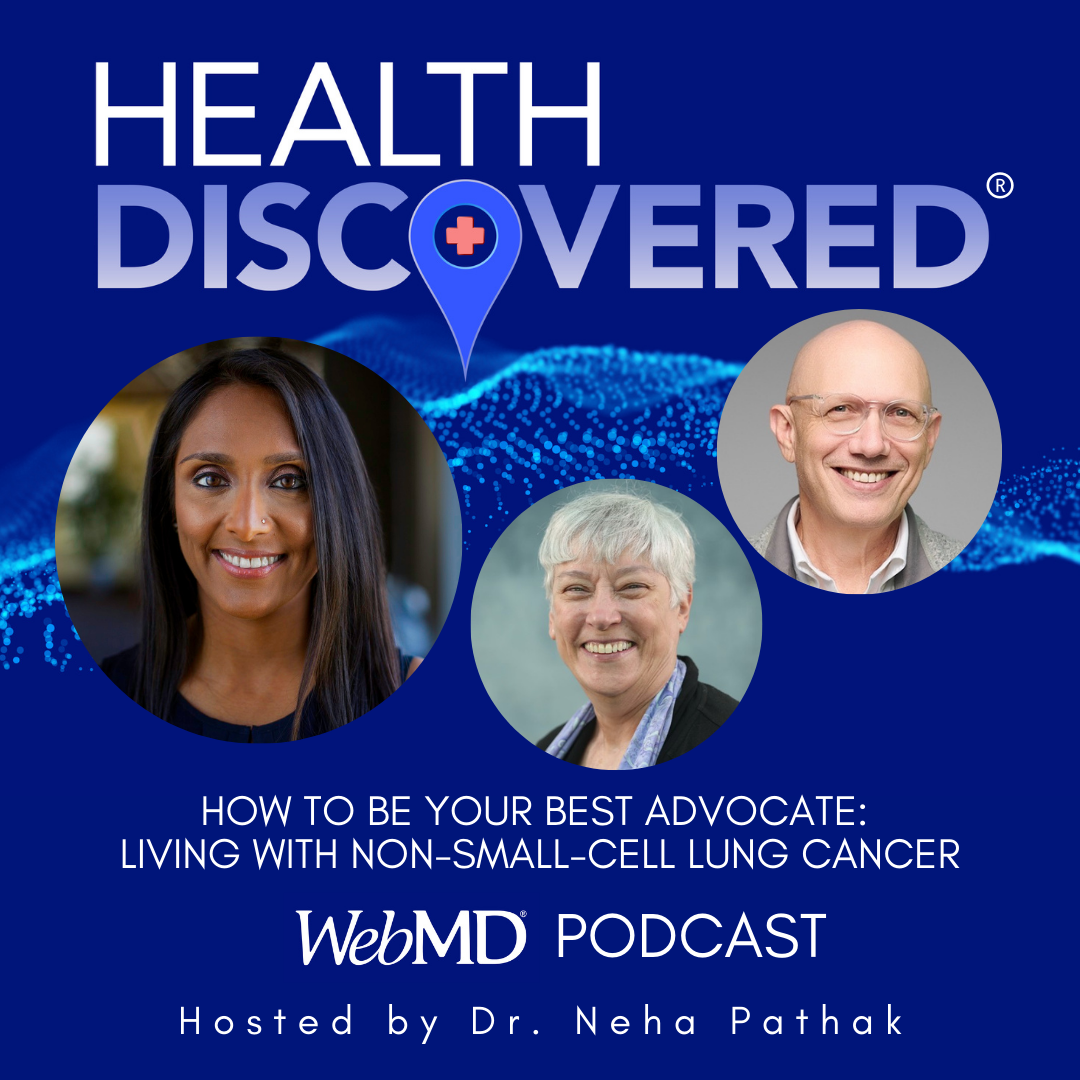
WebMD interviewed me for their Health Discovered podcast. The episode has good information about coping with a diagnosis of non-small cell lung cancer and the emotions it generates. My “patient experience” content is in the first 4 minutes; the rest is an interview with a psychiatrist who works with cancer patients (recorded separately).

Transcript on WebMD:
https://www.webmd.com/…/how-to-be-your-best-advocate…

Spotify podcast: https://open.spotify.com/episode/1CEQZ8YumYKI19Q2rBxLmt…

Apple podcast:
https://podcasts.apple.com/…/how-to-be…/id1365054560…

iHeart podcast:
https://www.iheart.com/…/269-health-discovered-120255783/

A moment in my cancer history

Thirteen years ago today, I experienced a revival of hope. In mid September 2012, I had learned my cancer had grown despite two different lines of chemotherapy plus radiation. But on this date, the University of Colorado notified me that my tumor tissue tested positive for a gene rearrangement called ROS1, and I was eligible for a clinical trial of the targeted therapy pill crizotinib. I had options again!

Today I’m still on the same daily pill. Cancer research is awesome.

The End of the US War on Cancer (which isn’t over)

Chances are strong that at least one person you know and love (or even you) will have cancer at some point. Why should you care?  Because people are dying for better cancer treatments.

We still do not know how to cure most cancers.  Now the funding that has fueled so many new discoveries in recent years—like the targeted therapy I’m taking, which has kept my cancer in check for nearly 13 years—is being throttled. Training programs at universities are being defunded. Labs are closing. Scientists are leaving the US for countries where their research is valued. We’re losing years of painstaking research that cannot be replaced.

The 2025 World Conference on Lung Cancer (WCLC) in Barcelona, Spain, concluded on September 9, 2025. I was there as part of the admin team for the IASLC STARS Scholar Program (STARS = Supportive Training on Research and Science). It was wonderful to see the number of lung cancer patient research advocates actively participating in the scientific panels and presentations. It was also exciting to see my rare type of lung cancer have a plenary session presentation–ROS1+ cancer wasn’t even in the diagnostic guidelines when my lung cancer was first diagnosed in 2011.

Six years ago (2019) I also attended WCLC in Barcelona. It was the first-ever STARS program, and several of my friends in the lung cancer advocacy community were there; a few were even presenting. However, that’s a bittersweet memory. Of the thirteen patient/advocates in the WCLC 2019 pictures in this post, six are no longer with us, including Linnea Olson (one of the first lung cancer bloggers and a dear friend who encouraged me to become an advocate). I can’t think of WCLC in Barcelona without thinking of them. They all ran out of time before new treatments became available.

While it is encouraging to see lung cancer research continue to make strides over the past 15 years, people are still dying of the disease. Cuts in research funding at the National Cancer Institute and other organizations threaten to slow the pace of progress for all cancers This New York Times gift article titled “Trump is shutting down the war on cancer” (free to read) gives a more detailed description of the dire funding situation facing cancer research in the USA.

I don’t want to lose more friends to cancer. Please support efforts to restore funding for medical research in the federal budget. The life of someone you love may depend on it.

News I did not want to hear

Dr. D Ross Camidge is many things.

He’s a world famous lung cancer doctor. He’s an expert in my rare type of cancer (ROS1+ lung cancer). He is the person who started the oncology remote second opinion program at University Of Colorado. He is on the scientific advisory board of the nonprofit I cofounded (The ROS1ders). He is a principal investigator on the clinical trial that saved my life. I’m proud to say he is a personal friend.

On Monday September 8 I learned he is also a person living with lung cancer.

I applaud him for going public with his story. It also breaks my heart.


https://news.cuanschutz.edu/cancer-center/ross-camidge-lung-cancer-diagnosis

Did They Know They Had Metastatic Cancer Before Diagnosis?

Once a person is medically diagnosed with having metastatic cancer (cancer that has spread to other organs), some people accuse that person of lying when the person says they didn’t know they had cancer. Because some cancers might grow for years before spreading to other organs, people think the person with cancer would had to have known they had it.

After more than a decade of living with metastatic lung cancer and serving as a patient research advocate, I have seen plenty evidence this need not be the case. Here are some important factoids about lung cancer that also hold true for other types of cancer:

1. Not all cancers have symptoms while they are growing.
Lung cancer rarely has symptoms until it has spread to other organs. Lungs don’t have nerves to say “ouch!” when a tumor is growing. For this reason, the vast majority of lung cancers were not detected until the cancer had spread elsewhere before the advent of lung cancer screening. But not everyone is eligible for lung cancer screening. Screening is limited to people who are at increased risk of developing cancer and who can benefit from treatment–this is to minimize the risk of overdiagnosing and treating people who don’t need cancer treatment.

2. Not all cancer grows at the same rate.
When I was diagnosed in 2011, I was told my non-small lung cancer did not grow fast and would have taken years to create the 2.5 inch tumor in my lung. I had months of combined chemo and radiation treatments designed to cure me of my cancer. Yet three months after a CT scan said my tumors were almost gone, I had grown a new three-inch tumor at the base of my neck. Some types of cancers are much more aggressive than others.

3. Best practice medical care might not be looking for cancer.
Another friend (age in mid-20s) reported shortness of breath when running. Because they were so young, their doctor took a conservative approach to treatment. My friend was treated for allergies, and then pneumonia. By the time doctors prescribed a CT scan, the lung cancer had spread to several other organs. You can’t find something when you’re not looking for it.

4. Not all cancer is detectable with current technology.
A friend who had lung cancer had a brain scan using magnetic resonance imaging (MRI). The scan showed their brain was clear of cancer. Three weeks later they began leaning slightly to one side while walking. A second brain MRI scan found sizeable tumors in their brain that didn’t show up just a few week earlier. The seeds of those tumors likely existed when they had the first brain scan, but scan technology is not sensitive enough to detect cancer that small.

My take-away message
Don’t assume that someone must have known they had cancer just because it had spread to other organs by the time it was officially diagnosed. Many people honestly had no idea they had cancer before they were diagnosed. I didn’t.

Remembering Mount St. Helens

45 years ago today, Mount St. Helens erupted.  From my home in Tacoma over 70 miles away, I could hear and feel the blast and see the plume of ash, rock, and hot gases rising into the atmosphere.

Such major blasts of chaotic energy and hot gases produce extensive damage.  The explosion darked the skies for miles, extinguished lives, erased forests, and rearranged the landscape. The melted glacial ice generated a lahar that carried away homes, destroyed highway bridges, and clogged shipping lanes.  The blast left behind tons upon tons of pulverized rock that continue to cause challenges for communities living downstream–such as clogging their drinking water systems.


Mount St. Helens is now one of the most closely monitored volcanos in the world.  Last Saturday at the Cascade Volcano Observatory (CVO) open house I learned about different types of volcanoes, effects of eruptions on living creatures and the earth, how we track and model earthquakes to predict eruptions, understanding lahar flows so we can provide early warnings, and atmospheric influences on that guide ash and volcanic gas distribution. Models for making these predictions depend on data gathered by a variety of sources, such as weather balloons launched by the National Oceanic and Atmospheric Administration (NOAA). We can’t prevent volcanoes from erupting, but we can improve our preparedness and detection abilities so we can help reduce deaths and damage–IF we can learn from history and maintain the will to and funding to do what is necessary.

The posters I’m sharing in this blog were on display at the CVO open house.  CVO is part of the Volcano Hazards Program run the by U.S. Geological Survey (USGS), which is under the U.S. Department of the Interior.  Many USGS scientists and staff have departed in response to government actions of the past few months. In May the federal government has notified USGS researchers and students that their funds could be frozen and staff could be laid off. Other government cutbacks (such as reduced weather balloon launches) reduce USGS ability to monitor volcano activity, not to mention the U.S. Weather Service’s ability to predict tornadoes and other severe weather.

Despite the devastation, signs of life returned to the desolate blast zone within months, but it will never appear as it did before the eruption. If we don’t actively pursue the objective study of our world, we not only limit our learning about the world we live in, we will become less able to predict impending disasters and protect lives. Guess we’ll just have to adapt when natural disasters strike. If we can.

Erasing unique accomplishments as DEI

If anyone is still inclined to think the government’s efforts to delete “DEI” hires are aimed at people hired for reasons other than their skills, consider the case of the Navajo Code Talkers. Pages about them have been removed from DOD websites and replaced with “DEI.”

These Americans had a unique skill that no one else possessed. Their ability to speak in Navajo during WWII created a code that no enemy ever broke. They enabled us to win critical battles during World War II. High-level military leaders said the Allies could not have won those battles without them.

And yet they’ve been cancelled. Erased. Told they were only hired because they looked different than the majority population in the US during WWII, before the civil rights movement even existed. They accomplished it all despite the prejudice against them.

Where are all the objections to “cancel culture” now? Crickets.

I am ashamed of the way our government is erasing genuine accomplishments by people who don’t look like them or fit their definition of warfighter.

I’ve chosen a conservative media site for the supporting news article to show this isn’t a deception by liberal media. The image on this blog comes from this article.

https://www.newsmax.com/amp/newsfront/navajo-codetalkers-dod/2025/03/17/id/1203224/

Amp up your lung cancer patient advocacy! Apply for the STARS Program

Take steps to amp up your lung cancer patient advocacy! Applications are now open for the 2025 IASLC STARS PRA & Scholar Programs. STARS (Supportive Training for Advocates on Research and Science) can help you develop and enhance research advocacy skills needed to provide a patient perspective to research.

If you or a loved one has been affected by lung cancer, and you are an active lung cancer patient advocate, you are eligible to apply. Learn more on the STARS website.