Global Measles Outbreak Notice (US Centers for Disease Control)
WHO advice for international travel in relation to measles (June 2019)
Note:
The value of vaccines is established by scientific evidence. Please don’t debate this fact in the comments.
Home » Science (Page 4)
Global Measles Outbreak Notice (US Centers for Disease Control)
WHO advice for international travel in relation to measles (June 2019)
Note:
The value of vaccines is established by scientific evidence. Please don’t debate this fact in the comments.
Debates arise frequently in the lung cancer community about reducing sugar intake to prevent and/or treat cancer. Some people claim a ketogenic diet is an effective cancer treatment, but rarely provide objective, scientific evidence to support this claim.
A recent article explored claims about the value of ketogenic diets for cancer patients. It was published in an open access journal and written by researchers at the University of Manchester in the UK. The article found high-quality evidence regarding ketogenic diets for cancer patients is lacking:
“High‐quality evidence on the effect of ketogenic diets on anthropometry, metabolism, QoL [quality of life] and tumour effects is currently lacking in oncology patients. Heterogeneity between studies and low adherence to diet affects the current evidence. There is an obvious gap in the evidence, highlighting the need for controlled trials to fully evaluate the intervention.”
You can read the full article here:
A systematic review of the use of ketogenic diets in adult patients with cancer

THEN …
Apply for the brand-new STARS (Supportive Training for Advocate in Research and Science) program! STARS was developed by the IASLC (International Association for the Study of Lung Cancer) in collaboration with international lung cancer patient research advocates and advocacy nonprofits.
Those accepted in the program will be assigned a mentor from their own country, meet and learn lung cancer science from researchers, develop science communication skills, and attend the World Conference on Lung Cancer (WCLC) in Barcelona, Spain in September 2019.
To learn more and to find the online application, click here:
https://www.iaslc.org/supportive-training-advocates-research-and-science-stars
The application period is open from March 8 to May 1, 2019. Hope you’ll apply!


However, not all cancers can be detected using a PET scan and radioactive glucose. This means not all cancers suck up sugar faster than normal cells. Reducing the available supply of sugar would probably not affect such cancer cells.
Today the Centers for Medicare and Medicaid announced they will cover Next Generation Sequencing (NGS) for cancer! This is a major victory for all cancer patients.
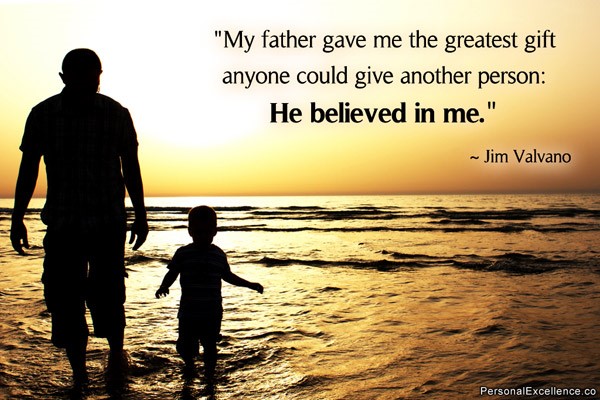
In some ways, my father was ahead of his time. An engineer, aviator, inventor, WWII vet, and medical doctor (Ok, he was an overachiever), Dad wanted all of his children, regardless of gender identity, to have a good science, technology, engineering, and math (STEM) education because he believed it would be essential for thriving in the future economic and political landscape. “Education is something that no one can take away from you,” he told me more than once.
Dad (and Mom too) fought school policy to make sure I was allowed to take science instead of being forced to take Home Economics with the other girls. Dad taught me how to use a slide rule, and when my math class did not cover essential concepts–like using π to calculate the area of a circle–he taught me himself (though at the time I would have much rather gone to bed). He advocated so that I and some other advanced students could take algebra and chemistry a year early, which allowed us to cram all the available STEM classes into four high school years. And he made sure that I could afford to attend my choice of colleges that focused on science and engineering.
In his sparse free time (he was a practicing family doctor while working as chief engineer at his father’s company on the side), he showed me how an oscilloscope could analyze an electronic circuit, taught me how to find the constellations using a telescope, took me and a classmate out in his boat to collect plankton for a science project, and talked to my physiology class about medicine.
True, he missed most every ball game, skipped a lot of music concerts, and often wasn’t home to read to me (thankfully Mom picked up the slack). True, I had issues with his insistence on perfection and lack of positive feedback. Still, I am the happy, inquisitive science geek I am today in large part because my father made sure my scientific curiosity and abilities were nurtured.
So, thanks, Dad, for believing in me. Despite your humanity and parenting missteps, you made a positive difference in my life. I wish 60-year-old me could talk to you face to face and make sure you knew how much I loved you–and love you still–and reassure you that I know how much you did for me.
To all who have been, will be, or wished they were fathers; who stand in as a loving father figure; or who had or wished they had a good father ….
may you spend Father’s Day remembering or making happy memories.
If your loved one was treated for lung cancer at a community hospital, and has since died, you can help find new lung cancer treatments that might spare other families the anguish you’re feeling.
Lung cancer is the biggest cancer killer. Fortunately, researchers have discovered several new therapies that are helping to turn metastatic lung cancer into a chronic illness instead of an automatic death sentence. Some of these therapies are effective for 70-80% of patients whose tumors have certain biomarkers .
Unfortunately, not all types of lung cancer have such effective treatments — yet. Researchers need to find more lung cancer biomarkers and develop more drugs to target them. Discovering these biomarkers and new therapies requires studying LOTS of lung cancer tumor tissue. If more tumor tissue from different patients were available for researchers to study, we might find new biomarkers and effective targeted therapies faster.
How can I help?
If your loved one was treated for lung cancer at a community hospital, and has since died, you can help by donating your loved one’s archived tumor tissue.
Researchers usually obtain tumor tissue from lung cancer biopsies and surgeries performed at their academic cancer centers. However, most lung cancer patients (about 80%) are treated at community and clinics, not academic cancer centers. Those hospitals generally just archive any tumor tissue that is not needed for guiding patient care, and destroy those tissues five to ten years after the patient has died. This means a lot of tumor tissue that could be used for finding new lung cancer therapies never gets to researchers.
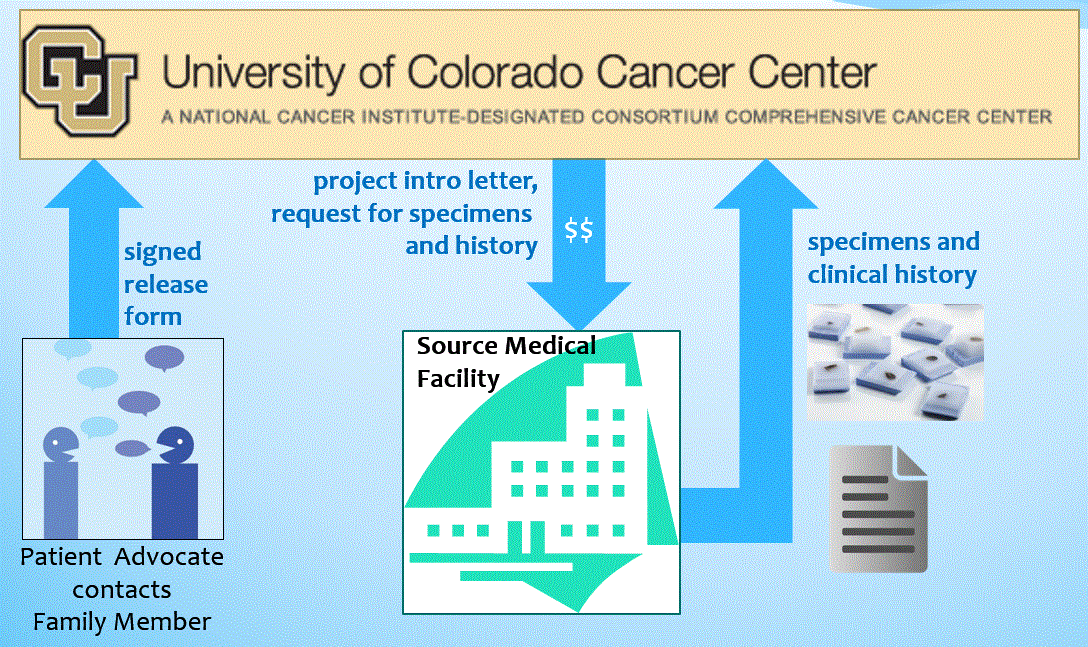
The National Cancer Institute’s Lung Cancer SPORE at the University of Colorado (I’ll call it CU Lung SPORE for short) aims to help lung cancer researchers find cures faster. Like other NCI SPOREs, CU has a biorepository (some people may call it a biobank) where they store patient specimens and medical records. The biobank provides the tissues along with the important clinical background to scientists studying new ways to treat lung cancer, not only from the University of Colorado, but to institutions all around the country. Researchers can search for available specimens and request them for research projects.
The CU Lung SPORE created a pilot study to collect archived tumor tissue and medical records of deceased lung cancer patients, and place these in their biobank so that researchers can use them. This study focuses on deceased patients because they have no further need of the tissues (living patients may need their specimens for tumor testing later). The study needs five to ten more family members to submit signed release forms so we can complete the pilot study and assess whether this a feasible way to gather more lung cancer tumor tissue for research.
HIPAA laws forbid a research center from asking patients or family members about donating tissues and medical records if the patient wasn’t treated at their facility. But advocates (like me) CAN ask.
What do I have to do?
To participate, all you need do is:
Filling in the release form only takes about 20 minutes (assuming you have to look up the contact information for the hospital). Pretty easy, isn’t it?
What happens next?
The SPORE will contact the hospital where your loved one was treated and request your loved one’s archived tissue and medical records. Once these documents are received at CU, they will be reviewed by the study team, de-identified (which means personally identifying information is removed), and placed in the CU Lung SPORE’s biobank.
THAT’S IT!
PLEASE consider donating your deceased loved one’s archived lung cancer tissue and medical records for research through this project. You can learn more by contacting me (the patient advocate for the CU Lung SPORE) at jfreeman.wa@gmail.com, or the CU Lung SPORE at the address above.
Do it to honor your loved one. Do it for the next family stricken by lung cancer. Whatever your reason, please do it. We’ve lost too many to this disease.
Note: This research study’s official project title is “Patient-Initiated Biobanking of Deceased Lung Cancer Patient Tissues” and its study number is COMIRB# 15-1294. It is not a clinical trial dealing with live patients, so you will not find it listed on clinicaltrials.gov.
Cancer clinical trials can be a good treatment option. Today I’m giving a signal boost to a great post on CURE Today by my amazing clinical trial oncologist, D. Ross Camidge, MD, PhD, at University of Colorado. He’s written a nice overview of the benefits and pitfalls of cancer clinical trials for patients.
Who are Cancer Clinical Trials For: Guinea Pigs, Test Pilots or Prize Poodles?
Reality check: No one is hiding THE ONE CURE for cancer.
There will not be one treatment to cure all cancers, because each case of cancer is as unique as the person whose cells mutated to create it.
We’ve been curing cancer in groups of mice and lab containers for decades. However, the human body–and therefore each cancer it generates–is more complicated than a mouse or cells isolated in a petri dish.
Each cancer is a unique living organism that can mutate and evolve over time. Just like its host, a cancer’s characteristics and behaviors are influenced by genetics, environment, nutrition (what it consumes to make energy), and exposure to infectious diseases and toxins (and probably other factors we haven’t discovered yet).
If anyone had run a study in humans that proved a single cure worked for every case of cancer, no one could hide it. No one could silence the millions of joyful, grateful patients who had been cured by it.
Enough with the cancer conspiracy theories, people. Accept that humans–and cancer–are complicated creatures, and get on with the research. We cancer patients are waiting, and we don’t have the luxury of time.
This coming week, the online cancer hashtag communities will be celebrating. Why, you ask? We have two good reasons.
Our celebration will take the form of several coordinated chats open to everyone, regardless of cancer type.
Mon 6/27:
#BCSM Chat (use both #BCSM and #cancerchat hashtags) will host a cross-cancer chat at 9 PM Eastern Time about three of the Cancer Moonshot Working Group topics (check blog on #BCSM website for chat details):
–Expanding Clinical Trials
–Enhanced Data Sharing
–Precision Prevention and Early Detection
Ideas generated can be submitted online to the Cancer Moonshot.
Wed 6/29:
Cancer Moonshot events in DC and satellite locations (see agenda for DC Summit below)
Wed 6/29:
#Hcchat will conduct the official Moonshot chat (use both #Hcchat and #Moonshot hashtags) at noon Eastern Time on the topic “Will the Moonshot lead to the death of cancer?” This chat applies to all types of cancers. Special guest will be Vincent T. DeVita, Jr, MD, who was head of the NCI during Nixon’s Cancer Act and author of “The Death of Cancer.”
Thu 6/30:
#LCSM Chat (use both #LCSM and #cancerchat hashtags) will host a cross-cancer chat at 8 PM Eastern Time about the remaining four Cancer Moonshot Working Group topics (check blog on #LCSM Chat website for chat details):
–Cancer Immunology and Prevention
–Tumor Evolution and Progression
–Implementation Sciences
–Pediatric Cancer
Ideas generated can be submitted online to the Cancer Moonshot.
Thu 6/30:
Last day to submit Moonshot ideas at https://cancerresearchideas.cancer.gov/a/index
Sun 7/03:
#BTSM Chat (use both #BTSM and #cancerchat hashtags) will host a cross-cancer chat at 9 PM Eastern Time about our hopes and dreams for cancer research and treatment in the future.
Mon 7/04:
5th anniversary of #BCSM and cancer hashtag communities
Mon 7/04:
#BCSM anniversary celebration chat at 9 PM Eastern (use both #BCSM and #cancerchat hashtags)
The cancer hashtag communities hope you’ll join us for some (or ALL) of these special events and help us celebrate! To learn more about the cancer hashtag communities, visit http://www.symplur.com/healthcare-hashtags/ontology/cancer/
AGENDA FOR THE CANCER MOONSHOT SUMMIT IN WASHINGTON, DC