Pavement Diving Is Not My Best Event

On May 28, I blithely strolled the streets of Chicago and stepped in a missing sidewalk square.  My right toe caught the edge as I stepped out, and momentum carried me forward.  I lunged several steps, trying to regain my balance, but my shoulder bag (with my iPad and other weighty items) threw me off balance.  All 230-ish pounds of me crashed in a face-down baseball slide, arms outstretched like Superman, onto the ChiTown pavement.

Credit: Sandro Giordano (Instagram)

Credit: Sandro Giordano (Instagram)

Fortunately my husband was only a step or two behind, and stayed with me as the dizziness of shock dispelled.  Eventually he pulled me to my feet with my left arm (I protect my right arm after radiation damaged its nerves) and he steadied me as we wandered to our hotel, followed by a solicitous street sweeper who insisted the pavement would be repaired immediately.

Heck of a way to end our anniversary celebration, much less start a five-day conference (ASCO) in which I daily log 3-4 miles of walking.

At the hotel, I discovered I’d skinned my bare left elbow as well as my right kneecap (despite being covered by jeans and compression hose), and my shoulder hurt.  I hadn’t noticed any pain before.  I wondered aloud if my neuropathic tootsies perhaps contributed to the fall, then applied bandaids over the raw skin and iced the joints.  The iPad seemed unfazed.

The next morning, my knee was bruised, but supported my weight and allowed me to walk comfortably. However, my shoulder didn’t want to move or be touched.  Putting on a bra became an Olympic challenge, only slightly more difficult than pulling on pants and a t-shirt. I didn’t use the arm much for the rest of the week.

Two days after we returned home from Chicago, I saw my primary care provider. He said the knee was healing, but suspected a rotator cuff tear in my left shoulder.  An orthopedic specialist  ordered an MRI.  

The good news:  the shoulder shows no torn tendons or muscles, just a bad bone bruise, tendon strain, and a ton of inflammation. I came very close to breaking my shoulder (the socket does have a tiny crack), but no surgery is necessary. The shoulder gets four weeks rest in a sling, then physical therapy.

The bad news: since I’m on warfarin, I can’t take anti-inflammatories (NSAIDs), and I can’t have a cortisone shot to reduce the inflammation because the bone won’t heal properly. I can have Tylenol and, if I need it, Vicodin (which, thankfully, my clinical trial allows me to take).

To celebrate, I bought myself a rolling case for my PC, and washed sports bras to wear the next few weeks.

Yet (despite my dramatic retelling) the entire episode seems no more disruptive than a scratch.  I will recover.  Life goes on, with only a temporary adjustments in activities and few hours lost in the clinic.  Compared to cancer, this is a minor bump in the road. Or a dip in the sidewalk.

So what if pavement diving isn’t my best event?  I’m damn awesome at living.

What’s the best part of National Cancer Survivors Day?

To celebrate National Cancer Survivors Day, I’m sharing a recent picture of me with Linnea Olson, a sister metastatic lung cancer patient and one of the bloggers (Outliving Lung Cancer) who inspired me to become a lung cancer blogger and advocate.  She and I are both alive thanks to research and clinical trials.  As Linnea phrased it on Twitter, … read more

#LCSM Chat topic 5/21: Living with and Beyond Lung Cancer

This is a reblog of a 5/18/2015 post on the #LCSM Chat site (reposted with permission).

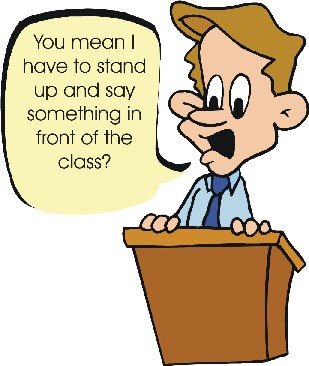
You mean I have to say something

Lung cancer patient advocates are beginning to make their voices heard and gain acceptance in the medical world.  For the first time ever, patient advocates will be speaking from the stage at the World Conference on Lung Cancer (WCLC), the largest meeting dedicated to lung cancer anywhere.  The meeting, which runs September 6-9 in Denver and is sponsored by the International Association for the Study of Lung Cancer (IASLC), will have sessions on research, treatment, biotech developments…and patient advocacy topics.

In the session titled “Advocacy in Practice,” #LCSM Comoderator Janet Freeman-Daily will be speaking about “Supporting Lung Cancer Survivors–Living with and Beyond Lung Cancer,” which will inform lung cancer healthcare providers … read more

“Moving On” — a yarn about knowing when to let go

The short film “Moving On” touched me both as a daughter who made care choices for dying parents, and as a metastatic lung cancer patient who is likely facing death sooner rather than later. It’s especially poignant since I spent yesterday in a workshop about palliative care and end of life. I needed several tissues after the subtle headshake, yet the tears were cathartic.

I pray all of us and our loved ones will  make the most of whatever time we have together, and know when it’s time to let go of the yarn — whether for ourselves or for those in our care.

Please remember to touch and be touched by your loved ones before the yarn is all gone.

Thanks to Lucy Goddard Kalanithi for sharing the link.

Reflections on a Cancerversary

Today is my fourth cancerversary.  Four years ago–May 10, 2011–I first heard a confirmed diagnosis of lung cancer.  On cancerversaries I review events of the past year and assess how I’ve spent my time.  I’m not looking to pat myself on the back for my accomplishments, or check locations off a travel list.  I’m looking to see if I stayed focused on what means the most to me, and whether I need to adjust my priorities.  My time is too precious to waste… continue reading 

My drug is a breakthrough!

Woohoo!  My clinical trial drug may get FDA approval soon!   It’s about time.

The clinical trial in which I participate has been running for over three years.  I take Xalkori (crizotinib) for my ROS1-positive non-small cell lung cancer.  Early phase clinical trial results  announced last year show around 72% of patients experienced measurable shrinkage of their tumors, and another 12% achieved stability.  This is remarkable, considering most chemos have a response rate around 20%.

The average crizotinib response lasted about 17 months, with half of the patients still responding when the data was collected for the journal article.  I personally know at least four people (including me) who responses have lasted over two years (two of them are not on the trial).

Today Pfizer announced it had received US FDA “breakthrough” designation for Xalkori treatment of ROS1+ non-small cell lung cancer.  This means it is on the fast track for FDA approval for treatment of ROS1 NSCLC (after already being approved for treatment of a different lung cancer mutation).

My marvelous clinical trial drug may finally get FDA approval.   It’s sort of moot, in a way, because the evidence of its effectiveness is so outstanding that most US insurance companies are already paying for crizotinib treatment of ROS1 NSCLC.  But it is still cool.

Pfizer Receives U.S. FDA Breakthrough Therapy Designation For XALKORI® (crizotinib) For The Treatment Of Patients With ROS1-Positive Non-Small Cell Lung Cancer

Coincidentally, I have my clinical trial appointment today, and I’ll be talking with one of the lead investigators (my oncologist, Dr. Ross Camidge) about what this announcement means for those of us still on the trial.

Can I fly when I have cancer?

Many patients with active cancer can fly safely.  If you have concerns about your fitness for flying, ask your doctor — some cancer patients (such as those who have had lung-related problems, edema, or recent surgery) might be at risk for complications if they fly.  Cancer Research UK’s brief list addresses situations when you shouldn’t fly.  The National Comprehensive Cancer Network’s online article offers general tips about traveling with cancer.  However, even though you and your doctor think you can fly safely, sometimes the airline might prevent you from flying … continue reading

Distraction is the better part of valor

Photo credit: Flickr user Francesco (Creative Commons)

Photo credit: Flickr user Francesco (Creative Commons)

Today I’m again boarding a flight to Denver, Colorado, for my bi-monthly scan and clinical trial check-in. Packing and traveling for my clinical trial is pretty routine after  2+ years. Despite the best effort of my conscious mind and having No Evidence of Disease for 28 months, some small part of me still gets nervous as scan time approaches.  Even seasoned cancer survivors can sometimes experience scanxiety.

Perhaps spending March dealing with pneumonia prompted this feeling. I caught an upper respiratory virus shortly after my husband did. Since I could see his symptoms were similar to mine, and my symptoms started only a few days after my last clean scan, I wasn’t worried the severe goopy cough might be lung cancer progression. However, the goop got caught in my radiation-scarred lower lobe of my left lung, and set up residence. It took me two Z-paks of antibiotics and a couple of extra weeks to knock it out.

I suppose that reminder that my lungs are vulnerable could be enough to explain my edginess and need for more hugs. It’s not overwhelming, it just slows me down a bit. I just wish my rational mind and faith had learned by now how to silence the vague unease.

Fortunately, a new science fiction story idea popped into my head yesterday and is vigorously trying to elbow out an article I’m struggling to finish this week. I’ll try to capture the concept on my flight to my Denver clinical trial today, before it fades in the chemobrain fog.  My mind will be productively preoccupied during this trip.  Maybe if they work together, the two writing projects can throttle this low-level scanxiety.

Distraction is the better part of valor.

Building cognitive skills after chemobrain

Earlier this month the MIT News published an article titled, “The rise and fall of cognitive skills.”  It discussed research that found different types of thinking skills peak at different times in life.  I particularly like this part:

… crystallized intelligence — the accumulation of facts and knowledge … showed a later peak, in the late 60s or early 70s.

People who participated in this online study demonstrated their ability to build their vocabulary continued to increase into their 60s and 70s, which indicates their ability to accumulate facts and knowledge also continued to increase.  This is awesome!   As a person in my 50s with cognitive impairments from cancer treatment, I’m reassured to know that at least some parts of my brain may continue to improve.  Woohoo!

Now if I can just remember what I learn …


The President’s Cancer Panel Wants … ME?

When the Twitter icon indicated I had a new direct message last Tuesday, I took my time opening it. I was down with a bad case of the flu, including a fever and a cough that had stolen my voice, and I wasn’t at the top of my game.  When I finally clicked on the icon, I felt a jolt of adrenaline.

The message was from “@PresCancerPanel” and started “We’d like to invite you to …” …continue reading


Edit May 7, 2015:  list of March 2015 workshop participants