Did They Know They Had Metastatic Cancer Before Diagnosis?

Once a person is medically diagnosed with having metastatic cancer (cancer that has spread to other organs), some people accuse that person of lying when the person says they didn’t know they had cancer. Because some cancers might grow for years before spreading to other organs, people think the person with cancer would had to have known they had it.

After more than a decade of living with metastatic lung cancer and serving as a patient research advocate, I have seen plenty evidence this need not be the case. Here are some important factoids about lung cancer that also hold true for other types of cancer:

1. Not all cancers have symptoms while they are growing.
Lung cancer rarely has symptoms until it has spread to other organs. Lungs don’t have nerves to say “ouch!” when a tumor is growing. For this reason, the vast majority of lung cancers were not detected until the cancer had spread elsewhere before the advent of lung cancer screening. But not everyone is eligible for lung cancer screening. Screening is limited to people who are at increased risk of developing cancer and who can benefit from treatment–this is to minimize the risk of overdiagnosing and treating people who don’t need cancer treatment.

2. Not all cancer grows at the same rate.
When I was diagnosed in 2011, I was told my non-small lung cancer did not grow fast and would have taken years to create the 2.5 inch tumor in my lung. I had months of combined chemo and radiation treatments designed to cure me of my cancer. Yet three months after a CT scan said my tumors were almost gone, I had grown a new three-inch tumor at the base of my neck. Some types of cancers are much more aggressive than others.

3. Best practice medical care might not be looking for cancer.
Another friend (age in mid-20s) reported shortness of breath when running. Because they were so young, their doctor took a conservative approach to treatment. My friend was treated for allergies, and then pneumonia. By the time doctors prescribed a CT scan, the lung cancer had spread to several other organs. You can’t find something when you’re not looking for it.

4. Not all cancer is detectable with current technology.
A friend who had lung cancer had a brain scan using magnetic resonance imaging (MRI). The scan showed their brain was clear of cancer. Three weeks later they began leaning slightly to one side while walking. A second brain MRI scan found sizeable tumors in their brain that didn’t show up just a few week earlier. The seeds of those tumors likely existed when they had the first brain scan, but scan technology is not sensitive enough to detect cancer that small.

My take-away message
Don’t assume that someone must have known they had cancer just because it had spread to other organs by the time it was officially diagnosed. Many people honestly had no idea they had cancer before they were diagnosed. I didn’t.

How Is Artificial Intelligence used in Cancer Research?

There’s still time to register for the STARS Webinar on “Advancing Trustworthy Artificial Intelligence for Cancer Research.” Hope you’ll join us tomorrow, Thursday, August 29 at 3 pm MDT (Denver time). Once you register, the Zoom link will be emailed to you.

https://www.iaslc.org/meetings-webinars/advancing-trustworthy-artificial-intelligence-cancer-research

8-Apr-2021 COSMO Panel–“Patient Engagement in Social Media: When the Doctor is No Longer the Expert”

I am honored to be a presenter at the Collaboration for Outcomes using Social Media in Oncology (COSMO) online conference tomorrow, April 8.

I’m speaking in Session IV (Social Media in Oncology: A Multistakeholder Look) on a panel titled: “Patient Engagement in Social Media: When the Doctor is No Longer the Expert” at 1:40–2:20 pm Eastern Time. Registration for the two-day conference is FREE. Register here: https://lnkd.in/duYxM7e

My fellow panelists are all awesome:

Chair: Patricia F. Anderson, MILS @pfanderson
https://www.facebook.com/pfanderson

Tamika Felder @tamikafelder
https://www.facebook.com/tamikafeldercampbell

John Novack, MS @J2Novack
https://www.facebook.com/john.novack.98

Dorinda (Dee) Sparacio, MS @womenofteal
https://www.facebook.com/dsparacio

Thanks to Don S Dizon for the invite to participate!@drdonsdizon

Think your Internet passwords are well-managed? Think again!

A malicious hacker recently took control of the ROS1cancer.com website (which I help to manage). WordPress suspects the hacker accessed the site by guessing a password of an authorized author on the site.

Over the past two days, WordPress worked with me to restore most of our content. During the process, the site automatically emailed a LOT of old blog posts to our subscribers (I apologize for all the emails you may have received.) Dozens of blog posts about living with ROS1 cancer that had been shared by patients around the world were corrupted when the hacker deleted the site’s list of authors and editors. WordPress is still trying to help me recover those posts without having to reconstruct every single one. I also had to request a new credit card number, since the hacker could see my card data that was used to pay the annual upgrade fees (more time lost updating my card info for autopays). At least the hacker hadn’t used my credit card yet.

It’s a cautionary tale that reminds us to practice good password management, especially on sites that contain vital information (like banking or personal info) that could cause significant problems if it were compromised.  EVERYONE should:

  • Use STRONG passwords (more info below)
  • Create a unique password for each site
  • Change passwords regularly
  • Avoid reusing passwords

Alas, hackers use sophisticated tools to help them guess passwords. It is no longer sufficient to generate an eight-character password with one uppercase letter, one lowercase letter, and one number. But we all use a lot of passwords–I use over 400!–and generating a unique, strong password for each of them can be a real pain. What to do?

Use a password manager!

Password managers are software products that help you generate and store complex passwords, eliminate duplicate passwords, update your passwords regularly, and access your passwords on different devices and browsers. They will also allow you to autofill your password when visiting a site, if you wish.  The best part is that you only have to remember ONE password to access ANY of your passwords.

I have used a password manager for years on all the PCs in our household, as well as on my tablet and phone. I love that I only have to change a password in the password manager software on ONE device to make the new password available on ALL devices. True, the apps can be glitchy at times, but I’ve seen a big improvement in features and performance in the past few years. For me, it’s been far easier and more accurate than maintaining all my passwords in a written notebook.  I’ve never had one of my passwords compromised while using a password manager, although I know it could still happen–hacker tech is evolving rapidly.

Each password manager has a different combination of features and strengths. Which one is right for you depends on how you use your devices ( family? business? high-tech projects?) and how often you’ll use it on which platforms (Windows PC, Mac desktop, iPad, Chromebook, iPhone, Android, etc). Comparisons and rankings of products are published every year by reliable and impartial sources like PC Magazine, CNET, Wired Magazine, WireCutter, and Consumers Reports.

No one can guarantee a password can’t be hacked, but you can at least make your passwords harder for hackers to guess.  When did you last update YOUR passwords?

Medicare approves genomic testing for cancers

Today the Centers for Medicare and Medicaid announced they will cover Next Generation Sequencing (NGS) for cancer! This is a major victory for all cancer patients.

Decision Memo for Next Generation Sequencing (NGS) for Medicare Beneficiaries with Advanced Cancer (CAG-00450N)

And they said streaming was easy …

I feel so 21st century. I’m streaming my first Amazon Prime movie on our home TV.  Not a bad bit of tech work for a 60-something.

It’s amazing how many choices, purchases, technologies, services, and connections this effort required:

  • research and buy a digital TV (years ago)
  • research and buy a Blu-Ray player (many months later)
  • research and contract with a high-speed Internet service provider
  • upgrade Comcast service to faster Internet
  • order upgraded cable modem from Comcast
  • activate new cable modem and upgrade its software
  • buy new Wi-Fi router with range and bandwidth to reach the TV
  • ensure I have all necessary cables (whoops, another trip to the tech store)
  • set up router
  • wire modem to router and confirm connection
  • set up home Wi-Fi network
  • wire TV to Blu-Ray player and confirm connection
  • connect Blu-Ray player to home Wi-Fi network
  • update Blu-Ray player software (from version 2007 to 2021)
  • use networked PC to subscribe to Amazon Prime
  • install Amazon app on Blu-Ray
  • find Amazon app amidst other apps on Blu-Ray player
  • login to Amazon app
  • use Blu-Ray player find and select a movie
  • start streaming …

… and discover that so many neighbors are streaming movies at the same time on Comcast that your movie won’t play.

Who knew home entertainment could be so complicated?

Good thing fixing healthcare only takes some quick legislation.

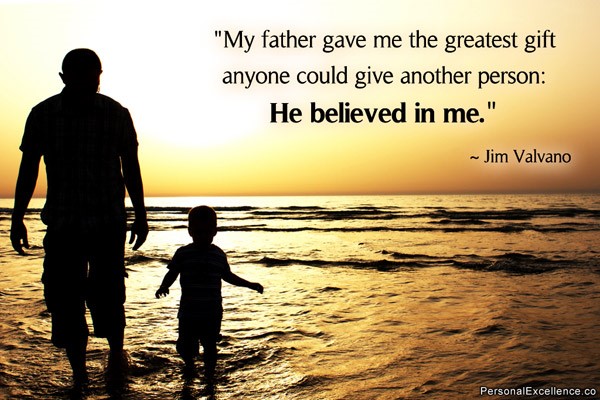
The value of one father

Photo Credit: personalexcellence.co

In some ways, my father was ahead of his time. An engineer, aviator, inventor, WWII vet, and medical doctor (Ok, he was an overachiever), Dad wanted all of his children, regardless of gender identity, to have a good science, technology, engineering, and math (STEM) education because he believed it would be essential for thriving in the future economic and political landscape. “Education is something that no one can take away from you,” he told me more than once.

Dad (and Mom too) fought school policy to make sure I was allowed to take science instead of being forced to take Home Economics with the other girls. Dad taught me how to use a slide rule, and when my math class did not cover essential concepts–like using π to calculate the area of a circle–he taught me himself (though at the time I would have much rather gone to bed). He advocated so that I and some other advanced students could take algebra and chemistry a year early, which allowed us to cram all the available STEM classes into four high school years. And he made sure that I could afford to attend my choice of colleges that focused on science and engineering.

In his sparse free time (he was a practicing family doctor while working as chief engineer at his father’s company on the side), he showed me how an oscilloscope could analyze an electronic circuit,  taught me how to find the constellations using a telescope, took me and a classmate out in his boat to collect plankton for a science project, and talked to my physiology class about medicine.

True, he missed most every ball game, skipped a lot of music concerts, and often wasn’t home to read to me (thankfully Mom picked up the slack).  True, I had issues with his insistence on perfection and lack of positive feedback. Still, I am the happy, inquisitive science geek I am today in large part because my father made sure my scientific curiosity and abilities were nurtured.

So, thanks, Dad, for believing in me. Despite your humanity and parenting missteps, you made a positive difference in my life. I wish 60-year-old me could talk to you face to face and make sure you knew how much I loved you–and love you still–and reassure you that I know how much you did for me.

To all who have been, will be, or wished they were fathers; who stand in as a loving father figure; or who had or wished they had a good father ….

may you spend Father’s Day remembering or making happy memories.

Happy 50th Anniversary, Star Trek!

Yesterday (September 7, 2016) marked the 50th Anniversary of Star Trek’s first airing. I can’t count the ways in which this show has influenced me.  The biggest conscious influences:

  • encouraged me to pursue a career in science and engineering
  • motivated me to write my own stories
  • helped me to accept that being analytical, making mistakes and expressing emotions are all OK
  • showed people using logic and science to solve difficult problems (yeah, OK, and sometimes emotional convictions, intuition and force–that’s human too)
  • showed me that others also value an upbeat vision of a future based on exploration (concepts as well as new places and people), tolerance, celebrating differences, and the scientific method.

Thanks to Gene Roddenberry and the multitudes of dedicated, creative people who helped bring the world of Star Trek to screens big, small, and flat.

A Crowning Achievement

Here’s an example of technology making a huge positive difference in healthcare, with very little fanfare.

While waiting for the dentist to see me during my recent checkup, I asked the hygienist if they had an old printer running a large print job–I could hear a continuing buzz from somewhere in the office.  I was imagining a 1970’s style printers with those spiky little wheels feeding long continuous sheets of paper and a dot-matrix ink cartridge zipping back and forth, like those that ran our card batch jobs during my college days (yeah, I’m that old).

Turns out, it wasn’t an OLD printer.  She took me into the next room and showed me a device the size of a microwave.

My dentist can now create a custom crown using a 3D printer during one office visit. The system designs the crown using 3D imaging to ensure a good fit in your mouth–no more temporary, ill-fitting crowns.  More on the process is here.

3D crown printing

So we have a new variation on Precision Medicine–custom crowns designed while you wait.  Technology is so cool.

image from “New At The Dentist: 3D Printing Dental Crowns While You Wait


Patient Advocate Scholarships Available to Attend #ASCO16

Photo shows two mean chatting in the bustle of Annual Meeting.

If you are a cancer patient advocate interested in attending ASCO 2016, consider applying for the Conquer Cancer Foundation Patient Advocate Scholarship Program.

I have attended ASCO’s annual meeting in Chicago for the past two years.  While the five-day conference can be exhausting, it’s perhaps the best way to learn what treatments are up and coming for your type of cancer, become educated about the science behind research and clinical trials, and discover (and even chat with) the experts in your type of cancer.  It’s also a place to meet the people in your cancer community who you might only know online.

The ASCO (American Society of Clinical Oncology) 2016 Annual Meeting–held in Chicago June 3-7–will bring together over 30,000 cancer professionals from around the world for sessions about state-of-the-art treatment, results of clinical trials, as well as policy, advocacy, and survivorship issues.  You might strike up a conversation with a world-class expert in your type of cancer at a poster presentation or even walking between sessions.  The exhibit hall is a great place to learn about new biotech technologies (such as genomic testing panels and liquid biopsies) as well as what’s in each pharmaceutical company’s drug pipeline.

The Patient Advocate Scholarships are intended for expenses related to air or train travel, lodging, and meeting registration for advocates traveling from outside the Chicago area to attend the meeting (which can add up to $2K US or more).  Eligibility is based primarily on financial need as well as advocacy experience and current activities. Applicants will need to demonstrate why they would not be able to afford to attend the ASCO Annual Meeting without a scholarship award, and are encouraged to provide a compelling reason why their attendance at the meeting is vital to their advocacy role(s).

Although the application period for the doesn’t open until April 4, get an early start now on preparing your application –the application period will only open for three days!