Building cognitive skills after chemobrain

Earlier this month the MIT News published an article titled, “The rise and fall of cognitive skills.”  It discussed research that found different types of thinking skills peak at different times in life.  I particularly like this part:

… crystallized intelligence — the accumulation of facts and knowledge … showed a later peak, in the late 60s or early 70s.

People who participated in this online study demonstrated their ability to build their vocabulary continued to increase into their 60s and 70s, which indicates their ability to accumulate facts and knowledge also continued to increase.  This is awesome!   As a person in my 50s with cognitive impairments from cancer treatment, I’m reassured to know that at least some parts of my brain may continue to improve.  Woohoo!

Now if I can just remember what I learn …


EPatients on the Front Lines: Precision Medicine, the FDA, and Me

On February 19, 2015, I was an invited patient advocate speaker at the 11th Annual Moores Cancer Center Industry/Academia Translational Oncology Symposium. My topic, “EPatients on the Front Lines:  Precision Medicine, the FDA, and Me,” explained how cancer research could move faster and be more successful if researchers, pharmaceutical companies, and the biotech industry would collaborate with patients early in the trial design process.

You can see my slides here:

Edit May 7, 2015:  UCSD posted the video of my speech

Here’s the text of the speech, along with the links on the slides.

# Slide Speech
1 Title Thank you for inviting me to speak to you today.  I’m going to share a view of precision medicine from the patient’s perspective.  If I seem a bit tense, blame it on the PET scan I’ll have 4 days from now.  I’ll post the speech on my blog tomorrow, so you don’t have to take notes.
2 Genome Scarf This is the legacy of an epatient.  It’s a genome scarf. It represents the chromosome 18 base pair sequence of colonrectal cancer patient Jay Lake.  Jay was a prolific science fiction author and my friend. http://maryrobinettekowal.com/journal/jay-lake-genome-scarf/
3 Genome Scarf and Jay pic Jay was example of an epatient:  a patient who is Equipped, Engaged, Empowered, and Enabled, whether or not they’re online. In 2011, after several surgeries and chemo regimens, Jay was running out of options.  Friends told him about genomic sequencing and helped him research clinical trials. The science fiction community crowdsourced the funding to sequence and analyze Jay’s personal and cancer genomes. Jay shared his data with NIH researchers for his immunotherapy trial, and with Harvard’s open-source Personal Genome Project.  http://www.youcaring.com/medical-fundraiser/sequence-a-science-fiction-writer/38705
4 My journey-Diagnosis Like Jay, I’ve pursued cutting-edge scientific research in hopes of living longer with metastatic cancer. I was diagnosed with Stage 3a non-small cell lung cancer in May 2011.  I never smoked anything – except a salmon.
5 My Journey-Progression 1 After a month’s delay to treat pneumonia, I had concurrent chemo and radiation. My primary tumor and lymph nodes all responded. Two months later, a PET scan found a new hotspot on my collarbone. A biopsy confirmed my cancer had progressed.  Since I had severe radiation pneumonitis, my oncologist recommended a break from treatment. In the next three months, I grew a 3-inch mass on my collarbone.
6 My Journey-Progression 2 I had more chemo, followed by more radiation. A new scan showed all the known tumors were gone or dead. BUT … I had two new tumors in my other lung.  I now had metastatic lung cancer. Whenever I stopped treatment, I had a new tumor within two months.  My oncologist told me I would be on chemo for the rest of my life.
7 My journey-Patient as Participant However, I wasn’t just a recipient of care. The information I learned in the Inspire online lung cancer community enabled me to become an interactive participant.  From other epatients, I learned to ask for my data, including radiology and pathology reports.  I also learned more extensive molecular testing was available at other facilities, and arranged to have my slides sent to the University of Colorado Hospital for a 10-oncogene panel. Unfortunately, all tests were negative.
8 My Journey-ROS1 & Trial Here’s where the tone of my story changes.  An online patient told me I fit the profile of patients who had the ROS1 translocation–relatively young, adenocarcinoma, neversmoker, triple negative for the most common mutations.  He sent me the journal article of early trial results.  After my second progression, I contacted University of Colorado again, and learned they had recently developed a ROS1 test.  I gave permission to use my remaining slides.  When I learned my cancer was ROS1 positive, I enrolled in the crizotinib trial in Colorado.
9 My journey-NED Thanks to precision medicine and the online lung cancer community, I’ve had  No Evidence of Disease for over two years. I’m not cured, but life is relatively normal for now–if you ignore the scanxiety every 8 weeks.  I chose to enroll in a trial for treatment in hopes of better option than chemo forever.
10 Smart Patient LC Trials Chart Epatients are very interested in the treatment options available in precision medicine trials, but sometimes we have trouble finding the right ones. New trial finders–like this format created with input from epatients–can help patients find the right treatment at the right time. http://www.smartpatients.com/lung-cancer/trials
11 Purpose of Clinical Trial For clinicians, researchers, pharmaceutical firms, and industry, clinical trials are scientific experiments.  For epatients, clinical trials are treatment. Clinical trials are hope. By collaborating with epatients early in the design process, clinical trials not only can recruit more patients–they also move cancer research forward in ways that are meaningful to patients. Here are some examples.
12 Life Raft Group One of the earliest examples of patient involvement in clinical trial design comes from the Life Raft Group.  In the year 2000, gastrointestinal stromal tumor patients involved in the early Gleevec trials began sharing their experiences online in ACOR. Now Life Raft Group has the largest patient-generated clinical database in the world, and is driving research on GIST genome sequencing and drug screening.  http://liferaftgroup.org/
13 LMS Direct Research Foundation Another example of patient-driven research is the Leiomyosarcoma Direct Research Foundation.  LMS is very rare–only 4 people in 1 million have it.  In 2004, over 800 of those patients were members of an ACOR online support group.  One group member read a journal article about a GIST molecular study, and emailed the researcher to ask “What would you need to study LMS?” The answer was “tissue samples”  Patients recruited 500 donors from the online group, collected  slides from clinics, deidentified them, and gave them to the researcher. The Stanford lab has since identified several molecular subtypes of LMS as well as potential drug targets, and published nine journal articles in its first four years.  Key elements of this successful research collaboration were a motivated online patient network and a researcher who listened to those patients and trusted them as collaborators. http://www.lmsdr.org/stanfordu.php
14 TLS protocol crowdsourcing Technology is providing new ways to incorporate the patient voice.  In December 2012, the FDA cleared an Investigational New Drug Application (IND) for a multiple sclerosis therapy.  What’s remarkable is that the clinical trial protocol was the first ever developed with the aid of global crowdsourcing. That helped define primary and secondary endpoints, inclusion/exclusion criteria, and remote monitoring strategies for tracking patients.  http://dev.transparencyls.com/
15 ALCMI Young Lung Study 1 Patient networks and online technologies are also driving research for the most deadly cancer: lung cancer.   Currently 3-6 thousand newly-diagnosed lung cancer patients in the USA are under the age of 40, typically athletic never smokers.  The patient-founded Addario Lung Cancer Medical Institute designed a study of the somatic and germline mutations that might be driving the cancer in these young patients. The study is unique in that it allows patients to enroll either at a study site or online. It also provides genomic profiling data and treatment recommendations to patients as well as physicians.
16 ALCMI Young Lung Study 2 Because this trial was created in response to patient-identified needs and included the patient voice in all phases of trial development, it accrued 30 patients in the first two weeks.
17 Petition to FDA Patients, clinicians, and researchers can also collaborate on regulatory issues that impact clinical trials.  While working with a laboratory director at the University of Colorado, Dr. Dara Aisner, I realized that patients like me who had a genomic cancer variation might be unable to access essential testing under the FDA’s proposed regulations for laboratory developed tests.  By collaborating with medical professionals, I was able to help lung cancer advocacy groups submit comments to the FDA, and draft an online petition that collected over 700 signatures in less than three days. You can still sign the petition, by the way. https://www.change.org/p/protect-patient-access-to-precision-medicine-tell-fda-to-withdraw-proposed-ldt-regulations
18 CTTI The Clinical Trials Transformation Initiative, which seeks to increase the quality and efficiency of clinical trials, recognizes the patient voice must be included when defining the precision medicine landscape. http://www.ctti-clinicaltrials.org/home
19 Where to Find Epatients If you’re interested in finding epatients for collaboration, there are many places you can look for them.  Here’s where they may be hiding.

20 Obama Quote When President Obama announced the Precision Medicine Initiative, he said:”Patient advocates are not going to be on the sidelines. It’s not going to be an afterthought. They’re going to help us build this initiative from the ground up.”  He recognized the importance of including patient voices early in the design process. To be successful in the age of precision medicine, oncology researchers must collaborate with patients.
21 Thank You I hope I’ve encouraged further collaboration between cancer epatients, researchers, and industry. It will create faster paths to cancer cures.  Thank you for inviting me to share an epatient perspective at this symposium.

Dying the Best Death – It’s Not Cancer

dying flower

Richard Smith wrote a New Years Eve opinion on The BMJ blog titled Dying of Cancer Is the Best Death. Early in the piece, he asks, “How do you want to die? You must think about it.”

As a metastatic lung cancer patient, I have spent significant time thinking about my death, which will likely come sooner rather than later.  I believe it’s important for people to accept death as a part of life and discuss end-of-life preferences with loved ones while life is still pleasant.

But Smith’s piece is not about awareness of death and treatment options.  It is about the best way to die.  And Smith gets it entirely wrong. I cannot accept his conclusion that cancer is the best death.

In Smith’s admittedly romanticized vision, a dying cancer patient “…can say goodbye, reflect on your life, leave last messages, perhaps visit special places for a last time, listen to favourite pieces of music, read loved poems, and prepare, according to your beliefs, to meet your maker or enjoy eternal oblivion …it is achievable with love, morphine, and whisky. “

The reality is that death from cancer often does not conform to Smith’s vision.  Death by cancer happens when tumors cut off your air supply, compress your heart so it can’t beat properly, block your gut so you can’t eat, cause organ failure, erode your bones, press on nerves, or destroy bits of your brain so you can’t control your body or think properly.  Sound painful?  Without pain medication – sometimes even WITH morphine and whisky – it is.  Yet according to the European Society for Medical Oncology, the majority of people in the world who die of metastatic cancer are NOT given the option to receive pain medication such as morphine. “Among patients with terminal cancer, 80% are estimated to experience moderate to severe pain due to inequitable access to medicine.” And this isn’t happening only in third world countries.

Not all forms of cancer give patients the luxury of time to set their affairs in order, resolve family issues, or tackle that bucket list.  In my too-familiar world of lung cancer, the majority of patients are diagnosed when the disease has already spread to the brain or other organs.  Among the lung cancer patients I’ve come to know online through their own posts or those of their caregivers, death can claim patients before they have established financial security for their family, raised their children, finished college — or even had time to recognize that they are dying. Many linger after they’ve lost the ability to do what they love, communicate, or think clearly. Most will eventually find themselves dependent on others for their basic needs while still aware of the emotional and financial stresses their illness imposes on their loved ones.

This is not the death I would prefer.

And then, Smith tacks on his ulterior motive: “But stay away from overambitious oncologists, and let’s stop wasting billions trying to cure cancer, potentially leaving us to die a much more horrible death.”

Wow.  If you follow this reasoning to its logical conclusion, we need no medical profession.  You’re going to die at some point, and being cured of one disease just means you’re going to die of something nastier later.  When you get sick, just take the morphine and whisky and get it over with.  Too bad we wasted our resources discovering antibiotics that cured the top three killers in the USA in 1900:  pneumonia/influenza, tuberculosis, and gastrointestinal infections.  Now people must die of heart disease or cancer instead.

**Deep breath**

I’ve lived long enough to know what different kinds of death look like.  A parent died from dementia over a decade.  Friends were struck down quickly by accidents or sudden sickness.  Other friends have dealt with organ failure, cycling in and out of good health.  And too many in my online and real life community have died of cancer.  Some metastatic cancer patients pursued clinical trials and aggressive treatments in search of a cure, while for others, solely palliative care was a brave and appropriate choice.  Ultimately, only the patient can decide which approach to treatment is the best for them.  Thanks to cancer research, most have some options, and some (like me) live comfortably for years.

Few of us know for certain how or when our death will come.  It would be lovely if Richard Smith’s idyllic vision of cancer death were true:  we could all know when death was near, take time to prepare, then take a pill and die comfortably.  Those who live in states that support death with dignity can actually make that choice, but most just have to wait for the credits to know how their story will end.

If I could choose my form of death, I would live each day with full awareness, do and say what’s important while I can, enjoy life and my loved ones as much as possible, and die quickly in my sleep.

I would not choose cancer.  If I could choose.

A Lung Cancer ePatient Story

Last Friday, November 7, I spoke at Virginia Mason Medical Center’s Grand Rounds on the topic of “Lung Cancer in Non-Smokers.”  Grand Rounds is a common teaching tool in medical facilities that helps healthcare providers stay current and provide the best possible care.   In our one-hour session, my pulmonologist Dr. Steven Kirtland talked about the epidemiology of non-smoker lung cancer (its frequency, possible causes, patient demographics), I shared my epatient story, and my oncologist Dr. Joseph Rosales talked about lung cancer mutation testing and targeted therapies.   You can see my 20-minute presentation below.

———————————————–

 

Standing in line at Starbucks

© Janet Freeman-Daily


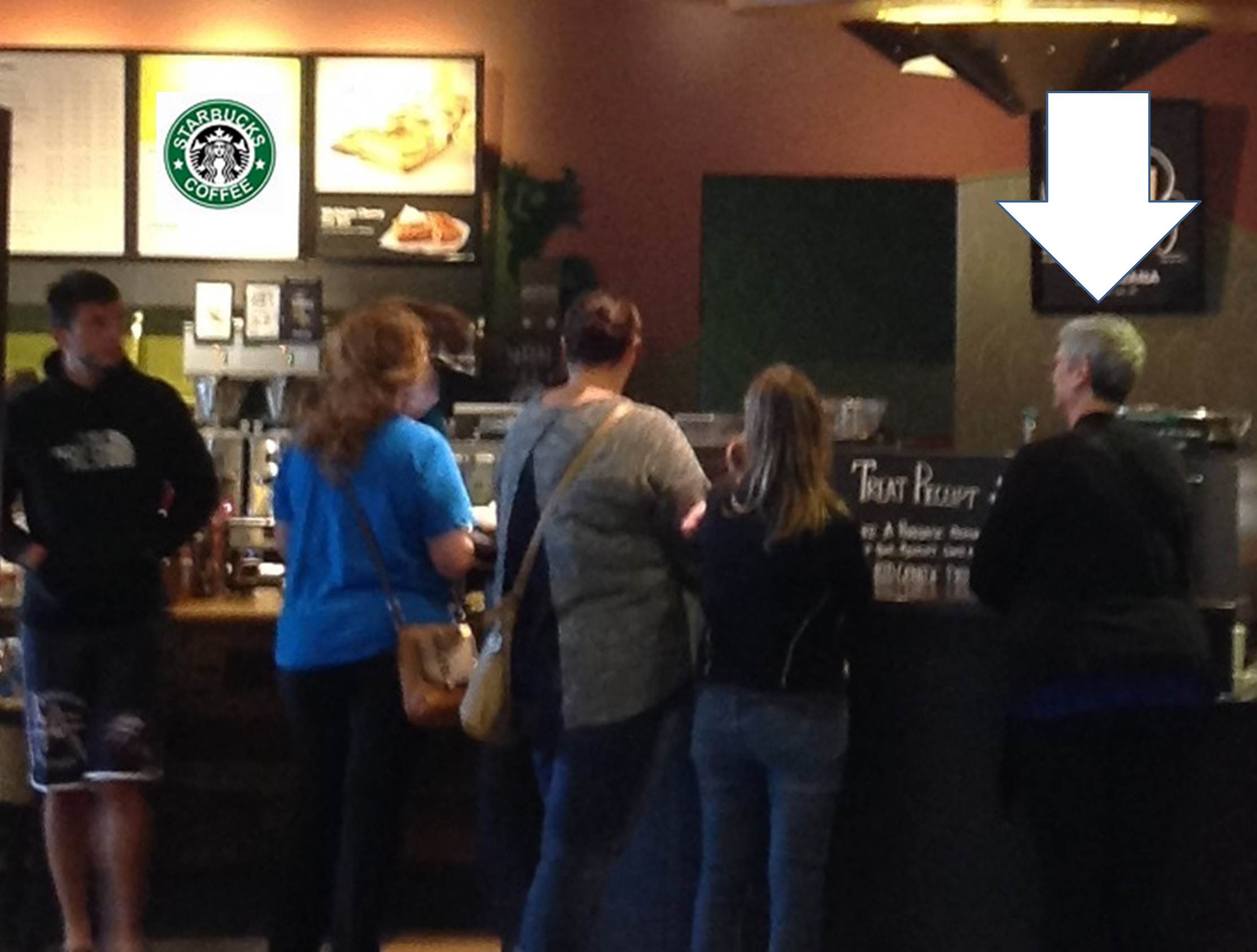
In Seattle, home of Starbucks, everyone drinks coffee. Can YOU tell which of them has lung cancer? In this picture, it’s the person on the far right: me.

In March 2011, I was healthy, a bit overweight, and exercising regularly. However, I’d had a nagging cough for a few months. To make my husband happy, I mentioned the cough to our doctor. Two months, two rounds of antibiotics, one x-ray, and a bronchoscopy later, I spent a very anxious four days waiting for biopsy results.

When I heard, “lung cancer,” I could barely believe the diagnosis. I called my sister to tell her the news, poured a big glass of wine, and lost myself in a favorite science fiction movie.

I had never lived with smokers, never worked in a smoking environment, never smoked anything (except a salmon). I knew nothing about lung cancer.  The facts I found online were not encouraging.  As we moved through the various staging procedures, my family and I experienced increasing levels of fear:

  • “It’s OK, it’s just one tumor. VATS surgery will probably take care of it.”
  • “Well, OK, lymph nodes are involved, but still inside one lung. We can remove the lung, right?” (OMG)
  • “There’s a lymph node between the lungs, severe inflammation and obstructive pneumonia. Stage 3a. No surgery.” This is serious. After my mediastinoscopy, my sister left the hospital convinced I was dying.

I was reassured to hear Dr, Rosales say he considered me curable. I was eager to start aggressive lung cancer treatment. But the universe, it seemed, objected to the treatment plan. The interior of my tumor had died and become colonized by bacteria. Even though we finally found an antibiotic that knocked out the infection, my recovery took weeks. During that time, I developed a clot on my PICC line and required daily self-injected blood thinner. Heaven forbid I should be a boring, vanilla cancer patient! I worried my lung cancer was growing while I waited to start treatment.

I hit bottom a few days after my second bronchoscopy. I awoke at 3 AM coughing up a lot of blood, and Dr. Kirtland told me to go to the ER.  I was released later that morning, just in time to drive 30 miles to my first radiation treatment.  The linear accelerator was down two hours for repairs, but I did eventually get zapped.  My husband and I drove to a nearby restaurant for a very late lunch, and came out to find our car had a flat tire.  Not a very reassuring start.

The next few months revolved around my daily appointments. Perhaps the toughest part was telling my autistic adopted son that he might lose another mother to cancer.  My bucket list became laser-focused on helping him prepare to live on his own.  Despite fatigue and severe esophagitis, I was able to attend my niece’s wedding a month later.  You haven’t lived until you’ve had Ahi tuna encrusted in coffee beans–pureed for a liquid diet.  At one point I was taking ten different meds to control pain and side effects.  My butt was dragging, my blood values tanked after one full dose of chemo, and I broke out in hives during my second red cell transfusion. But gradually, I started feeling better.

It all seemed worthwhile when my first post-treatment CT scan showed my lymph nodes had resolved and the primary tumor had shrunk about 90%. I wanted that tumor OUT, if possible.  I had 15 appointments in 16 days to determine if the surgery would be an acceptable risk–we only had a short window in which to do surgery before radiation changes would make it too risky.  Juggling that schedule generated a lot of additional stress —  my family’s life revolved completely around my cancer.  I wished Virginia Mason had a Lung Cancer Navigator to coordinate all the appointments between seven different professionals at four different facilities, communicate results, explain terms and options in more detail, and ensure timely follow-up.  The last procedure, a PET scan, showed a hot spot on my collarbone.  Dr. Kirtland quickly arranged an MRI scan for the next morning, and a surgical open biopsy on the following day.  To find the tiny suspicious lymph node, the surgeon used an innovative combination of FDG tracer and a Geiger counter.   Two nodes contained cancer.

Grand Rounds 4

I was now a metastatic lung cancer patient. The panic bowled me over like a 50-foot wave.  Alone at home, I became a puddle of hopelessness–for about an hour.  Then I shifted gears and got busy asking questions in an online lung cancer forum.  The support I received there was essential for maintaining hope while I processed my new diagnosis.  They helped me accept there was no point undergoing a risky lung surgery with a tough recovery when it wouldn’t cure me.

Together Dr. Rosales and I decided to start a new chemo after a couple of months, to give me time to recover from my first line treatment. I appreciated that he listened to my concerns about the delay, and that he was careful not to give me an expiration date that might take away hope. I didn’t want to die before applying for my Boeing pension, so I asked how long I had left.  Dr. Rosales estimated about two years.

In the next ten weeks, my mother died, I started taking prednisone for radiation pneumonitis, and a new three-inch tumor grew very visibly on my collarbone. My extended family gathered for what we thought might be my last Thanksgiving.  I had no desire to celebrate Christmas that year.  My most memorable gifts were a newly-installed power port and a hint that my hair was coming in curly.

In my online lung cancer forum, I learned about a clinical trial called the Lung Cancer Mutation Consortium Protocol. It tested lung cancer tumor tissue for mutations in ten different genes. I consulted with my Virginia Mason doctors, but they hadn’t heard of it.  I found the trial listing on clinicaltrials.gov, then contacted the trial sites until I found one accepting patients. The University of Colorado Cancer Center agreed to test my existing biopsy samples even though I could not fly to Denver due to concerns my hollow primary tumor might cause a pneumothorax.  My entire team was disappointed when all tests were negative.  I continued networking with experienced lung cancer patients, and when Dr. Rosales and I discussed chemo options, I suggested Avastin based on some new research.  We mutually agreed on Alimta plus Avastin–he was willing to be more aggressive in my treatment because he knew I understood the risks.

Ten days after I started the new chemo in January, my collarbone tumor was visibly shrinking. I was extremely encouraged despite a sudden worsening of my pneumonitis and my new appreciation for ‘roid rage.  Still, I was glad to finish chemo after six rounds–I was losing my voice frequently, and towards the end I felt like I always had the flu.  I began to understand how some people could decide to stop cancer treatment.  But I couldn’t argue with the results:  all the original tumors were gone, the new tumor had shrunk 90%, and no new tumors appeared. We  decided to treat this one remaining tumor as an oligo-recurrence and go for a possible cure — radiation therapy might knock my cancer out for good.  My skin burned raw, but I made it through.

The next PET scan showed no activity around my collarbone. Yay!  However…it also showed two new nodules in my “good” lung, both outside the radiation field.  Seems I progress whenever I stop chemo.  Another bronchoscopy was scheduled two weeks out, after my husband and I returned from a weekend with my nephew in Denver.

Grand Rounds 5

© University of Colorado Cancer Center (used with permission)


Here’s where the tone of my story changes.

Months before, one of my online lung cancer friends told me of a new mutation called ROS1. I fit the profile of typical patients who had it, and a Phase 1 ROS1 trial still had slots left, but only a lab in Boston could test for it. No one at Virginia Mason knew about it.  On my last full day in Denver, I realized the University of Colorado Cancer Center was not far from my nephew’s house.  I might be able to personally thank the people who had helped me get my previous mutation testing done. I sent an email Sunday afternoon, and was amazed to get an email back that evening saying I could meet the next day with Dr. Bunn, the Center’s Director. He told me they could now test for additional mutations, including ROS1. I gave him permission to test my remaining slides.

A week later, Dr. Kirtland performed a bronchoscopy on the larger of my new nodules. He got a good sample, but couldn’t find any cancer cells. The biopsied nodule could be inflammation, BOOP, or cancer. The other nodule was too small to biopsy.

The very next day, Dr. Bunn emailed me to say I had “an impressive ROS1 rearrangement” and University of Colorado had an opening in a crizotinib trial for me, if I wanted it. Crizotinib is a twice-daily pill that targets cells expressing certain mutations, including ROS1. It produced a terrific response rate in the initial trial with substantially fewer side effects than chemo for most patients. He also said I could join the trial later if I didn’t have active cancer now. I was so excited that I almost screwed up forwarding the email to Dr. Rosales.

The following morning, Dr. Rosales called, also excited by my ROS1 news. If the new nodule was cancer, he agreed I should enter the ROS1 trial rather than start taking Alimta.

That afternoon, Dr. Kirtland called. He had taken my case to the Tumor Board, and their consensus said the biopsied nodule was radiation changes. I was to restart prednisone.  (My husband asked, “What will he give ME when YOU restart steroids?”)  In a month I would have a CT to determine if the nodules responded to prednisone, or continued growing.  I’d come to accept that living with stage IV lung cancer brought uncertainties, but that didn’t make the waiting easier.

The CT scan showed the larger nodule had not changed, but the smaller nodule had grown nearly fifty percent. The good news was that I could once again ramp down off prednisone.  The bad news was that the smaller nodule was likely cancer–I needed to either restart Alimta, or join the crizotinib trial.
Grand Rounds 6

I was on the phone the next morning to the University of Colorado, inquiring about how to join the ROS1 trial. Their doctors said I might be able to join the trial without having another biopsy.  Virginia Mason medical records and radiology really hustled to pull my records together.  After four days, I was flying to Denver with the intention of staying until I was accepted into the trial, and wondering why the heck I was traveling a thousand miles away from my home and family to try an experimental cancer treatment that might not work.  My concerns were not eased by the delays caused by Hurricane Sandy, which shut down the trial sponsor Pfizer’s headquarters in New York City during my screening period.  My acceptance into the trial came at the last possible minute.

I took my first crizotinib pill two years ago last Thursday. My first scan eight weeks later showed both nodules were gone, indicating they likely were both cancer.  As of last Monday’s scan, I have had No Evidence of Disease (known to cancer patients as “NED”) for 22 months and counting. I may be able to stay on this drug for months or years longer. Yet targeted therapies like the one I take do not offer a permanent cure. In time I’ll probably develop resistance to the drug.  There IS no cure for metastatic lung cancer.  No one can say how long I will live.  Sometimes that weirds me out.  Yet I’m hopeful that when this trial drug stops working, another clinical trial will be a good match for me.

Grand Rounds 7

It’s an odd existence, living from scan to scan in eight-week increments. I still sometimes experience scanxiety, as we patients call it.  I often hide out in the bedroom for days before a scan so my scanxiety doesn’t bite anyone.  There is no logical reason for this feeling.  My scans have been clean for months, and I have no symptoms that would indicate the next scan should be any different.  If I do have a recurrence, I know I have some treatment options.  Even if I had no treatment options, I am not afraid of dying.  Apparently my subconscious simply overpowers my conscious positive thoughts.  It probably doesn’t help that whenever I’m leaving for a scan, my son hugs me hard and says, “Please don’t die Please don’t die Please don’t die.”

Several events conspired to give me severe scanxiety a year ago. It felt like a panic attack. Not only was the timing near the anniversaries of my two cancer recurrences, but a friend on a targeted therapy had developed brain mets weeks after a brain MRI, a neighbor had died when her lung cancer spread to her brain covering, and the online ROS1 buddy who had first told me about my clinical trial appeared to be progressing after two years on crizotinib.  A network of lung cancer patients provides invaluable support, but it requires accepting that friends will die frequently.

Grand Rounds 8

I feel overwhelmingly grateful for everything and everyone that has helped me survive as long as I have: medical science that discovered new ways to treat my condition, compassionate healthcare providers at Virginia Mason and in Denver, insurance that paid for most of my care, family and friends who supported me, a knowledgeable online lung cancer community, and all the prayers and good wishes lifting me up throughout my cancer journey.  I’m acutely aware that many lung cancer patients do not have these supports and opportunities.

Being given a second chance at life, however long it might be, tends to give one a different perspective. Seeing the sunset paint Mount Rainier fills my heart.  Chatting with my sister over a latte keeps me smiling for a week.

A second chance at life also makes one introspective. Why was I spared when others died?  Why does my mutation have an effective treatment when others don’t? Why am I able to see one of the best lung cancer doctors in the world when many patients can’t afford proper treatment? Why am I still here?

I had been blessed with gifts that helped me survive my cancer journey thus far. In my previous career of aerospace engineering, I was a “translator” of sorts: I researched science and technology developments and helped others understand their benefits.  Thanks to these skills,  I’m able to understand lung cancer treatments and research. I’m able to explain what I’ve learned, both verbally and in writing, in everyday terms. And I’m able to advocate for myself with healthcare providers.

I have chosen to use these gifts to help other lung cancer patients by going public with my lung cancer in my blog, in online forums, and in public speaking.  Most patients don’t know about the new treatments like the one I’m taking–even some doctors don’t know. Lung cancer patients need more than compassion. They need information about second opinions, mutation testing, side effects, treatment options, and clinical trials.  They need HOPE.

Lung cancer people     Breast Cancer People

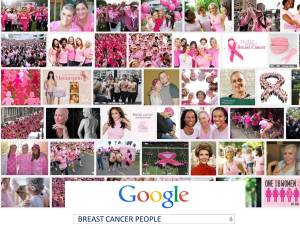
Going public has also helped more people understand that ANYONE with lungs can get lung cancer—and NO ONE deserves to die from it. Lung cancer kills about as many people as the other top four cancers combined, yet it receives fewer federal research dollars per death than any of them.  Why is that?  Are lung cancer patients not worth saving?  The answer becomes clear when you google the words “lung cancer people.” No throngs of ribboned supporters; few smiling survivors.  You see diseased lungs, death … and smoking.  Lung cancer has an image problem.  The first question I hear when I mention my disease is: “Did you smoke?” People blame patients for getting lung cancer. The breast cancer community has changed how the world sees their disease. The lung cancer community must do the same.  We’ve all done things that impact our health.  Yes, it’s healthier not to smoke.  But it’s not a sin that warrants the death penalty.

puffy feet

© Janet Freeman-Daily


Precision medicine allows me to live with lung cancer as a chronic illness instead of a death sentence. True, it’s not the same life I had Before Cancer. I can’t do the active sports that I used to do.  Chemotherapy left me with peripheral neuropathy and cognitive changes.  Radiation scarred my lungs and damaged the nerve bundle for my right arm. A year of steroids packed on the fat while decreasing muscle tone.  Crizotinib causes edema and graces me with antisocial gut behaviors. Some combination of side effects keeps my red blood cell count just below normal. When I exercise on the treadmill, I can’t get manage a brisk walk for more than 30 seconds without breathing fast and hard.
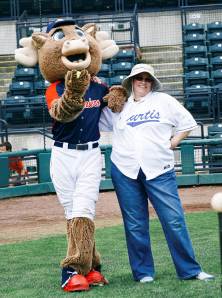
Image Credit: Stephanie Jarstad

Image Credit: Stephanie Jarstad

I’m not complaining, mind you–I’m happy to be alive and have a relatively normal life on targeted therapy. It even allowed me to play a casual game of softball in Cheney Stadium at my 40th high school reunion. The moment I put the glove on my left hand, my body recalled those years on the softball diamond. After some initial fumbles, I could catch, throw, pitch and hit. And I got to first base before the ball did.  I could not have even reached first base while on chemo.

As a three-year lung cancer survivor, I’ve already lived beyond my prognosis. I will stay with targeted therapy and other clinical trials as long as my quality of life makes it worthwhile. Lung cancer research has found more new treatments in the past few years than ever before, and the pace of discoveries is accelerating.  As people begin to realize that ANYONE can get lung cancer (including never smokers like me), the stigma will hopefully begin to fade, and research funding will increase.

We lung cancer patients deserve hope, and a cure. Every one of us.

Special #LCSM Chat Topic 11/05 1 PM ET: @TheNCI hosts chat on precision medicine in lung cancer

This is a repost of a blog on the #LCSM Chat website (posted with permission):

————————————————-

#LCSM Chat is pleased to announce a special #LCSM Chat for Lung Cancer Awareness Month will be held on WEDNESDAY, November 5 at 1 PM Eastern Time (NOT our usual day and time). The National Cancer Institute (@theNCI) and a panel of experts will be using the #LCSM hashtag to talk about exciting new lung cancer treatment options!

This chat will be in question-and-answer format, with a panel of experts addressing specific topics posed by @theNCI as well as fielding audience questions related to those topics. This format is great for patients, caregivers, medical personnel and advocates regardless of their previous experience with tweetchats.  We hope you’ll join us!  (Check out our refresher on how to join a tweetchat)

Below is NCI’s announcement about the November 5 Chat.

On Wednesday, November 5 from 1:00-2:00 ET, the National Cancer Institute (@theNCI) will be hosting a Twitter chat on precision medicine in lung cancer using the #LCSM hashtag.

We’ll have a “who’s who” of precision medicine lung cancer experts on the chat, including:

  • Dr. David Gerber, Lung Cancer Specialist, UT Southwestern Medical Center
  • Ryan M. Hohman, JD, Managing Director, Policy & Public Affairs, Friends of Cancer Research
  • Dr. Shakun Malik, Head, Thoracic Cancer Therapeutics in the Clinical Investigations Branch of the Cancer Therapy Evaluation program at the National Cancer Institute
  • Dr. Geoffrey R. Oxnard, MS, Instructor in Medicine, Harvard Medical School
  • Dr. Vassiliki Papadimitrakopoulou, M.D., Professor, Department of Thoracic/Head and Neck Medical Oncology, at the University of Texas MD Anderson Cancer Center, Houston, TX

During the chat, the experts will be discussing, among other topics, how lung cancer treatment has changed over the last few years, provide more information about the definition of “precision medicine” as it applies to lung cancer, discuss when patients might consider a clinical trial, as well as provide more background and specifics on the Lung-MAP and ALCHEMIST clinical trials.

For more background information on Lung-MAP, we also recommend Friends of Cancer Research’s “What Leaders in the Field are Saying About Lung-MAP.”

Why Aren’t Never Smokers Screened for Lung Cancer with LDCT?

As you’ve probably heard, 25% of lung cancer patients worldwide are never smokers.  Like all lung cancer patients, the majority of never smoker LC patients are diagnosed with metastatic lung cancer, even though they often have no real symptoms.  How come lung cancer screening guidelines don’t suggest never smokers get screened for lung cancer?

Well, it’s all a matter of risk reduction.

Medical practitioners (and those who pay for their services) do not like to run a medical test when the patient might be put at risk for little benefit.  This is a concern if a test is not 100% accurate and follow-up procedures for a positive result are potentially invasive.  This is the situation with LDCT screening.  With today’s technology, a lung cancer diagnosis can only be confirmed with a biopsy, which is invasive and does carry some risk.  And, lung biopsies are not guaranteed to detect a cancer, even if one is present.  Lung cancer screening with low dose CT might generate a false positive (meaning the test says the patient has lung cancer when they really don’t). False positives could result in unnecessary invasive follow-up procedures with some risk to the patient.

For this reason, LDCT screening is only recommended for those who are at HIGH RISK for lung cancer. At this time, “high risk for lung cancer” means current or past heavy smoking history and age 55 to 75. These risk factors were not chosen due to stigma or discrimination. To date, these are the only two risk factor scientifically demonstrated to have a HIGH correlation with lung cancer in several studies. A very large clinical trial (the National Lung Screening Trial, or NLST) showed people who had these risk factors were likely to benefit from lung cancer screening with LDCT despite the risks of false positives.

For these patients at high risk for lung cancer, the benefits of screening outweigh the risks.  LDCT screening reduced their lung cancer deaths by 20% compared to screening with x-rays, simply by detecting the lung cancer before it spread and getting it treated early.  By the way, NO deaths due to LDCT screening occurred in the 53,000+ participants enrolled in the NLST.

Since lung cancer occurs in a low percentage of the never smoker population, the risk of screening doesn’t make sense for never smokers unless they have another high risk factor.

We know of other risk factors associated with lung cancer–radon gas in homes, air pollution, previous cancer treatments (especially radiation treatment to the lungs), exposure to certain hazardous materials, even an inherited gene.  However, analysis to date hasn’t shown any of these factors have as strong a correlation with lung cancer, possibly because it’s harder to track those risk factors in a controlled study.  As we learn more about how lung cancers get started, and how they differ from each other, we are likely to discover more HIGH risk factors that can be validated by objective analysis.

This definition of “high risk” and this method of screening are just the first steps in early detection for lung cancer. As more high risk factors (like the inherited version of the T790M gene) are validated by objective studies, people who have those risk factors should also be included in covered lung cancer screening, whether or not they have a smoking history.

As more accurate and less expensive lung cancer screening technologies become available, testing will become more accessible to everyone.  Someday–hopefully in our lifetimes–accurate lung cancer screening will be as easy as a blood test or spitting into a test tube, without the need for a biopsy.

So keep supporting more research!  We need accurate, affordable early detection of lung cancer in never smokers.

Why Advocates Seem to Talk So Much About Lung Cancer Screening

On Thursday, September 25th, 8PM ET/ 5PM PT, #LCSM Chat will discuss the existing barriers in lung cancer screening in late 2014.

Recently I’ve heard some lung cancer patients say they feel abandoned by lung cancer advocacy groups.  These patients think the groups are focusing too much on early detection with lung cancer screening, and have abandoned those who already have the disease.

As a metastatic lung cancer patient, I don’t feel abandoned.  I feel lung cancer advocacy has never been more vibrant or successful than it’s been in the past year.  In the past year, lung cancer advocacy has featured:

  • Wide-spread national media coverage about lung cancer: Valerie Harper on “Dancing with the Stars” and other national shows, national news coverage of testimony on Capitol Hill about the need for lung cancer research funding, the “Turquoise Takeover” of prominent landmarks, and Molly Golbon’s cancer journey documented on NBC, for example.
  • Print and online articles discussing the need to eliminate lung cancer stigma and featuring the hope offered by new treatments and clinical trials.
  • More advocates, patients, doctors, and researchers posting and collaborating with the #LCSM hashtag on Twitter.
  • An increase in lung cancer bloggers compared to last year.

The focus of lung cancer advocacy hasn’t shifted away from research or treatments.  By my count, there are more new treatment options offered or announced this year for a wider range of lung cancer types than in any previous year: two new FDA-approved targeted therapies,  immunotherapy trials for all lung cancer types, an innovative new trial for squamous cell LC, a new study of Young Lung Cancer, new targeted drugs for mutations, newly-discovered mutations … the list is long.

Lung cancer screening with LDCT is a big deal because it is projected to save 18,000 lives PER YEAR by catching lung cancer before it spreads.  That’s more lives than most new targeted lung cancer treatments will save in a year.

We’re seeing more public discussion of lung cancer screening than treatments for four reasons:

(1) Lung cancer screening with LDCT gained major support at the end of 2013.
In December 2013, the US Preventative Services Task Force recommended lung cancer screening with LDCT.  As a result, the ACA now requires private insurance plans to cover LDCT as of January 2015.

(2) LDCT is becoming more available.
More hospitals and clinics are beginning to offer LC screening with LDCT, and are advertising that fact.

(3) The need for support is urgent.
The majority of lung cancer patients are over age 65.  In February, the Centers for Medicare and Medicaid (CMS) began evaluating whether to provide insurance coverage for LC screening with LDCT.  CMS will decide in November.   We must act NOW.

(4) Individual advocates have a chance to make a difference that will save lives.
The CMS decision is being made by a branch of the US government.  Our voices are needed to ensure those over 65 have access to LC screening, since most of them have Medicare as their primary insurance.  Lung cancer advocacy organizations are leading the charge.

The lung cancer community is still dedicated to raising awareness for ALL lung cancer patients and increasing research that will allow more lung cancer patients to be cured or to live with lung cancer as a chronic illness.   Advocating for LC screening is just one way to help more patients survive.  It’s part of the 2014 sea change in lung cancer.

Hyperintensities

Last Monday and Tuesday, September 8-9, I was in Denver for my clinical trial at University of Colorado Hospital (UCH). I had my once-every-eight-weeks PET-CT scan along with a once-every-six-months brain MRI.

I’m happy to report that both scans were clean. I’m now twenty months with No Evidence of Disease of metastatic lung cancer.  That Xalkori is great stuff for those of us with ROS1 NSCLC!

I’ve been in my clinical trial for 22 months, and the trial has been running for over three years. The medical journal article summarizing trial results is due out sometime in the next two weeks.  Judging from the response to Xalkori of several ROS1ers I’ve met online, I expect the news will be positive.  Can’t wait to read it–I’ll probably hustle to the University of Washington Library and download it first chance I get.  Yes, besides being a science geek, I’m an INTENSE science geek.  One of those “complete response” lines on the waterfall plot will be ME!

The scanxiety for this visit was different than my previous visits to Denver. It’s been a very busy summer for me.  As I posted previously, before flying to Denver I attended the Stanford Medicine X conference in Palo Alto September 4-7.  I gave my speech on lung cancer stigma on the main stage Sunday morning, left the conference a couple of hours early to fly to Denver Sunday night, and had my clinical trial labs and scans Monday.  I was so focused on the conference and my speech that I barely noticed any scanxiety –it was difficult to distinguish from the intensity that precedes my speaking publicly.  The only real indication of any anxiety was my increasing inability to focus during the conference and three hours of lost sleep the first night in Palo Alto (although my husband might have a different perspective about my intensity in the days before I flew to Palo Alto).

A few other things were different about this clinic visit:

  • On the day of my visit, I spent an hour talking with the American Lung Association of Colorado’s office about LUNG FORCE.
  • A pleasant UCH oncology Fellow conducted my clinic visit. My primary oncologist Dr. Camidge came in to chat with us both for a few minutes afterwards–he knows I always have a list of questions for him. We talked about an exciting new clinical trial design at UCH for FGFR-positive NSCLC (more on that in a future post).
  • UCH had recently installed new software for their MRI machine, so the report of my brain MRI was not available at the time of my clinic visit. However, Dr. Camidge and the Fellow both reviewed the scan itself and reassured me it was normal.
  • After Dr. Camidge completed his clinic hours on Tuesday, he joined me, Dora (an online friend of mine who is also his lung cancer patient), and Dora’s husband Bill for a chat at a restaurant near UCH. How many world-renown lung cancer doctors do that? Well, yes, I did bribe him with a cup of coffee and a pastry. Here’s a selfie we took:

selfie with Camidge

Something else was also new to me after this clinic visit. I had a headache after I arrived home.  Since I’d just had a clean brain scan two days before, I knew the cause could not possibly be a brain met.  Somehow this reinforced the feeling that I was more a normal person than a cancer patient at this point.  Sometimes a headache is just a headache.

The brain MRI report appeared in our mail yesterday. It didn’t say much except “normal,” but a few terms were new to me.  I was Googling the new terms when an infolinks box popped up with this message:

“Searching for T2 hyperintensities in white matter? Try Kelley Blue Book!”

Maybe Kelley Blue Book can tell me how my hyperintensities affect the resale value of my brain.

Meeting the Chemist

This post originally appeared July 15, 2014, in ASCO’s cancer.net blog. Reposted with permission.
—————————

My first ASCO Annual Meeting was an educational and exhilarating experience. As a science geek, I loved learning about new cancer treatments from leading researchers. But the highlight for me happened in a noisy back corner of a crowded poster session when I met Dr. J. Jean Cui, the chemist who is saving my life.

A little backstory: I was diagnosed in May 2011 with stage IIIa non-small cell lung cancer (NSCLC). After two series of chemo, two radiation protocols, two recurrences, and promotion to stage IV, I was told I’d be on chemo for the rest of my life. Thanks to “CraiginPA,” who I met in an online support group, I learned about a tumor mutation called ROS1 and arranged to have my tumor tested. I’m now enrolled in the same ROS1 clinical trial as CraiginPA, taking a pill called crizotinib (Xalkori) to suppress my lung cancer. I’ve had no evidence of disease (NED) status since January 2013. I know my cancer will likely return, but for now, life is almost normal.

CraiginPA and I both attended the 2014 ASCO Annual Meeting as patient advocates. We met “in real life” in Chicago the day before the meeting began and attended many sessions together. On the third day, June 1, we went to a lung cancer poster highlights session. Similar to a high-powered science fair, the session featured 25 large posters explaining ongoing studies, each with a researcher standing by to answer questions. One poster described a study of our drug crizotinib for ROS1 in Europe.

While we were tag-teaming the researcher with questions, we noticed two representatives of the pharmaceutical company who makes crizotinib standing nearby. We introduced ourselves and moved to a table to discuss when our trial drug might obtain FDA approval for ROS1.

After several minutes, one of the reps smiled and said, “Jean is here.”

CraiginPA’s face lit up. “She’s the chemist—the lead inventor who developed our drug!”

My geek meter pegged at ecstatic. The chemist who invented the drug that was keeping me alive was HERE!

“If I see Jean, I’ll tell her you’re looking for her,” one of the reps said. They excused themselves to talk to another researcher.

A bit giddy, CraiginPA and I went back to digesting the ROS1 poster. We had started debating where the drug actually bonded with the ROS1 protein on our tumor cells when a smiling young woman approached us.

CraiginPA recognized her instantly. “Jean! So good to see you again.”

I felt like I did when I’d been introduced to idols like Nobel Laureate Physicist Richard Feynman or MD/PhD/Astronaut Story Musgrave. This was not some academic stuck at a bench with glassware and data analysis. This cancer rock star was a real person, and she seemed just as happy to meet us as we were to meet her. How often does a researcher get to see the living, breathing proof that her work saves lives?

We hugged all around and coerced someone into taking a picture with Jean’s smartphone. I couldn’t have grinned any wider.

For the next 20 minutes, Jean fielded our questions about her background, why she chose chemistry as a career, and how her team designed the drug. CraiginPA and I were like two kids getting a peek behind the Wizard’s curtain at the magic of cancer research. We agreed this experience was easily our highlight of the meeting, especially for me since I experienced it with CraiginPA who first told me about this drug.

Later Jean emailed us the picture, along with an invitation to ask her any further questions we might have—a perfect end to an amazing day.

So stop me if you’ve heard this one: a patient advocate, a pharma rep, and a chemist walk into a poster session…

20140715-110726-40046427.jpg

Clinical Trial Check-In Number 18

Denver gifted me with a warm, bright day today — clear skies, 60 degrees, a hint of breeze — perfect for sitting on a sun-drenched bench and basking in the glow of another clean scan. I’m still No Evidence of Disease (NED) status. Woohoo!

You’d think I would have had enough radiation for one week, but that spring sunshine was simply irresistible after such a long winter.

I had a PET-CT scan as well as a brain MRI and lab work yesterday, and had my once-every-eight-weeks visit with my clinical trial oncologist Dr. Camidge at University of Colorado this afternoon. Today I started cycle 19 on the drug Xalkori. Each cycle is 4 weeks, so I’ve been on this drug trial for 76 weeks now, which is almost 17 months.

I’ve been NED for nearly 15 months on Xalkori. According to interim results published about this clinical trial last year, only myself and one other person achieved NED on this trial. It’s possible I don’t have many cancer cells available to mutate and develop resistance to the drug. My particular flavor of lung cancer (ROS1-driven NSCLC) hasn’t been studied very long — the first article about it was published in January 2012 — so little data exists to know what will happen in my case. Xalkori may continue to suppress my cancer for years. It’s cool to hear my doctors say they have no idea of how long I might have left, and know they’re being honest with me. I’m an outlier for those gloomy stage IV lung cancer statistics.

I feel so fortunate to be blessed with more time to enjoy family and the miracle of life. I aim to make good use of it.

Speaking of making good use of my time … should I mention I have to work on tax returns after I fly home? Nah.