Tomorrow (January 10, 2024) I will speak on an FDA panel as one of the patient advocates, along with clinical investigators and oncologists. The discussion will highlight transformative oncology drug approvals in 2023 including one for ROS1+ cancer (my type of cancer).
Topics we will discuss include patient and investigator perspectives on their experiences with these drugs, impact on patient’s prognosis and quality of life, how these drugs will change the treatment landscape, and barriers to access.
In May 2011 I was diagnosed with advanced lung cancer. At that time, surgery, chemo and radiation were the only treatments available. However, a small clinical trial had already begun for a targeted therapy pill called crizotinib. This pill that sounded like an alien seemed to inhibit ROS1+ cancer in about 80% of people in the trial. That was amazingly effective for a cancer drug!
I joined that trial, and as of yesterday, I’ve been on crizotinib for 11 years. Yes, I’m an outlier. While this drug has worked well for me, current targeted therapies don’t work well for everyone, and most people eventually develop resistance. We need more research and treatment options.
The ROS1ders (a nonprofit I cofounded) is funding research into ROS1+ cancers so all patients can one day have great treatment outcomes. This year we funded two $75,000 ROS1+ Cancer Innovation Awards. We are aiming to raise $225,000 so next year we can fund three awards.
I’m in Boston today, where I spoke to a pharmaceutical company that has new ROS1 drug in clinical trials, and met with a researcher who will be starting a new study about my type of cancer. Please help me fund more research to find better treatments for my rare type of lung cancer. Thanks for your support!
The IASLC STARS (Supportive Training for Advocates on Research and Science) webinar will include a sampling of patient advocate research abstracts presented at the 2023 IASLC World Conference on Lung Cancer (WCLC23) in Singapore. A live Q&A session will follow, moderated by lung cancer patient and research advocate Janet Freeman-Daily. The speakers are Mentors for the 2023 IASLC STARS program:
• Upal Basu Roy, PhD, MPH, Executive Director of Research at LUNGevity Foundation • Andrew Ciupek, PhD, Associate Director of Clinical Research at GO2 for Lung Cancer • Jill Feldman, MS, lung cancer patient and research advocate • Anne-Marie Baird, PhD, president of Lung Cancer Europe (LuCE) • Lillian Leigh, JD, lung cancer patient and policy advocate
Educational Objectives:
Highlight range of research conducted by lung cancer research advocates and advocacy organizations.
Demonstrate effective communication of research topics to a broad audience.
Increase patient research advocates’ understanding of research abstract format and content presented at conferences.
Raise awareness of research advocates contributions to improving patient care and outcomes.
Live interpretation will be offered in these languages:
Chinese (Mandarin)
French
German
Greek
Japanese
Spanish (Latin America/neutral)
The webinar will be recorded and available for viewing afterwards in each offered language.
I’ve just personally encountered a new-to-me health disparity in the lung cancer space. I’m not aware of tools in the healthcare system that can deal with it.
Lung cancer care was confusing and overwhelming for me when I was diagnosed at age 55–and I was willing and able to access my digital medical records, Google standards of care, and connect with online patient groups. Dealing with my medical appointments and side effects took over my family’s life during my first-line treatment. At least I had an available driver who could accommodate clinic visits that ran long, or could reschedule transport on short notice when radiation therapy was cancelled due to equipment glitches.
The average age for a lung cancer diagnosis is around 70. This means many people are more than 80 years old when diagnosed. How does someone who is legally blind from macular degeneration, hard of hearing, and in an assisted living facility navigate lung cancer care when they can’t read information in online portals, or readily follow verbal conversations with healthcare providers? How can they decide which treatment option will best meet their quality of life goals without reviewing accurate information?
If they don’t have a driver at their beck and call and can’t see to use smartphone or computer apps, how do they get to the array of medical appointments with different providers when they must rely on transportation systems for people with disabilities, which require users to schedule pickups at specific times, days in advance?
This year’s Targeted Therapies in Lung Cancer Patient Forum is happening online Saturday June 15, and it’s FREE! Great way to learn about current treatment options for those eligible for targeted therapy.
This signature, live, virtual, interactive patient education event includes presentations and panel discussions covering general subjects relevant to all targets as well as breakout sessions on specific mutations of lung cancer. Save your spot here: [https://give.cancergrace.org/…/targeted…/e490332](https://t.co/8TDXsdjyp5)
Cancer research advocacy encompasses several types of activities and a broad range of skills. The needs of the lung cancer patient population alone are HUGE, and no one person or organization has the time, skills, or bandwidth to address them all. The featured image on this post is a range of tall mountains for a reason.
I believe that the only way to stay engaged in cancer research advocacy over the long haul is to employ skills you enjoy using on projects that have personal meaning for you. I try to focus on activities that allow me to use my unique skills and (hopefully) improve outcomes for the greatest number of patients.
Some activities require multiple hours every week–these are my primary projects. Some have intense demands of several hours over a few days or weeks; examples are advisory boards, preparing a talk, grant reviews, or journal articles. Others may only require an hour or two each month, such as a serving as a patient advocate for a research committee.
To give you a sense of what one cancer research advocate’s activities might be, I’ve listed below those in which I’m currently involved. If this looks like a lot, please keep in mind that each advocate has a unique set of health and personal circumstances that influence how much of their energy and other resources they are able to give to advocacy. In my case:
I am retired, no longer have children at home, and have the luxury of choosing what I want to do with my time.
I’m on a cancer therapy that has tolerable side effects and leaves me with energy to do more than focus only on my own healthcare.
I get to use skills I enjoy (e.g., writing, speaking, analyzing), work with smart people who are dedicated and compassionate, and learn about subjects I love (science and technology).
The connections and reputation I’ve developed over ten+ years of lung cancer patient advocacy have brought me opportunities about which I wasn’t even aware when I first began advocacy work.
Primary Projects (several hours every week)
The ROS1ders nonprofit (co-founder, president, and board chair) A global group of patients and caregivers living with ROS1+ cancer that seeks to improve outcomes for all ROS1+ cancers through community, education, and research.
IASLC STARS program (co-developer and consulting staff)* STARS aims to increase the number of patient research advocates (PRAs) equipped to provide accurate scientific translation and patient perspective for lung cancer research and policy.
Advisory Panels
Fred Hutch/UW/Seattle Children’s Cancer Consortium External Advisory Board*
National Cancer Institute (NCI) PE-CGS Network External Advisory Panel
International Association for the Study of Lung Cancer (IASLC), Patient/Survivor member
American Society of Clinical Oncology (ASCO), Patient Advocate member
American Association for Cancer Research (AACR), Affiliate member
——————————-
Disclosures
When advocates provide value to projects, I believe they should be paid for their time, just as any other professional would be. I receive compensation for some activities (such as an honorarium for speaking); these are marked with an *. If an organization requires me to travel for a meeting, I receive compensation for travel expenses and often free conference registration.
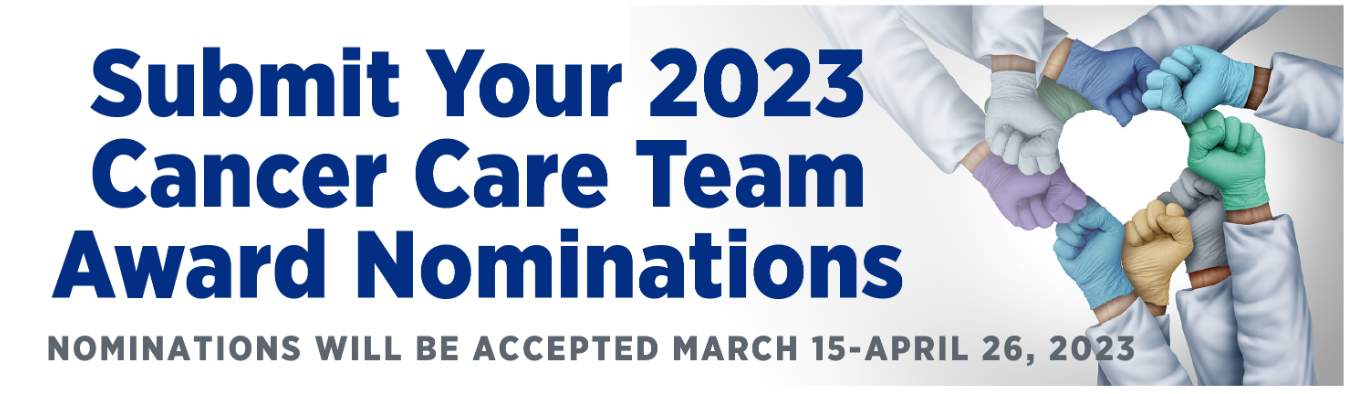
The IASLC Cancer Care Team Award honors multidisciplinary teams, as nominated by the patients they serve. Exceptional care teams offer the patient seamless and informed communication, as well as an individualized treatment plan based on not just the patient’s needs, but the patient’s wishes. The Cancer Care Team Award aims to highlight this kind of worldwide, outstanding care.
The IASLC Cancer Care Team Award was established in memory of Marilyn Holman, who passed away from lung cancer in 2016. By recognizing Cancer Care Teams across the globe, we hope to spread awareness and speak to the outstanding care that is possible for all lung cancer patients, from the time of diagnosis through treatment.
The IASLC invites and encourages individual patients with lung cancer and/or their caregivers to nominate a multidisciplinary care team who they feel provided exceptional care. Only IASLC Members are eligible to submit nominations for the Cancer Care Team Award. If you are not yet a member, CLICK HEREfor information on how to join. IASLC Membership is complimentary for patients and their family members and caregivers. The deadline to submit nominations is April 26, 2023. An international panel will choose one winning team from each of the four regions – North America, Latin America, Europe, and Asia/ROW. Winning teams will be announced during the 2023 World Conference on Lung Cancer in Singapore (September 9-12, 2023).
Lung cancer research gives patients hope, time with loved ones, and better quality of life. Ten years ago today, I entered a targeted therapy clinical trial for my ROS1+ lung cancer, taking an oral drug called crizotinib (trade name Xalkori). I’m still taking it (it’s now approved by the FDA and in many other countries) and have had no evidence of disease since I started it. Pretty amazing, since I had been given an expiration date of 2 years at the outside for my metastatic non-small cell lung cancer.
This presentation was given on April 6, 2022, by Janet Freeman-Daily (a lung cancer patient research advocate) at the IASLC 2022 World Conference on Lung Cancer (#WCLC22) in Vienna, Austria during the “Social Media + Communications Workshop.”
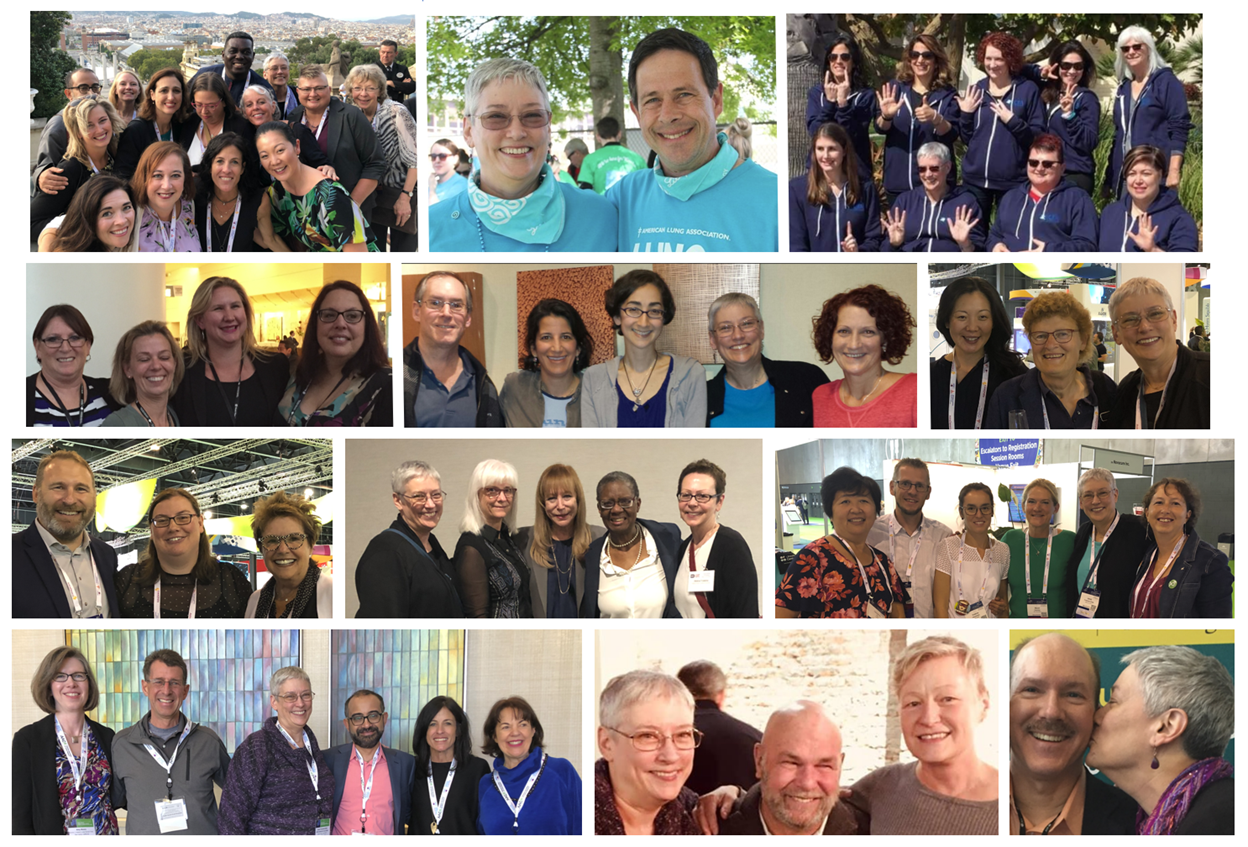
Lung cancer patient advocates share purpose, laughter, and tears. On #World Lung Cancer Day, I celebrate efforts to improve outcomes & quality of life for people living with lung cancer. Most of us have/had lung cancer. Many have died. Still, we persist because … we see how we make a difference. #LCSM #WLCD
Below I’ve listed several large, established nonprofit organizations engaged in some aspect of lung cancer patient advocacy. All provide medically validated information about lung cancer, offer patient supports, and/or fund lung cancer research. Many individual patients (like me) and smaller nonprofits are also engaged in aspects of lung cancer patient advocacy.





 Gray Connections