Guest blog: Dear lung cancer patient who didn’t smoke

In February of 2014, I wrote a blog post titled “Dear lung cancer patient who smoked.”  Today that post received a comment from my friend and fellow lung cancer patient advocate K ‘Karen’ Latzka.  Her insight deserves a blog post of its own.  Reposted with author’s permission.

—————————

Dear lung cancer patient who didn’t smoke,

I was a pre-teen when my older sister invited me to smoke a cigarette with her. I worshiped her, and was excited she included me. Smoking united us. By sixteen, I had a full-blown addiction that I couldn’t break. But the day before my dad’s birthday, when I was 35 years old, I smoked my last cigarette.

For a decade, people celebrated this accomplishment with me. Relatives, friends and strangers asked me for tips to help them quit. More important, I forgave myself for poisoning my body for so long and committed to a healthy lifestyle.
At age 46, I was diagnosed with lung cancer. Since that day, every time someone hears of my diagnosis for the first time, they ask “Did you smoke?” and, unlike my never-smoker brothers and sisters, I respond yes. Yes, but I quit a decade ago. Yes, but I know lots of people with lung cancer who never smoked. Yes, but I don’t deserve to die!

I remind myself that the question usually is not intended to judge me, but rather the inquisitor is gauging their own risk. Smokers and ex-smokers usually follow-up with questions about my smoking history, perhaps hoping my history was worse than theirs. Never-smokers usually follow-up with questions about a loved-one’s smoking history, or about second-hand smoke. I patiently respond with the things I know, followed by “anyone with lungs can get lung cancer.” And in the end, many walk away still thinking that I deserve what I got, most without showing a bit of compassion. And I forgive myself once again, and tuck away the guilt and shame until the next round.

It’s exhausting. It’s hard enough to fight the guilt and shame we put ourselves through after diagnosis, but to be reminded of it again and again by strangers, while we’re literally fighting for our lives is something most of us don’t have the will or the strength to tolerate. Which is why, when I look at my ever-expanding list of lung cancer friends who are active advocates like me, I don’t see many who have a smoking history.

So you advocate for all of us. The rise in lung cancer among never-smokers has caused an explosion in lung cancer research (relatively speaking). We’re finally seeing this research extend the lives of lung cancer patients! And these patients are actively advocating for more research funding, better education, and better screening methods.

As for this former-smoker, I will continue to fight lung cancer stigma by your side, and to do everything in my power to improve survival outcomes, no matter how exhausting it is.

With much love,

A lung cancer patient who smoked

When your pharmacy plays favorites with cancer

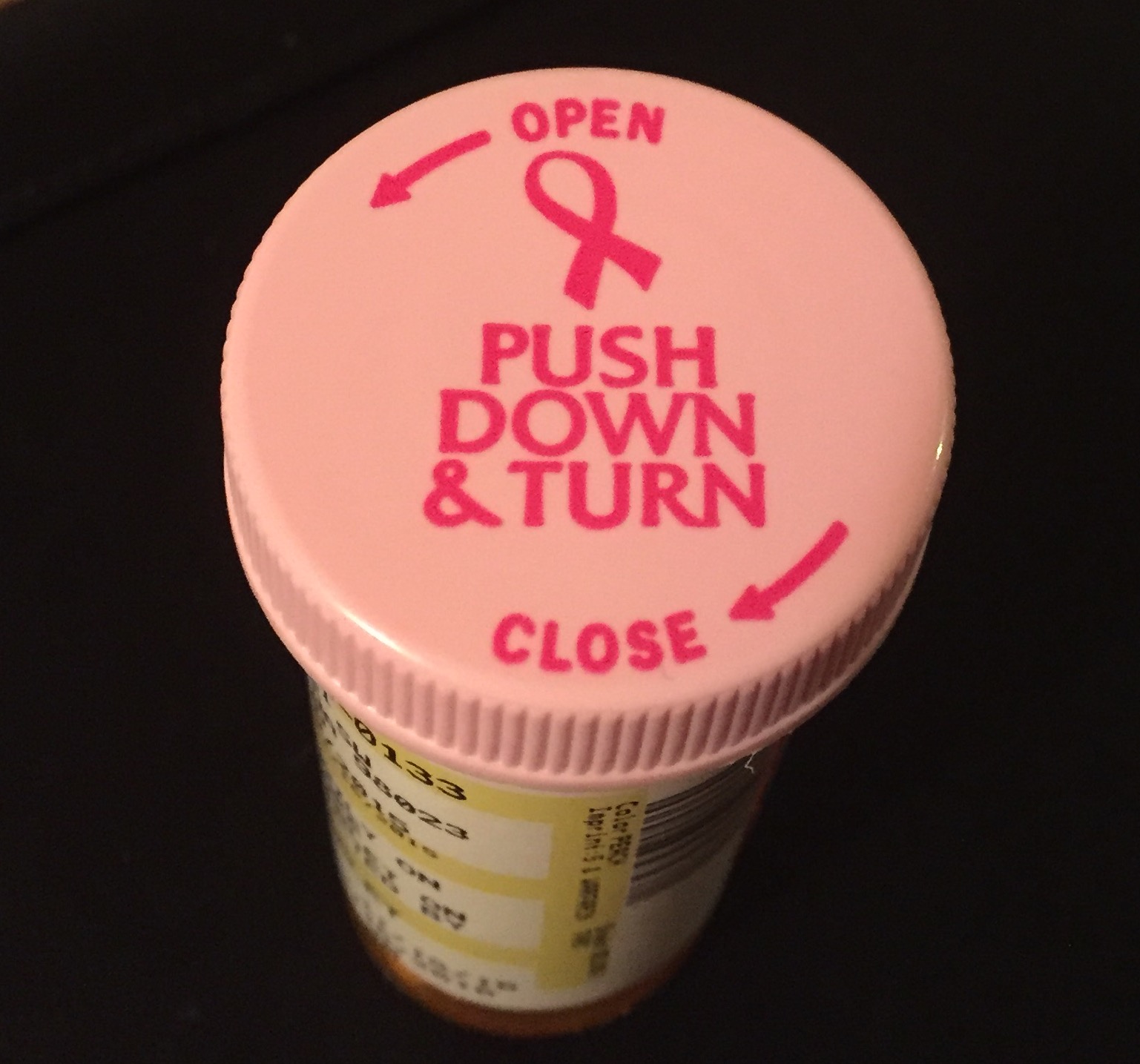
Last week I refilled my prescription for warfarin, a blood thinner I take for my cancer-related pulmonary embolism (such blood clots that are not uncommon in cancer patients).  The Fred Meyer pharmacy did their usual efficient job and delivered my medication promptly.  It looked like this:

pink ribbon pill bottle

I think it’s wonderful when corporations support cancer research and cancer patients. Kroger (Fred Meyer’s parent company) has a large breast cancer awareness campaign featuring Kroger employees who have or had the disease, and I’m sure some breast cancer patients who received this pill bottle cap felt a surge of hope.

“Hope” is not the emotion I felt when I saw this bottle.

I felt stigmatized. Ignored. Devalued. And these feeling were triggered by an organizaion supposedly aiming to make me feel BETTER.

I have lung cancer, the biggest cancer killer, a disease that kills twice as many women as breast cancer  … READ MORE


Image credit:  Creative Commons License
Pink-ribbon pill bottle cap by Janet Freeman-Daily is licensed under a Creative Commons Attribution-ShareAlike 4.0 International License.

Profiles in Lung Cancer – Day 21: Dr. Ross Camidge “Progress will come from changing the way we think about cancer”

PROFILES IN LUNG CANCER
Lung Cancer Awareness Month 2015

D. Ross Camidge, MD, PhD  “Progress will come from changing the way we think about cancer”
Director of the Thoracic Oncology Clinical and Clinical Research Programs, University of Colorado

I am incredibly fortunate to have Dr. Ross Camidge as my lung cancer oncologist, clinical trial researcher, advocacy cheerleader, and friend. He goes above and beyond to help lung cancer patients better understand their options and find hope.  And he adores his two small daughters.

Camidge and daughtersA sample of the hope Dr. Camidge offers shows in his “User’s Guide to Oncology” presentation.  He explains the basic of cancer in understandable language, talks about how to sort through information available online and elsewhere, shares do’s and dont’s of cancer care, and offers some patient inspiring stories.  I’m honored that he chose mine as one of them.

Oh, and he has an awesome British accent.

What is your connection with lung cancer?

The first lung cancer patient I remember was called John and he was a plumber in Edinburgh in Scotland. He had never smoked and was one of the first people to go on an EGFR inhibitor in a trial and had a great and long lasting response. He was the nicest of people and introduced me to all his tradesmen friends and I will be forever grateful to him for getting me on the inside track for fixing up my ‘fixer upper’ at the time. We didn’t know about EGFR mutations at that point but it was enough for me to see the potential and the need for breakthroughs in this common serious disease. Now, 15 years later, I run the lung cancer program at the University of Colorado Cancer Center where I am a physician and a clinical and translational researcher.

What does your typical day look like?

Get up before my wife and daughters, try not to wake them on my way out to work. If its a clinic day (two days a week) talk through the plan for every patient with the nurse practitioner, fellow, clinic nurses, schedulers and medical assistant before the first patient arrives. Then jump in and about eight hours later talk through it all again and see how well the battle plan stood up when the enemy (the cancer) was actually engaged. Do follow up emails, calls, dictations, etc. Go home and put one of our two daughters (5 and 3) to bed (pajamas, clean teeth, story), alternating nightly, with my wife doing the other one. Have dinner. Watch variably trashy movie (‘While We’re Young’ with Ben Stiller and Naomi Watts last night was really very touching. ‘Enders Game’ was less touching but still fun the night before). Go to sleep. On a non-clinic day, it is similar but the middle bit involves lots of meetings and emails and phone calls, with senior and  often junior faculty here and around the country and the world (I mentor a lot of bright young things), drug companies and various educational/advocacy groups trying to move clinical and translational research on new treatments for lung cancer forward.

What might we not know about you?

I am grossed out by slugs. Oh, and I taught myself to juggle while revising for my Royal College of Physicians exams in the UK many years ago and still occasionally do it to keep my children amused.

What do you want us to know about lung cancer?

Progress will come from changing the way we think about cancer as much as through specific drug or molecular breakthroughs.  A lot of the advances I have been fortunate enough to be involved with have come from not being shy about defining the edges of human knowledge, and then pushing on through.

What brings you hope?

Seeing the courage, dignity, love and humor of people who triumph over cancer simply by being themselves regardless of whether the cancer gets better or worse.

——–
Each day during Lung Cancer Awareness Month (November), a lung cancer blogger will share a brief profile of someone involved with lung cancer. The person profiled might be a patient, caregiver, advocate, researcher, or healthcare provider.

Yesterday’s post was on Lisa Buonnano’s blog “Faith, Family & Friends.”

Tommorow’s post will on Lisa Goldman’s blog Every Breath I Take.

All profiles can be found the day after posting on the #LCSM Chat blog at http://lcsmchat.com/. A list of links to all the profiles on the original bloggers’ pages can be found at on the #LCSM Chat site on the Profiles in Lung Cancer page.

NCI & #LCSM Chat present a Google Hangout on Air 11/19 at 2pm ET: “Changing Landscape of Lung Cancer Research & Treatment”

[Reblog of 11/15/2015 content from LCSMchat.com — used with permission]

Last year in November, The National Cancer Institute (NCI) and #LCSM Chat worked together to conduct a Twitter chat on precision medicine in lung cancer treatment.  This year, we’ve taken our collaboration a step further to create a highly engaging, interactive online event.

For Lung Cancer Awareness Month this year (#LCAM15), The NCI and #LCSM Chat are excited to announce we will co-host a one hour Google Hangout on Air on “The Changing Landscape of Lung Cancer Research and Treatment” on November 19, 2015 at 2:00 ETYou can watch the Hangout LIVE online by clicking HERE.

During the Google Hangout, we will also be co-hosting a simultaneous #LCSM Chat on Twitter on the same topic to expand on the discussion.  If you have questions you would like answered by the experts in the Hangout, tweet them during the chat (or before) using the #LCSM hashtag.  You can read about how to participate in an #LCSM Twitter chat here.

Our Hangout on Air will be moderated by #LCSM co-founder Janet Freeman-Daily (@JFreemanDaily), who will share questions submitted on Twitter with our three lung cancer experts:

During the Hangout, Dr. Jack West (@JackWestMD) will moderate the #LCSM Chat on Twitter.  The questions in the chat will reflect the topics to be discussed in the Hangout:

  • T1: What new aspects of lung cancer clinical research are you excited about? What’s new in clinical trials?
  • T2: How is translational research different from clinical research? What new projects in translational research are you excited about?
  • T3: What new directions in basic lung cancer research give you the most hope?
  • T4: How can the lung cancer community help researchers to give us more new treatments sooner?

Feel free to tweet questions of the presenters in the #LCSM tweetchat—just include the hashtag “#LCSM” in your tweet.  NCI social media people will collect the questions from the Twitter feed and feed them to Janet so she can ask them during the Hangout.  If you’re not comfortable with Twitter, just post your question in the comment section of this blog post.  We will make sure your question gets added to the list.

It promises to be a lively and vibrant discussion about current lung cancer research, clinical trials, and future treatment options.  We hope you tune in to the Hangout on Air and/or join the #LCSM Chat on Twitter.  If you aren’t able to join us live, don’t worry — the hangout will be recorded and posted on YouTube shortly after the event, and a Storify of the Twitter chat will be posted within a week.  As usual, you can find transcripts of past #LCSM Chats on our “Schedules and Transcripts” page.

After the 11/19 Hangout is over, we’d appreciate your completing a brief survey to let us know what you thought about the Hangout, and what you would like to see in future #LCSM Hangouts. Click here to take the survey.

Profiles in Lung Cancer – Day 14: Anne-Marie Baird, PhD “Lung cancer can affect anyone, anywhere”

PROFILES IN LUNG CANCER – DAY 14
Lung Cancer Awareness Month 2015

Dr Anne-Marie Baird, Lung Cancer Researcher and Advocate
“Lung cancer can affect anyone, anywhere.”
Twitter handle: @BairdAM

amb 2

What is your connection with lung cancer?
Both my grandmother and aunt died from the disease. My aunt died while I was researching lung cancer at university.

What does your typical day look like?
I am usually in the lab or labland (as I call it) and am active on the Twitter feed #LCSM. Outside of the lab, I keep an eye out for dangerous Australian wildlife!

What is something we might not know about you?
I am close to obsessive in my god-motherly dealings with my delightful nephew Oscar. I reserve a special affection for Scottish Highland cows (amongst other varieties), and have a fervent aversion to Australian spiders.

What does you want us to know about lung cancer?
Lung cancer can affect anyone, anywhere. All lung cancer patients and their families deserve to be treated with empathy, dignity and respect irrespective of their smoking history.

What brings you hope?
The recent advances in targeted and immuno-oncology therapy for lung cancer and the remarkable efforts of the very special lung cancer social media family.

——–
Each day during Lung Cancer Awareness Month (November), a lung cancer blogger will share a brief profile of someone involved with lung cancer. The person profiled might be a patient, caregiver, advocate, researcher, or healthcare provider.

Yesterday Linnea Olson’s blog “life and breath: outliving lung cancer” profiled Diane Legg.

Tommorow Lisa Goldman’s blog Every Breath I Take will profile Lucy Kalanithi.

All profiles can be found the day after posting on the #LCSM Chat blog at http://lcsmchat.com/. A list of links to all the profiles on the original bloggers’ pages can be found at on the #LCSM Chat site on the Profiles in Lung Cancer page.

Profiles in Lung Cancer – Day 2: Deana Hendrickson

PROFILES IN LUNG CANCER
Lung Cancer Awareness Month 2015

Deana Hendrickson, Lung Cancer Advocate
Co-founder of #LCSM Chat (Lung Cancer Social Media) on Twitter
Twitter handle: @LungCancerFaces
Deana Hendrickson

What is her connection with lung cancer?
Deana’s mother, Rita Stein, was diagnosed with stage 3b lung cancer in June 2012. During Rita’s treatment (concurrent chemo and radiation for 6 weeks) Deana found herself spending a great deal of time in waiting rooms, infusion centers, and unfortunately, her mother’s hospital room. In order to pass the time, Deana began to post lung cancer awareness messages on Twitter, which led to “meeting” other advocates, patients, and physicians on social media. When Deana’s mother died in April 2013, she continued her advocacy, in part, to help her heal from the terrible ordeal of losing her NED (no evidence of disease) mother to treatment complications.
Deana helped found #LCSM Chat (Lung Cancer Social Media) on Twitter, and does whatever she can to raise money and awareness, mixed with a little bit of outrage, on behalf of lung cancer patients and their families. As Deana says, “My mom survived the Holocaust, living in a DP (refugee) camp for two years, and the death of my dad after 53 years of marriage. She never backed down from a challenge. In her honor and memory, neither will I.”

What is her typical day like?
She’s online either connecting with lung cancer patients, caretakers and their families, or on Twitter promoting #LCSM Chat and lung cancer awareness.

What might you not know about her?
Much to the chagrin of her ever-patient husband of 31 years, Deana is a veteran animal rescuer, devoted dog mommy, and crazy cat lady. She’s also mom to two adult children, who thankfully do not live at home!

What does she want you to know about lung cancer?
Smoker, former smoker, never smoker: no one deserves lung cancer. #NoStigma

What brings her hope?
Survivors who are *living* with advanced lung cancer. Deana envisions a world where lung cancer is a chronic disease, one that is detected early for the majority of patients, rather than a life-limiting condition.

——–
Each day during Lung Cancer Awareness Month (November), a lung cancer blogger will share a brief profile of someone involved with lung cancer. The person profiled might be a patient, caregiver, advocate, researcher, or healthcare provider.

Yesterday Tori Tomalia profiled Melissa Crouse on her blog “A Lil’ Lytnin Strikes Lung Cancer.”

Tommorow’s post will be on Lisa Goldman’s blog Every Breath I Take, where she will profile Bonnie Addario.

All profiles can be found the day after posting on the #LCSM Chat blog at http://lcsmchat.com/. A list of links to all the profiles on the original bloggers’ pages can be found at on the #LCSM Chat site on the Profiles in Lung Cancer page.

Please join #LCSM Chat 10/22 at 8PM ET for “Sharing Your Story: Talking Points for #LungCancer Advocates”

Oct_22_LCSMCHAT

As Lung Cancer Awareness Month (November) grows nearer, patients and advocates become more focused on how to raise awareness of our disease. But what should we say to have the most impact? What “talking points” and tips do successful advocates use in writing, interviews, and public speaking?

The October 22 #LCSM Chat at 8 PM ET (5 PM PT) will discuss the most effective ways to share our patient and caregiver stories as we work to raise awareness of our disease in the media, online, and in person. Although our focus will be on lung cancer, the concepts will be applicable to advocates for any cancer or serious disease. Our moderator will be Janet Freeman-Daily, who has spoken to patient groups, industry, researchers, medical meetings, and the President’s Cancer Panel. Other experienced advocates such as LUNGevity’s Katie Brown (@brownbeansprout), lung cancer blogger Tori Tomalia (@lil_lytnin), and breast cancer survivor Casey Quinlan (@MightyCasey) will also share their knowledge.

These topic questions will guide the conversation:

  1. Which aspects of your #cancer experience do you include when sharing your story? How do you make it an interesting narrative?
  2. What key facts about #lungcancer do you ensure you weave into your story? Does this change over time?
  3. Any tips for tailoring an advocate presentation to different audiences, article/speech length, or types of media?
  4. How do you make contact with potential speaking, online and print publication opportunities?

For a primer on how to join #LCSM chat, check out How to Participate in LCSM Chat.

——————–

This content was reblogged from the LCSM Chat website (with permission).

Tips for Coping with Cancer: Make a “Grateful” List

In 2013, the website Moments A Day posted a lovely list to help moms remember why they’re grateful for the irritations in their life. It’s a great example of recognizing that how we choose to think about events can make a difference in how we view life.

Grateful from MomentsADay_com

Cancer patients occasionally need similar reminders. Some days we may have difficulty seeing the upside of anything, especially when in active treatment, experiencing unpleasant side effects, or facing cancer progression. On such days, we need to be creative and write a list  … READ MORE

This post was first published on my Cure Today blog on 14-Oct-2015.

Come Hear me at the GRACE Acquired Resistance Forum for ALK, ROS1 and EGFR Lung Cancer 10/03/2015

GRACE ALK EGFR ROS1 forum graphic

I hope you’ll join me and a host of lung cancer experts on Saturday, October 3, 2015 at the GRACE ALK, ROS1 & EGFR Acquired Resistance in Lung Cancer Patient Forum. I’m on the faculty, speaking about lung cancer patient survivorship.

The forum is for ALK, ROS1 & EGFR lung cancer patients and their caregivers, and will be held at the Marriott Waterfront San Francisco. You can register and read the agenda (with a list of confirmed faculty) online.

At the forum, lung cancer patients can learn about research advances in lung cancers driven by ALK, ROS1, and EGFR. You’ll hear from leaders in targeted therapy research. In addition to presentations and question and answer sessions, attendees will have many opportunities to approach the faculty to speak with them directly. An evening reception after the event will enable additional face time and give attendees – many of whom know each other from online support groups – a chance to meet in real life.

Scheduled presentations include:

  • Acquired Resistance & Why It Occurs
  • Brain as a Sanctuary Site
  • Repeat Biopsies and Serum-Based Testing
  • Selecting Patients for Immunotherapy
  • Quality of Life vs Progression Free Survival – What Are the Most Relevant Endpoints?
  • Patient Assistance Programs
  • Lung Cancer Survivorship

Additionally, breakouts for ALK/ROS1 patients and EGFR patients will cover issues specific to those patients:

  • New Ideas and Treatment Options
  • Individual Treatments for Individual Mutations
  • Combinations to Prevent & Treat Acquired Resistance
  • Drug Sequencing

Registration is $25 per person. GRACE has negotiated a group rate for rooms at the Marriott Waterfront San Francisco of $179 per night (request the “GRACE Patient Forum” room rate).

Hope to see you there!

A patient at a press conference

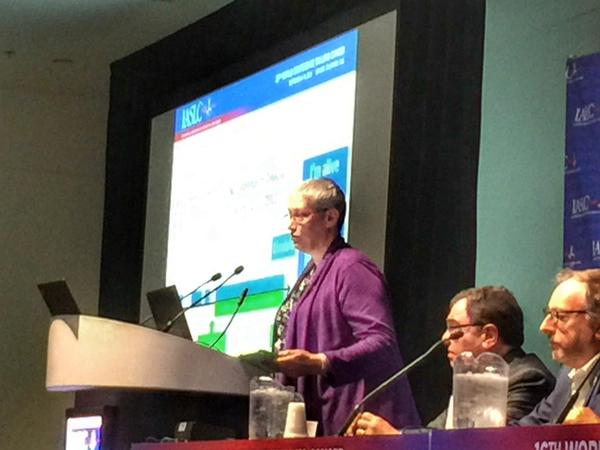
Earlier today (September 6, 2015) I gave this speech at the International Association for the Study of Lung Cancer (IASLC)  World Conference on Lung Cancer in Denver.  I’m pleased at the reception it received.
JFD speaking at WCLC2015 press conference

——————————————–


PRC 1

I appreciate IASLC including me in this press conference. They’ve been responsive to lung cancer patients and advocates, and have included the patient voice in several conferences. Patients and advocates participated in the planning process for this World Conference on Lung Cancer, as demonstrated by the number of patient and advocate presentation on the program. This is a first among major oncology conferences, and a step forward for engaged patients.

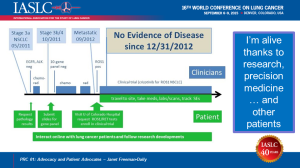
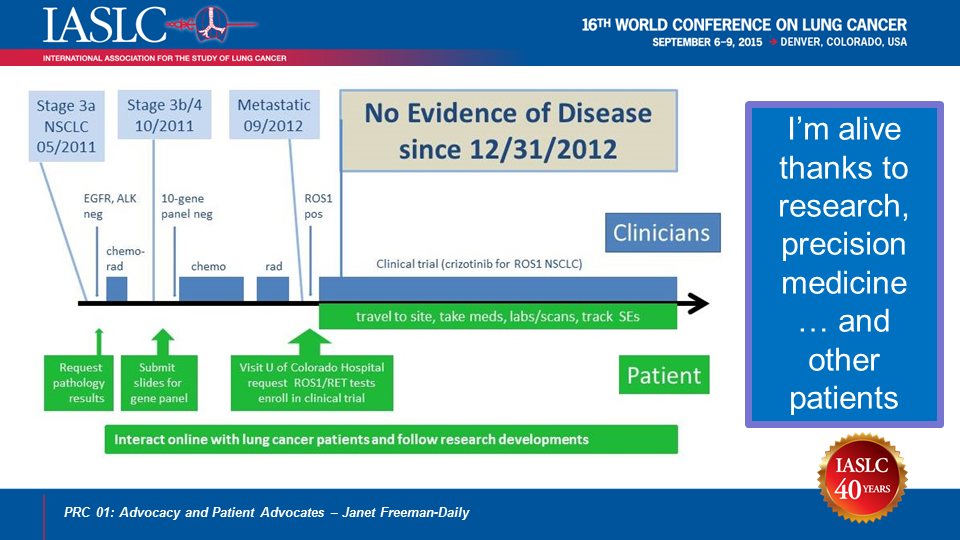
As the slide says, I’m alive thanks to research, precision medicine, and other patients. My lung cancer journey is a good example of the importance of research, hope, and engaged patients and advocates.

In early 2011, I had a nagging cough [hack hack]. To make my husband happy, I went to see my doctor. After two rounds of antibiotics, and weeks of diagnostic procedures, I was diagnosed with advanced lung cancer with a 3-inch tumor in my left lung. I never smoked anything – except a salmon.

My primary tumor and lymph nodes all responded to chemo and radiation, but two months later, I had a new cancerous hot spot by my collarbone. That became a 3-inch mass in three months. I had more chemo, followed by more radiation. A new scan showed all the known tumors were gone or dead. BUT … I had two new tumors in my other lung. I now had metastatic lung cancer. Whenever I stopped treatment, I had a new tumor within two months. My oncologist told me I would be on chemo for the rest of my life. Fortunately, just after I began treatment, a friend and fellow cancer patient recommended I join an online support group for lung cancer patients.

From other patients, I learned about molecular testing, targeted therapy, and clinical trials. I arranged to have my tissue tested, and based on the results, traveled from Seattle to Denver to enroll in a clinical trial. Thanks to this trial, I’ve outlived my original prognosis by years. I recently celebrated my four-year cancerversary, and have had No Evidence of Disease for 32 months and counting. I am not cured, but I am living well with lung cancer.

PRC 2

I am an epatient. Epatients are not just people who search for health information online. The term epatient applies to any patient who is equipped, engaged, empowered, or enabled. These patients can become equal partners in their own care, working together with healthcare providers to improve their outcomes.

In the online lung cancer community of over 20,000 people, I found patients with my type of lung cancer, on the same treatment, who understood exactly what I was feeling and experiencing. They answered questions I didn’t think to ask at doctors appointments while I was still in shock over my diagnosis. They suggested ways to cope with side effects at home. They prodded me to ask my doctor about issues I hadn’t thought were important. They were available in the wee hours when the fear was overwhelming. They shared online information resources from reliable authorities like the National Cancer Institute.

The information I learned online enabled me to become an interactive participant in my care. From other epatients, I learned to ask for my data, including radiology and pathology reports. I learned about treatment options and typical side effects. I learned about new molecular and genomic tissue testing that doctors in my home clinic did not know about. I learned how to find and participate in clinical trials. And I found hope. If I had not had access to other epatients, I would likely be dead now.

Preliminary studies indicate patient engagement and shared decision making can increase patient satisfaction and outcomes and reduce healthcare costs. Activated patients are less likely to be readmitted within 30 days of hospital discharge, less likely to have poor care coordination across healthcare providers, and less likely to lose confidence in their health care system.
PRC 3

Thanks to research and new treatments, more lung cancer patients are surviving longer and learning to live with lung cancer as a chronic illness. As you’ve heard, this disease still kills more people every year than the other top three cancers combined. Yet lung cancer receives fewer federal research dollars per death than any of those cancers. Why is that? Are lung cancer patients not worth saving?

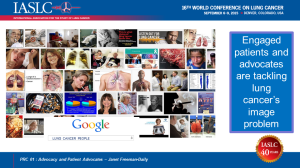
The answer becomes clear when you google the words “lung cancer people.” No throngs of ribboned supporters; few smiling survivors. You see damaged lungs, death … and cigarettes. Lung cancer has an image problem. The first question I hear when I mention my disease is: “Did you smoke?” People blame patients for getting lung cancer. The breast cancer community has changed how the world sees their disease. The lung cancer community must do the same. Two thirds of lung cancer patients – TWO THIRDS — either never smoked, like me, or quit smoking years ago.

Now that more lung cancer patients are benefitting from new treatments, we can speak out to raise awareness of other risk factors such as radon gas, air pollution, and workplace exposure; fight the stigma of lung cancer, and increase research funding so more of us can live. We are telling our stories and experiences through blogs, social media, and support communities. We are sharing our treatment data in online databases, and collaborating with clinicians and researchers via Lung Cancer Social Media (#LCSM) on Twitter.
PRC 4

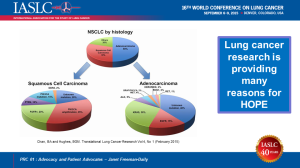
The new treatments and screening opportunities arising from research give patients like me many reasons for hope. Early last year, there were no additional clinical trials for people with my type of lung cancer. Now there are at least four other trials. In fact, there are now over 17 actionable mutations for lung cancer. Patients whose tumors have these genomic mutations have options for either approved treatments or clinical trials. In fact, more new treatments have been approved for lung cancer in the past four years than in the previous four decades.

Innovation in cancer care can help more patients get the best possible treatment with easy-to-access medical records for second opinions; accurate early detection methods; affordable genomic testing; simpler searches for clinical trials; new trial designs for small and remote populations; big data analysis of outliers; and more effective ways to share information and hope among all lung cancer patients as well as the public–including those who are not on the Internet.
PRC 5

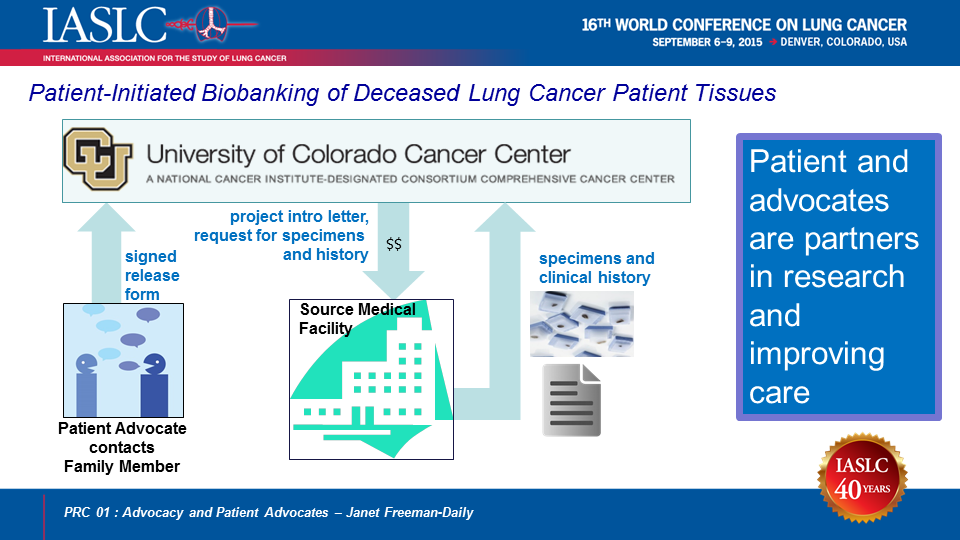
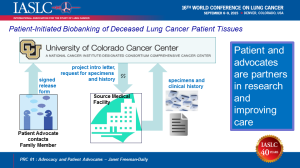
Engaged patients and advocates are working with clinicians and researchers to accelerate research and improve patient outcomes. Last year advocates were instrumental in obtaining Medicare coverage for lung cancer screening, and a group of lung cancer survivors helped change National Comprehensive Cancer Network guidelines for treatment of metastatic lung cancer. Patients and advocates are supporting the “Don’t Guess. Test.” campaign to encourage more patients to get genomic testing. At this conference, patients and advocates will be discussing their involvement in the NCI’s Lung-MAP precision medicine trial, establishment of support groups, a clinical trial to study lung cancer in young adults, and information that helps patients make choices for treatment and survivorship. In just the past two weeks, a research study began at the University of Colorado lung cancer SPORE to work with family members of patients who died of lung cancer to collect archived tumor tissue from community hospitals and provide it to lung cancer researchers so they can continue to provide hope for this disease. I initiated this project as the SPORE’s patient advocate with support of the Addario Patient and Caregiver Advisory Board.

Thank you for your interest in reporting on lung cancer research. Together we can raise awareness, spread hope, fight the stigma of lung cancer, and improve outcomes for all patients.