Finally! A article in a respected oncology journal suggests it’s time to consider lung cancer screening in never smokers.
Role of Low-Dose Computerized Tomography in Lung Cancer Screening among Never-Smokers (in Journal of Thoracic Oncology)
Home » Articles posted by Gray Connections (Page 11)

Finally! A article in a respected oncology journal suggests it’s time to consider lung cancer screening in never smokers.
Role of Low-Dose Computerized Tomography in Lung Cancer Screening among Never-Smokers (in Journal of Thoracic Oncology)
Finally! A published study offers proof that metastatic ALK+ lung cancer patients can live for YEARS thanks to targeted therapies.
This is phenomenal, considering that in 2011 (the year crizotinib was approved in the US for ALK+ non-small cell lung cancer, or ALK+ NSCLC) , the US SEER database listed average survival for metastatic non-small cell lung cancer at less than one year.
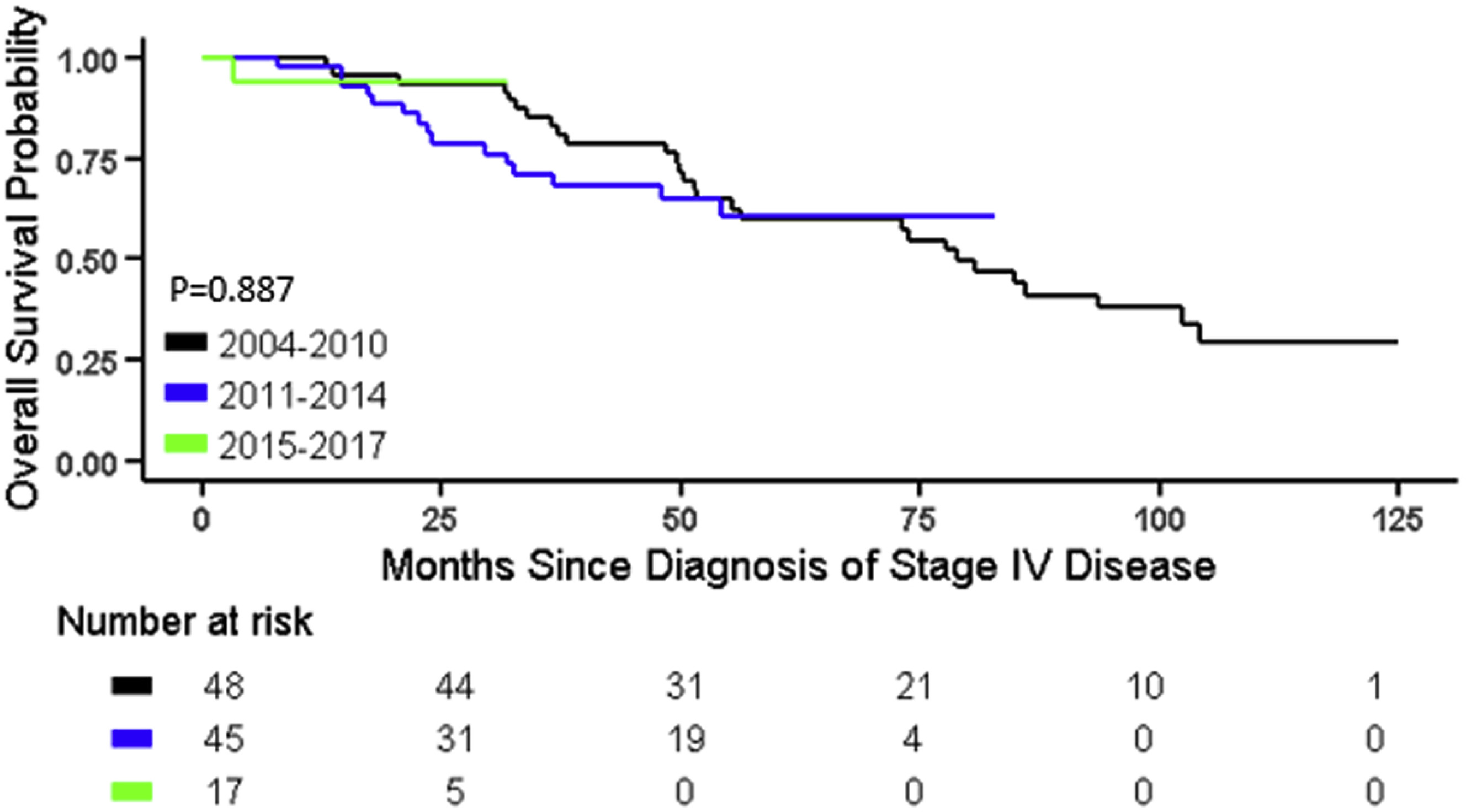
In this study of 110 patients at University of Colorado (one of the sites in the original clinical trial of crizotinib for ALK+ NSCLC), the median overall survival time from diagnosis of stage IV disease was 81 months. That’s 6.8 years.
Over six YEARS of survival. Woohoo! Note that this median survival (when 50% of the group remains alive) will be even longer for patients diagnosed after 2011, when crizotinib was approved.
Besides finding patients with stage IV ALK-positive NSCLC can have prolonged overall survival, the study also found:
Yay for cancer research that is helping more lung cancer patients live longer! You can read the complete article here.
Natural History and Factors Associated with Overall Survival in Stage IV ALK-Rearranged Non–Small Cell Lung Cancer
Jose M. Pacheco, MD et al, University of Colorado Cancer Center

Life as a lung cancer research advocate can require a lot of travel. This week I’m in Washington DC for two meetings.
Monday I participated as the sole patient advocate in the National Cancer Institute’s Small Cell Lung Cancer (SCLC) working group meeting, along with some of the top US researchers in this disease. The meeting will provide fodder for the NCI’s report to Congress about the Recalcitrant Cancers Act.
Thursday I’ll be one of several patient advocates at the National Institutes of Medicine for a meeting on data sharing, along with medical institutions, pharma, and healthcare payers. Data sharing in the electronic age involves more than just who can see your medical records. We patients and family members have already participated in several phone calls in preparation for this meeting. It will be interesting to hear what the other stakeholder groups think are the main barriers to data sharing, and what we should do about them.
In between, I’m trying to get caught up on expense reports and writing projects while adjusting to a new time zone. I hope my inputs make a enough difference for patients to make the travel worthwhile.
Original post is on The ROS1ders website
I’m Janet Freeman-Daily, a cofounder of The ROS1ders. I’m writing this post in response to some of the comments we’ve seen recently in our private Facebook group “ROS1 Positive (ROS1+) Cancer.”
Many of our members who have ROS1+ cancers take the targeted therapy crizotinib (Xalkori), a tyrosine kinase inhibitor (TKI). It was approved by the US FDA for ALK+ non-small cell lung cancer (NSCLC) in 2011, and for ROS1+ NSCLC in 2016.
Many ALK+ and ROS1+ NSCLC patients have had long-term stability or no evidence of disease (NED) on crizotinib, and are tolerating it well. Some of these patients suggested they might “take a vacation” from crizotinib for a while, as some people do with chemo. They think this could help them avoid developing resistance to crizotinib (which could allow them to stay on the drug longer), and that they can start taking the drug again later if the cancer returns. Their oncologist might even agree with this idea. But …
PLEASE — If crizotinib (Xalkori) is working for you and you can tolerate it, consult a ROS1 expert before stopping treatment!
If your doctor tells you should stop taking crizotinib for a medical reason (like a severe side effect or toxicity), or temporarily during surgery or radiation, you should follow their advice. But don’t stop taking crizotinib just because you want a drug vacation.
ROS1+ cancer is a rare disease. Oncologists who have seen no or few ROS1 patients usually haven’t followed the fast-moving research into this disease.
Dr. Ross Camidge and Dr Robert Doebeleare among a handful of doctors who have treated dozens of ROS1+ and ALK+ patients with crizotinib. Globally, they are considered experts in ROS1+ NSCLC. Both have told me they think it’s a bad idea for patients to stop taking Xalkori just because they’re NED or stable on the drug. Below are the reasons they gave me.
Each patient has the right to make up their own mind about their treatment, In my case, I have had no evidence of disease on crizotinib for 6 years. When I asked about stopping crizotinib, Dr. Camidge has told me that he does not want me to stop taking my cancer drug. I’m going with his expert opinion.
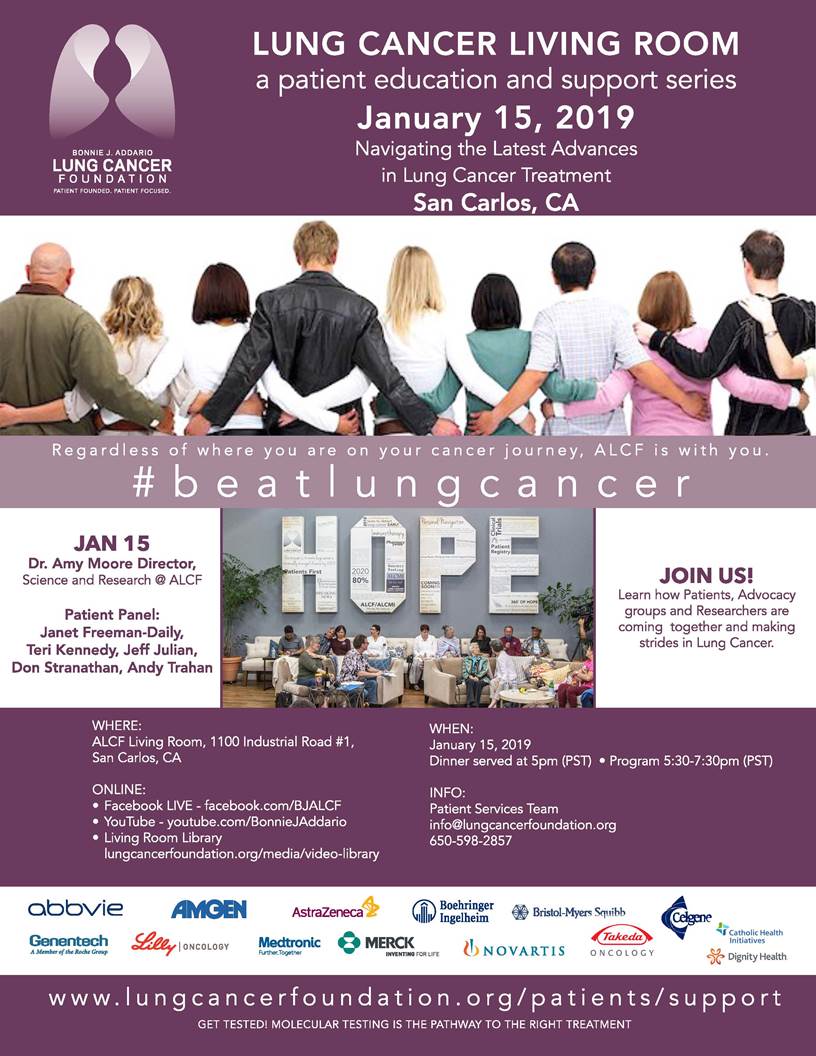
Please join lung cancer patients/survivors Teri Kennedy, Jeff Julian, Don Stranathan, Andy Trahan, and me, along with Dr. Amy Moore (Director of Science and Research, Bonnie J. Addario Lung Cancer Foundation, also know as ALCF) Tuesday January 15, 2019 5:30-7:30 pm Pacific Time for a discussion on “Navigating the Latest Advances in Lung Cancer Treatment.” I’ll have an opportunity to talk about The ROS1ders and the research project we created in partnership with ALCF.
Join us in person in San Carlos, California, watch live on Facebook, or watch later on YouTube or in the Living Room Library.

However, not all cancers can be detected using a PET scan and radioactive glucose. This means not all cancers suck up sugar faster than normal cells. Reducing the available supply of sugar would probably not affect such cancer cells.

Awesome news for Lung Cancer Awareness Month! A relatively simple blood test developed at MD Anderson could help identify those at high risk for developing lung cancer (independent of smoking history). This could lead to refining current lung cancer screening eligibility criteria. #LCAM
Blood Test to Identify Individuals for Lung Cancer Screening (Medscape)
I’ll be attending the annual World Conference on Lung Cancer (#WCLC2018) in Toronto Canada later this month. For those who are interested, I will be making two presentations. Hope I’ll see you in the audience!
OA10 – Right Patient, Right Target & Right Drug – Novel Treatments and Research Partnerships
Tuesday 9/25 10:00 AM to 12:00 PM
Oral Abstract Session in the Targeted Therapy Track
Moderated by Howard (Jack) West, Jyoti Patel
ES05 – Collaboration Between Stakeholders to Improve Lung Cancer Research
Tuesday 9/25 15:15 PM to 16:45 PM
Education Session in Advocacy Track
Moderated by Bonnie Addario, Toshiyuki Sawa

Are you from Oregon? You may be losing a very important tool to help you survive cancer. Please stand up to keep providing Medicaid coverage of FDA approved comprehensive genomic sequencing. Many lives depend on it!
OREGON CALL TO ACTION!
The state of Oregon Health Authority Health Evidence Review Commission (HERC) recently released proposed guidance to not provide coverage for the use of FDA-Approved Next Generation Sequencing (NGS) tests for cancer patients in the state with Medicaid.
A copy of the comments submitted by LUNGevity Foundation to the HERC can be found here.
Thanks to Matt Ellefson at SURVIVEiT! for helping to make this need known.
The journal Trends in Neurosciences published an article June 12, 2018 calling for more research into cognitive impairment caused by cancer treatment. Unfortunately, it’s behind a paywall. To get an overview of the content, read Cancer Today’s July 18, 2018 article “What is ‘Chemobrain’?” , which is an interview the article’s lead author, Todd Horowitz of the National Cancer Institute.