Neuropsych Serendipity

I visited the Virginia Mason Neuropsychology and Rehabilitation department today for a consult about dealing with my chemobrain symptoms.

I expected the appointment to be an introductory session: the counselor and I would spend the time recounting my cancer history, detailing my symptoms, explaining the chemobrain study in which I participated at Fred Hutchinson Cancer Research Center last year, learning about therapy options, and discussing possible neurocognitive testing.

Turns out the Ph.D. psychologist I saw was the lead researcher for last year’s chemobrain study!

She knew me.  She knew my history. She had access to my previous neurocognitive results from the trial.  The available therapy options were the techniques she and her team had taught me last year.

So, we spent a VERY productive hour talking about coping strategies for my particular symptoms and situations.

Might this be cosmic payback for volunteering for clinical studies?

Serendipity rocks.


brain 2 graphic

Weighing In (Reluctantly)

I hoped it wouldn’t happen.  But it did.

I stepped on the bathroom scale, and my weight was higher than “that number.”  You know, that number all women have in their heads (even if we say we don’t), the one I can’t possibly weigh because it absolutely, positively, undeniably means I’ve hit an unhealthy benchmark.

I’ve tried to be patient with myself.  I know much of the sixty pounds I’ve gained since my cancer diagnosis can be blamed on chemo-induced menopause, metabolic changes, reduced activity due to side effects of lung cancer treatment, a year of steroids, and edema caused by my current targeted therapy, crizotinib.  (Notice I’m not mentioning my fondness for chocolate—allow me the comfort of a small rationalization.)

Yet the scale kept creeping upward until it hit “that number” a week ago.  I suppose I subconsciously acknowledged the possibility when I donated all my large-sized clothes a couple of months ago, when I had to buy 2X jeans to be comfortable.

I had hoped I could ignore it, that I could just say I’m happy that I’m still alive three years after my cancer went metastatic, that I could settle for being “that number.”  But BMI doesn’t lie.  My every-8-week PET scans consistently show fatty liver.  I am not just overweight.  I am OBESE, and putting myself at risk for lots of nasty health conditions. This doesn’t make a whole lot of sense, given I’ve worked so hard to beat the lung cancer odds.  All my cancer doctors say it’s OK if I want to lose weight intentionally, in a reasonable manner.

Over a decade ago, I lost 50# and kept most of it off until I got cancer.  However, I’ve not had much success with moderate measures since my cancer diagnosis.  I’m going to have to be strict with myself, and keep it going for months.  I’m not looking forward to it, but that’s how it is.

So into the weight loss trenches I go.  Tossing out the tempting goodies and hiding the Halloween treats.  Aiming to eliminate simple carbohydrates.  Saying no to some foods I prepare for my family.  Tracking my fat, carbs and protein with the LoseIt app on my phone.  Tracking my steps and calories burned with my Fitbit band (good thing the two devices talk to each other).  Keeping my calorie deficit above 500 calories per day.  Exercising at a moderate pace over 30 minutes per day.

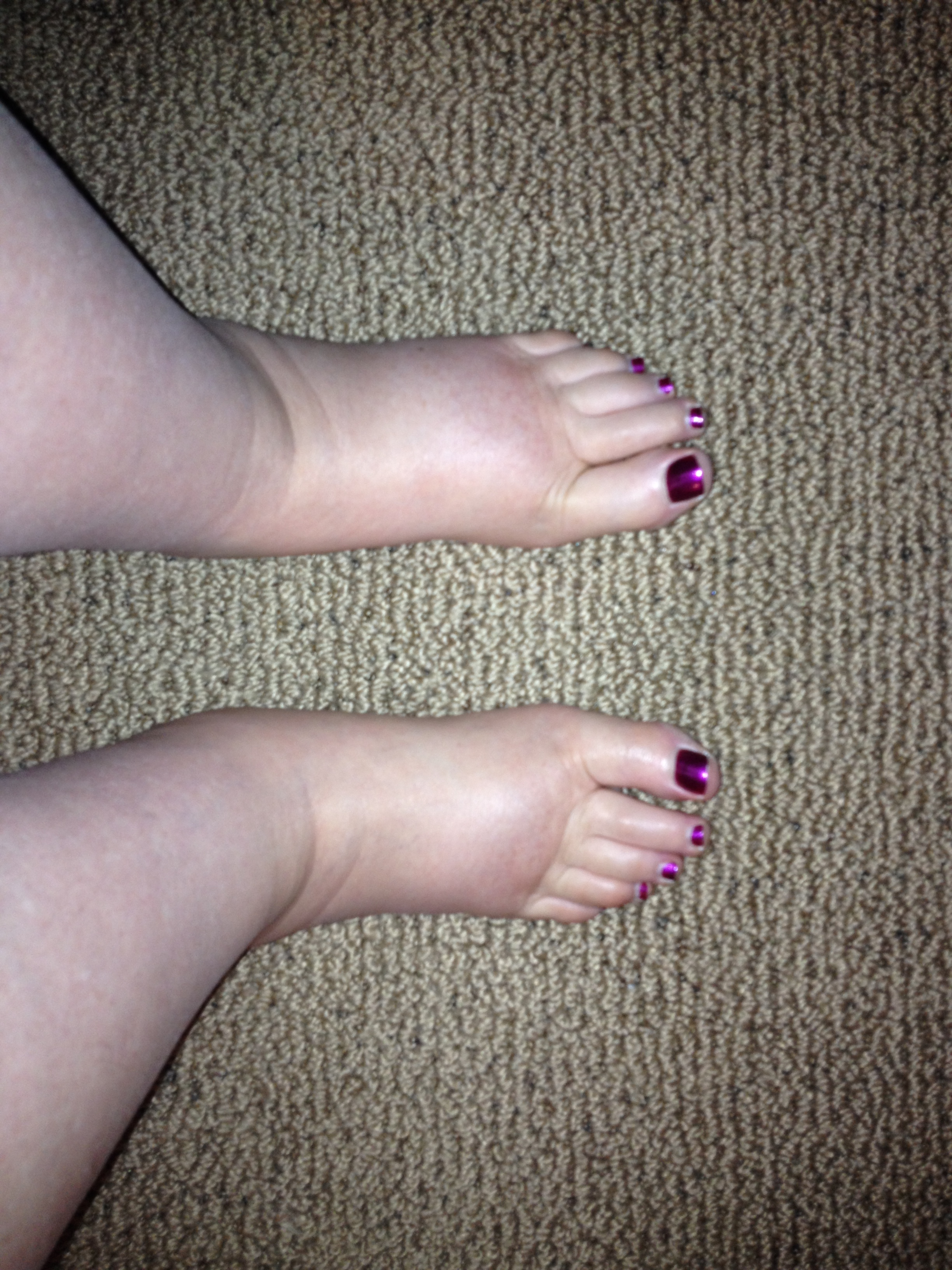
You’d think my body would appreciate this.  You’d think it would reward me by showing at least a little weight loss after the first few days of self-discipline.  Instead, I gained.  But I have a legitimate excuse, honest:

Fat piggies (2014-09-30)

Apparently my edema doesn’t agree with my new diet.  Sigh.

Why I’m Behind on My Patient Advocacy Projects

Today is a relatively typical day.  I’ve been up for 2.5 hours.  I haven’t tackled any major projects yet. Why?

6:50–7:20 AM
Wake up a few minutes before the alarm, take anti-reflux pill, check email, get up, step on scale, be bummed (again) about my post-cancer-treatment weight gain, resolve to spend at least 30 minutes on the treadmill this afternoon, brush cats

7:20-8:20 AM
Get dressed, help with family breakfast, help son get ready for school, help hubby with shopping list, eat breakfast (had to wait an hour after taking anti-reflux pill), log food intake in LoseIt! (only 360 calories for breakfast–yay!), take cancer pills, check Twitter, pet cats

8:20-8:45 AM
Load dishwasher, have several writing ideas flood into my head while washing big pots, clean up mess I made on the counter while distracted by writing ideas, realize my chemobrain has forgotten all writing ideas, play with cats

8:45-9:20 AM
Check Facebook while drinking milk/coffee, look at pile of urgent family paperwork, decide I should start on a lung cancer advocacy article, go see what cat is playing with, write blog post instead (with feline oversight)

But the day is young, the cats are now napping, and coffee is kicking in.  I still have hope I shall actually accomplish something today.

Oh, look, the hummingbird feeder is empty …


Why Aren’t Never Smokers Screened for Lung Cancer with LDCT?

As you’ve probably heard, 25% of lung cancer patients worldwide are never smokers.  Like all lung cancer patients, the majority of never smoker LC patients are diagnosed with metastatic lung cancer, even though they often have no real symptoms.  How come lung cancer screening guidelines don’t suggest never smokers get screened for lung cancer?

Well, it’s all a matter of risk reduction.

Medical practitioners (and those who pay for their services) do not like to run a medical test when the patient might be put at risk for little benefit.  This is a concern if a test is not 100% accurate and follow-up procedures for a positive result are potentially invasive.  This is the situation with LDCT screening.  With today’s technology, a lung cancer diagnosis can only be confirmed with a biopsy, which is invasive and does carry some risk.  And, lung biopsies are not guaranteed to detect a cancer, even if one is present.  Lung cancer screening with low dose CT might generate a false positive (meaning the test says the patient has lung cancer when they really don’t). False positives could result in unnecessary invasive follow-up procedures with some risk to the patient.

For this reason, LDCT screening is only recommended for those who are at HIGH RISK for lung cancer. At this time, “high risk for lung cancer” means current or past heavy smoking history and age 55 to 75. These risk factors were not chosen due to stigma or discrimination. To date, these are the only two risk factor scientifically demonstrated to have a HIGH correlation with lung cancer in several studies. A very large clinical trial (the National Lung Screening Trial, or NLST) showed people who had these risk factors were likely to benefit from lung cancer screening with LDCT despite the risks of false positives.

For these patients at high risk for lung cancer, the benefits of screening outweigh the risks.  LDCT screening reduced their lung cancer deaths by 20% compared to screening with x-rays, simply by detecting the lung cancer before it spread and getting it treated early.  By the way, NO deaths due to LDCT screening occurred in the 53,000+ participants enrolled in the NLST.

Since lung cancer occurs in a low percentage of the never smoker population, the risk of screening doesn’t make sense for never smokers unless they have another high risk factor.

We know of other risk factors associated with lung cancer–radon gas in homes, air pollution, previous cancer treatments (especially radiation treatment to the lungs), exposure to certain hazardous materials, even an inherited gene.  However, analysis to date hasn’t shown any of these factors have as strong a correlation with lung cancer, possibly because it’s harder to track those risk factors in a controlled study.  As we learn more about how lung cancers get started, and how they differ from each other, we are likely to discover more HIGH risk factors that can be validated by objective analysis.

This definition of “high risk” and this method of screening are just the first steps in early detection for lung cancer. As more high risk factors (like the inherited version of the T790M gene) are validated by objective studies, people who have those risk factors should also be included in covered lung cancer screening, whether or not they have a smoking history.

As more accurate and less expensive lung cancer screening technologies become available, testing will become more accessible to everyone.  Someday–hopefully in our lifetimes–accurate lung cancer screening will be as easy as a blood test or spitting into a test tube, without the need for a biopsy.

So keep supporting more research!  We need accurate, affordable early detection of lung cancer in never smokers.

Why Advocates Seem to Talk So Much About Lung Cancer Screening

On Thursday, September 25th, 8PM ET/ 5PM PT, #LCSM Chat will discuss the existing barriers in lung cancer screening in late 2014.

Recently I’ve heard some lung cancer patients say they feel abandoned by lung cancer advocacy groups.  These patients think the groups are focusing too much on early detection with lung cancer screening, and have abandoned those who already have the disease.

As a metastatic lung cancer patient, I don’t feel abandoned.  I feel lung cancer advocacy has never been more vibrant or successful than it’s been in the past year.  In the past year, lung cancer advocacy has featured:

  • Wide-spread national media coverage about lung cancer: Valerie Harper on “Dancing with the Stars” and other national shows, national news coverage of testimony on Capitol Hill about the need for lung cancer research funding, the “Turquoise Takeover” of prominent landmarks, and Molly Golbon’s cancer journey documented on NBC, for example.
  • Print and online articles discussing the need to eliminate lung cancer stigma and featuring the hope offered by new treatments and clinical trials.
  • More advocates, patients, doctors, and researchers posting and collaborating with the #LCSM hashtag on Twitter.
  • An increase in lung cancer bloggers compared to last year.

The focus of lung cancer advocacy hasn’t shifted away from research or treatments.  By my count, there are more new treatment options offered or announced this year for a wider range of lung cancer types than in any previous year: two new FDA-approved targeted therapies,  immunotherapy trials for all lung cancer types, an innovative new trial for squamous cell LC, a new study of Young Lung Cancer, new targeted drugs for mutations, newly-discovered mutations … the list is long.

Lung cancer screening with LDCT is a big deal because it is projected to save 18,000 lives PER YEAR by catching lung cancer before it spreads.  That’s more lives than most new targeted lung cancer treatments will save in a year.

We’re seeing more public discussion of lung cancer screening than treatments for four reasons:

(1) Lung cancer screening with LDCT gained major support at the end of 2013.
In December 2013, the US Preventative Services Task Force recommended lung cancer screening with LDCT.  As a result, the ACA now requires private insurance plans to cover LDCT as of January 2015.

(2) LDCT is becoming more available.
More hospitals and clinics are beginning to offer LC screening with LDCT, and are advertising that fact.

(3) The need for support is urgent.
The majority of lung cancer patients are over age 65.  In February, the Centers for Medicare and Medicaid (CMS) began evaluating whether to provide insurance coverage for LC screening with LDCT.  CMS will decide in November.   We must act NOW.

(4) Individual advocates have a chance to make a difference that will save lives.
The CMS decision is being made by a branch of the US government.  Our voices are needed to ensure those over 65 have access to LC screening, since most of them have Medicare as their primary insurance.  Lung cancer advocacy organizations are leading the charge.

The lung cancer community is still dedicated to raising awareness for ALL lung cancer patients and increasing research that will allow more lung cancer patients to be cured or to live with lung cancer as a chronic illness.   Advocating for LC screening is just one way to help more patients survive.  It’s part of the 2014 sea change in lung cancer.

Hyperintensities

Last Monday and Tuesday, September 8-9, I was in Denver for my clinical trial at University of Colorado Hospital (UCH). I had my once-every-eight-weeks PET-CT scan along with a once-every-six-months brain MRI.

I’m happy to report that both scans were clean. I’m now twenty months with No Evidence of Disease of metastatic lung cancer.  That Xalkori is great stuff for those of us with ROS1 NSCLC!

I’ve been in my clinical trial for 22 months, and the trial has been running for over three years. The medical journal article summarizing trial results is due out sometime in the next two weeks.  Judging from the response to Xalkori of several ROS1ers I’ve met online, I expect the news will be positive.  Can’t wait to read it–I’ll probably hustle to the University of Washington Library and download it first chance I get.  Yes, besides being a science geek, I’m an INTENSE science geek.  One of those “complete response” lines on the waterfall plot will be ME!

The scanxiety for this visit was different than my previous visits to Denver. It’s been a very busy summer for me.  As I posted previously, before flying to Denver I attended the Stanford Medicine X conference in Palo Alto September 4-7.  I gave my speech on lung cancer stigma on the main stage Sunday morning, left the conference a couple of hours early to fly to Denver Sunday night, and had my clinical trial labs and scans Monday.  I was so focused on the conference and my speech that I barely noticed any scanxiety –it was difficult to distinguish from the intensity that precedes my speaking publicly.  The only real indication of any anxiety was my increasing inability to focus during the conference and three hours of lost sleep the first night in Palo Alto (although my husband might have a different perspective about my intensity in the days before I flew to Palo Alto).

A few other things were different about this clinic visit:

  • On the day of my visit, I spent an hour talking with the American Lung Association of Colorado’s office about LUNG FORCE.
  • A pleasant UCH oncology Fellow conducted my clinic visit. My primary oncologist Dr. Camidge came in to chat with us both for a few minutes afterwards–he knows I always have a list of questions for him. We talked about an exciting new clinical trial design at UCH for FGFR-positive NSCLC (more on that in a future post).
  • UCH had recently installed new software for their MRI machine, so the report of my brain MRI was not available at the time of my clinic visit. However, Dr. Camidge and the Fellow both reviewed the scan itself and reassured me it was normal.
  • After Dr. Camidge completed his clinic hours on Tuesday, he joined me, Dora (an online friend of mine who is also his lung cancer patient), and Dora’s husband Bill for a chat at a restaurant near UCH. How many world-renown lung cancer doctors do that? Well, yes, I did bribe him with a cup of coffee and a pastry. Here’s a selfie we took:

selfie with Camidge

Something else was also new to me after this clinic visit. I had a headache after I arrived home.  Since I’d just had a clean brain scan two days before, I knew the cause could not possibly be a brain met.  Somehow this reinforced the feeling that I was more a normal person than a cancer patient at this point.  Sometimes a headache is just a headache.

The brain MRI report appeared in our mail yesterday. It didn’t say much except “normal,” but a few terms were new to me.  I was Googling the new terms when an infolinks box popped up with this message:

“Searching for T2 hyperintensities in white matter? Try Kelley Blue Book!”

Maybe Kelley Blue Book can tell me how my hyperintensities affect the resale value of my brain.

My 2014 Stanford Medicine X Experience (Sep 4-7)

I’m in Palo Alto, CA for four days attending the Stanford Medicine X (#MedX) conference, which focuses on emerging health-care technology and patient-centered medicine. The first day was a pre-conference workshop on Partnering for Health in clinical trials.

I’m having a blast! It’s like a giant TweetUp of patient advocates, healthcare providers, and technology innovators. I’ve met a dozen people that I’d previously only known online. Several of them are patients who are healthcare bloggers and tweetchat moderators like me and have diseases different than mine (diabetes, arthritis, lupus, other cancers, etc.) My roommate is a delightful young pre-med student who happens to love chocolate, and who has had no sense of smell for as long as she can remember (which is fortuitous, considering one of my Xalkori side effects).

Presentations and panels address the evolving nature of healthcare, with a strong emphasis on patient involvement. Some topics:
–How to include the patient voice when designing clinical trials
–How do patients who are not tech savvy (“no smartphone patients”) obtain medical records and learn about their disease?
–Technology to assist those with disabilities
–New apps and devices for improving outcomes (e.g., a device that tracks when bedridden patients need to be turned to avoid bedsores)
–The value of relationships in promoting health
–Training medical students and doctors to incorporate empathy in patient care and ask the patient what is important to them
–Patients self-tracking their health data (e.g., diabetes blood levels and insulin doses)
–Which metrics to use when choosing a doctor, and where to find them, and new ways to gather the info

At least half the people in the audience are interacting with their smartphones, laptops and tablets during the event. I can see how all the online activity is extending the reach of the conference, which is also being streamed live (except when the server crashes from overwhelming demand). It is fascinating to watch the presentations and simultaneously read a very active #MedX Twitter stream that summarizes, critiques and expands on what is being said.

I’ve seen some cool vendor demos also, like 3D printing of medical models and devices:

IMG_6646.JPG

My speech is tomorrow (Sunday September 7) at 10:10 AM PDT. Hope you’ll be watching via Medicine X Global Access! If you miss it, it will be posted online eventually.

I fly to Denver Sunday evening for my eight-week scan on Monday. I must admit this conference is a great scanxiety distraction.

Relax, Recoup and Regroup

Today is my day to relax, recoup and regroup.  Just for today.

Yesterday I pitched, hit, threw, and ran (a very short distance) in a relaxed, laughter-filled softball game at my 40th high school reunion in Tacoma’s Cheney Stadium.  Both during the game and the reunion dinner in the evening, I had a chance to visit with people who grew up with me.  I appreciated renewing and reinforcing friendships, especially since I likely will not be around for my 50th reunion.  As the “Faithful Scribe” of the Reunion and Softball Committees, it was a wonderful to see so many people enjoy the months of work that went into making these events happen.  I was also surprised (and pleased) to learn how many classmates have been following my lung cancer journey on my blog.  It was a terrific day!

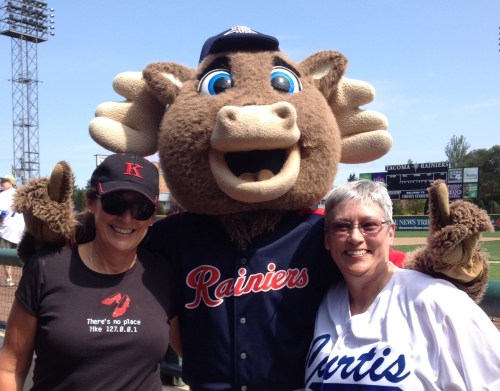
My sister Karen and me with Rhubarb, mascot of Tacoma Rainiers Baseball in Cheney Stadium

Now that the reunion is over, I’ve hit a turning point in the summer.  The looming deadlines imposed by outside events and projects have been met.  In addition to helping plan my high school reunion, I have been up to my eyeballs in lung cancer patient advocacy projects over the past three months:  working on the first-ever LUNG FORCE walk, collaborating with a group of metastatic patients on changes in lung cancer treatment guidelines, attending the big ASCO clinical oncology meeting in Chicago, preparing and giving speeches at conferences and events, writing articles and guest blog posts, and generating panel proposals about lung cancer for upcoming medical conferences.  Somewhere in there, I wrote blog posts, contributed to #LCSM Chat activities, researched new lung cancer developments, and communicated online with others in the lung cancer community.  I’m reminded why I’ve been feeling stressed this summer!

So, just for today, I’m resting up from all that exercise and socializing at the reunion, as well as reviewing what I want to do next.  I still have a long list of projects that don’t have externally-imposed deadlines.  I don’t handle pressure as well as I did before cancer (not that I handled it particularly well before) and need to wind down a bit and set priorities before jumping back into action.

And I MUST jump back into action.  I feel a pressing need to complete family and advocacy tasks ASAP, while I am able.  Even though I’m feeling pretty good right now, I can’t forget that my cancer might recur at any time, and people—including my friends—are dying of this disease every day.

But for now, I’ll bask in the fact that I just wrote blog post #100 for Gray Connections.

Tomorrow hubby Gerry and I start cleaning out the garage for the first time in 22 years.  No stress there.

Pondering Resources for Affordable Healthcare

I’ve been thinking about the US healthcare system thanks to a fascinating Facebook discussion with other Stanford Medicine X epatients.  Each of us are too familiar with the strengths and weaknesses of the US healthcare system and its mix of insurers: Medicare, employers, and private insurance companies.

My focus is this:  whatever healthcare system we decide to have in the US, we need to be able to pay for it.  The reality is that healthcare resources are not unlimited.

Whether or not a healthcare system is government run and/or devoted to serving the good of all people, the resources required to operate the healthcare system are driven by a free market.  Governments and nonprofits fund only a small percentage of healthcare research and development.  Healthcare providers still choose what type of work they want to do and where they want to live in order to enjoy life and perhaps support a family.  For-profit companies still choose when and how to develop and manufacture drugs and technology, which are required to provide treatment and services. The government can’t afford to fund and/or control all these resources completely (even if some think it should).

Even if healthcare were universally acknowledged (and it isn’t) to be a basic human right, any comprehensive healthcare system will still have to ration healthcare services such as time with providers, technology, and treatments.  As a metastatic cancer patient, I am acutely aware of the rising cost of cancer care.  The drug keeping me alive would cost about $10,000 per month if I weren’t getting it free in a clinical trial.  Even if we acknowledge that everyone deserves to receive the treatments they need, we simply can’t afford to treat everyone with leading edge medical care at those prices.

A good example of this quandary is the new drug Sovaldi, which offers a breakthrough and long-awaited cure for Hepatitis C.    More than 3.2 million people are chronically infected with hepatitis C virus in the US.  A cure with Sovaldi currently costs about $84,000 per person.  A little math shows curing all the US patients would cost around $270 billion–and the cure is not permanent (people can get reinfected with the virus). Having health insurance cover that $270 billion could break the healthcare system and put premiums out of reach for many, no matter whether the system is structured as private pay, single payer (government health system), or a mixture of the two. So who gets the treatment?

Other countries with single payer, government-funded health plans solve this problem by limiting services they cover.  For instance, the National Health Service in the UK will not pay for the lung cancer drug, crizotinib (approximately $10k/mo), even though the drug can give a small population of lung cancer patients years of quality time.  When the government must consider how to use its resources to provide the best care for the nation as a whole, they decided the cost to keep that small group of cancer patients alive for only a year or two is too high.  So people who can afford crizotinib in the UK pay privately, creating a two-tiered health system.

You can’t duck the issue by simply saying, “Get rid of the gatekeeper insurance companies.”  Because healthcare resources are limited, and provided by a market economy, SOMEONE or SOMETHING is going to be the gatekeeper.  Who should it be?  Insurance companies? Government?  Healthcare providers?  Medical societies? Pharmaceutical companies?  Companies that manufacture generic drugs?  Research institutions?  Individuals?

To me, the most important questions are these:

1. What guidelines should our healthcare system use to determine who gets healthcare, so that everyone is treated in the same fair and ethical manner?

2. Who gets to make and enforce those decisions?

You might want to learn more about these questions.  The next person who declares bankruptcy due to a health crisis such as a heart attack or metastatic cancer may be you.  Or your child.

My Worst Speech EVER

Last night I gave the worst speech of my life.  Everything that could go wrong, did.

I misunderstood the start time, and arrived late to the venue. Many of the seats in the once-filled room were now empty. People were partying audibly in the hallway.  I walked out onto the empty stage and discovered the fly of my pants was open.  I turned around to zip it, and when I turned back, a large potted plant blocked me.  I stepped around the plant to start speaking, and immediately began stammering nonsense.  An audience member in the front row imitated me and laughed. I finally found my words, but they were somewhere in the middle of my talk– everything was out of sequence.  I couldn’t find my place in my notes. Another audience member began lecturing about what I was doing wrong, and I had to ask him to be quiet so I could continue.  As I spoke, people stood up and walked out.  When I finished, none of the few remaining attendees clapped or looked at me.  I walked out of the building to find people on the street commenting to each other about how bad my speech had been.

I completely failed to deliver an effective speech.  And …

The world did not end. Life continued.

Living with metastatic cancer gives one a different perspective about small things like failure.  I don’t want to waste precious time fretting over what hasn’t gone right in my life.

Failure won’t kill me. It just teaches me what to do better the next time.

Like not having spicy barbeque sauce on a snack before bed.  It gives me weird dreams.  I’d rather not have that dream again.*
*Added that last sentence about 5 hours after the original post — evidently people didn’t catch my hint that this was a dream.  Sorry I was too subtle.  I don’t often hear that adjective applied to me!