#LCSM Chat topic 2/25: Communicating patient goals and values for #lungcancer treatment


This is reblogged with permission from the LCSM Chat website.

———————–

The best lung cancer care considers the patient’s goals and values when choosing a treatment. However, identifying and communicating those goals is not always a straightforward process for either the care provider or the patient.  

This week’s #LCSM Chat explores the process of communicating patient goals and values. Care providers need to know how to elicit them. Patients (even those who want to leave treatment decisions entirely to their doctors) must be able to identify and express them, and, if need be, initiate a conversation about them.  

Choosing the right treatment and care for a lung cancer patient is a matter of weighing risks of side effects versus evidence that the treatment has a good chance of success. Physical side effects can run the gamut from mildly annoying tummy upset to life-threatening organ failure. Yet sometimes a drug that causes severe side effects might result in cure or prolonged No Evidence of Disease. While the doctor or other care provider can learn about the risks and benefits for specific treatments from medical literature, only the patient knows what risks they are willing to accept to achieve their individual treatment goals. 

Willingness to tolerate risks varies from patient to patient. Some patients (perhaps those with small children) might favor an aggressive new treatment with the goal of living as long as possible regardless of side effects. Others (perhaps those who have additional health problems that would be dangerously aggravated by cancer treatment) may choose to forego active treatment and aim to be comfortable enough to attend a dear friend’s wedding in six months.  

In addition to physical side effects, patients also have financial, logistic, cultural and family concerns. Although it would be wonderful if all cancer patients had sufficient resources to access the most effective treatment options and the best care, we know this is not the case. Some patients must make treatment choices based on their ability to pay or to travel to a treatment site–a cancer center may not covered by the patient’s insurance, or may be hundreds of miles away. Unfortunately, bankruptcy is not a rare side effect of cancer treatment.  

The discussion of patient goals and values must continue throughout a patient’s lung cancer treatment, because patient preferences may change over time. An early stage patient might choose to be aggressive in their first-line treatment in hopes of a cure. Yet that same patient may find that after their cancer has become metastatic and they have had three different aggressive cancer treatments, they hesitate to try another treatment likely to have severe side effects. 

Some patients are comfortable trusting their doctors to determine whether the potential benefits of a treatment are worth the potential side effects, while other patients prefer to participate in shared decision making. Both approaches are valid choices, but in both cases, one would hope that one’s doctors would consider each patient’s goals and values when weighing treatment options.  

However, the process each care provider uses to determine patient goals and values is far from standardized. It is not a skill that has been (or is currently) taught in most medical schools. Sometimes the process doesn’t happen. 

During our chat on February 25 at 8 PM Eastern (5 PM Pacific), moderator Janet Freeman-Daily (@JFreemanDaily) will lead the discussion about communicating patient goals & values for lung cancer treatment using these topic questions: 

  • T1: What are examples of patient goals & values that would be helpful in discussions of #cancer treatment? #lcsm
  • T2: How can we encourage patients (including those who want to leave decisions to docs) to think about treatment goals & values? #lcsm
  • T3: How might care providers solicit patients goals & values for #lungcancer treatment? Are any topics (e.g., cost) off limits? #lcsm
  • T4: How might patients initiate the discussion of their goals and values if their #lungcancer care provider doesn’t ask? #lcsm
  • T5: How can we encourage discussions of goals and values between #lungcancer care providers and patients? #lcsm

We hope you will join the 2/25 chat. Remember to add the hashtag #LCSM to your tweets during the chat so other chat participants can see them. For more info, check out how to participate in #LCSM Chat. If you can’t join us, please leave your comments below.   

References

“Patient-centered: providing care that is respectful of and responsive to in­dividual patient preferences, needs, and values, and ensuring that patient values guide all clinical decisions.”  Institute of Medicine, CROSSING THE QUALITY CHASM: A NEW HEALTH SYSTEM FOR THE 21ST CENTURY, p. 3

Patient-Centered Communication and Shared Decision Making,” National Academies Committee on Improving the Quality of Cancer Care, Delivering High-Quality Cancer Care, Chapter 3.

Help lung cancer doctors learn about patient decision making

decision making

If you are patient with lung cancer, or a caregiver of a patient with lung cancer, please consider completing this 15-minute survey. It was created by Dr. Laurie Gaspar, a radiation oncologist at the University of Colorado, to gather information about:

– How prepared patients are for making difficult decisions?
– How involved patients are in the decision process?
– What would help to improve the decision making process?

The study results will help doctors, patients, and caregivers understand how the process of making decisions about lung cancer treatment and care might improved.

The survey is here:

Looking forward: 2016 AACR Annual Meeting and the Scientist-Survivor Program

Microscope

I recently learned I was selected to participate in the American Association of Cancer Research (AACR) 2016 Scientist-Survivor Program!  I’m excited to be attending the AACR Annual Meeting this April in New Orleans.  Thanks to the Bonnie J. Addario Lung Cancer Foundation for sponsoring my application.
I’m looking forward to networking with researchers as well as meeting advocates for other types of cancers to discuss their work.  I’ll also be presenting a research poster on Lung Cancer Social Media (#LCSM) on Twitter, which offer a unique opportunity to connect with all types of stakeholders in the lung cancer community — patients, caregivers, healthcare providers, researchers, hospitals, pharmaceutical companies, advocacy groups, and insurance payers.  Afterwards I plan to blog about the experience and share some of the exciting research presented at the meeting.
After the meeting, I’m going to have a few days vacation to enjoy New Orleans (which I’ve never visited).  I’ll then take The City of New Orleans Amtrak route to Chicago, followed by another train to Boston.  I’ll arrive just in time to present at another conference (GET 2016) at Harvard the next day! I had originally planned to take the Sunset Limited from New Orleans to LA, but after I was invited to GET my travel coordinator (e.g., hubby Gerry) could not find any place where I could disembark along the way and fly to Boston in time for the conference.  After GET, I’ll take a train to Washington DC, where I’ll be a speaker at LUNGevity’s National HOPE Summit.  Whew!
Glad I have willing housesitters who love (and are loved by) the cats.

How do you see a good death?

An emergency room physician has written a great piece comparing what dying is like today compared to a century ago.  The experience today isn’t necessarily better. Everyone needs to read I Know You Love Me — Now Let Me Die by .

The majority of humans will experience a gradual decline and loss of function in their lives before they die. Everyone–healthy or otherwise–needs to talk with loved ones NOW about what quality of life means, and how they would prefer to spend their last days. Because we WILL die.

Unfortunately, one can have all the Advance Directive paperwork in place and still have one’s wishes overridden by the hospital if the papers are not in the right hands at the right time. Also, Advanced Directives cannot cover every possibility–for instance, do you want your pneumonia treated with antibiotics if you’re already cognitively impaired by dementia? That’s why it’s so important to make sure loved ones know your wishes and will ensure they are carried out to the best of their ability.

Visit The Conversation Project to get started.

2015 in review

The WordPress.com stats helper monkeys prepared a 2015 annual report for this blog.

Here’s an excerpt:

The concert hall at the Sydney Opera House holds 2,700 people. This blog was viewed about 60,000 times in 2015. If it were a concert at Sydney Opera House, it would take about 22 sold-out performances for that many people to see it.

Click here to see the complete report.

Gratitude, Year Four

What does it mean to be thankful when you have metastatic lung cancer?

Four years ago on Thanksgiving, my extended family gathered for a somewhat somber meal. I had been diagnosed with advanced lung cancer the previous May, and despite aggressive treatment, the cancer had spread further. Although the tumors in my left lung and between my lungs were shrinking due to chemo and radiation, the new mass at the base of my neck was starting to threaten my carotid artery. I could see it growing week by week. I felt flashes of hope mingled with panic, anger and regret. Lung cancer is the biggest cancer killer for both men and women and the survival rate for metastatic disease is less than 5 percent. My presence at future family gatherings was far from assured.

This year, I am immensely grateful to have seen three more Thanksgivings and to have no evidence of disease for three years and counting.

I’m grateful for the support I’ve received from so many throughout my cancer journey. I’m grateful for compassionate … READ MORE

Guest blog: Dear lung cancer patient who didn’t smoke

In February of 2014, I wrote a blog post titled “Dear lung cancer patient who smoked.”  Today that post received a comment from my friend and fellow lung cancer patient advocate K ‘Karen’ Latzka.  Her insight deserves a blog post of its own.  Reposted with author’s permission.

—————————

Dear lung cancer patient who didn’t smoke,

I was a pre-teen when my older sister invited me to smoke a cigarette with her. I worshiped her, and was excited she included me. Smoking united us. By sixteen, I had a full-blown addiction that I couldn’t break. But the day before my dad’s birthday, when I was 35 years old, I smoked my last cigarette.

For a decade, people celebrated this accomplishment with me. Relatives, friends and strangers asked me for tips to help them quit. More important, I forgave myself for poisoning my body for so long and committed to a healthy lifestyle.
At age 46, I was diagnosed with lung cancer. Since that day, every time someone hears of my diagnosis for the first time, they ask “Did you smoke?” and, unlike my never-smoker brothers and sisters, I respond yes. Yes, but I quit a decade ago. Yes, but I know lots of people with lung cancer who never smoked. Yes, but I don’t deserve to die!

I remind myself that the question usually is not intended to judge me, but rather the inquisitor is gauging their own risk. Smokers and ex-smokers usually follow-up with questions about my smoking history, perhaps hoping my history was worse than theirs. Never-smokers usually follow-up with questions about a loved-one’s smoking history, or about second-hand smoke. I patiently respond with the things I know, followed by “anyone with lungs can get lung cancer.” And in the end, many walk away still thinking that I deserve what I got, most without showing a bit of compassion. And I forgive myself once again, and tuck away the guilt and shame until the next round.

It’s exhausting. It’s hard enough to fight the guilt and shame we put ourselves through after diagnosis, but to be reminded of it again and again by strangers, while we’re literally fighting for our lives is something most of us don’t have the will or the strength to tolerate. Which is why, when I look at my ever-expanding list of lung cancer friends who are active advocates like me, I don’t see many who have a smoking history.

So you advocate for all of us. The rise in lung cancer among never-smokers has caused an explosion in lung cancer research (relatively speaking). We’re finally seeing this research extend the lives of lung cancer patients! And these patients are actively advocating for more research funding, better education, and better screening methods.

As for this former-smoker, I will continue to fight lung cancer stigma by your side, and to do everything in my power to improve survival outcomes, no matter how exhausting it is.

With much love,

A lung cancer patient who smoked

When your pharmacy plays favorites with cancer

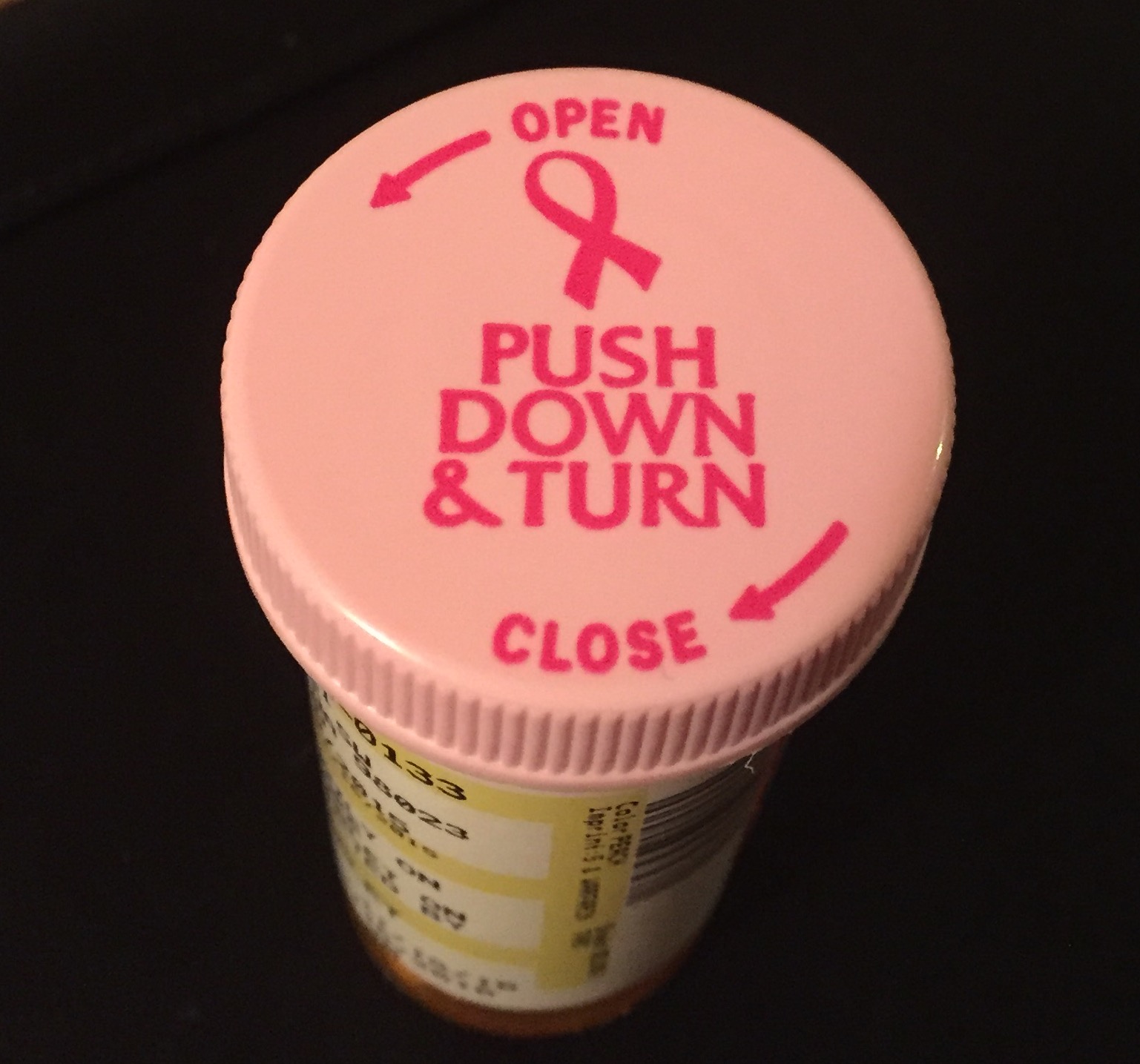
Last week I refilled my prescription for warfarin, a blood thinner I take for my cancer-related pulmonary embolism (such blood clots that are not uncommon in cancer patients).  The Fred Meyer pharmacy did their usual efficient job and delivered my medication promptly.  It looked like this:

pink ribbon pill bottle

I think it’s wonderful when corporations support cancer research and cancer patients. Kroger (Fred Meyer’s parent company) has a large breast cancer awareness campaign featuring Kroger employees who have or had the disease, and I’m sure some breast cancer patients who received this pill bottle cap felt a surge of hope.

“Hope” is not the emotion I felt when I saw this bottle.

I felt stigmatized. Ignored. Devalued. And these feeling were triggered by an organizaion supposedly aiming to make me feel BETTER.

I have lung cancer, the biggest cancer killer, a disease that kills twice as many women as breast cancer  … READ MORE


Image credit:  Creative Commons License
Pink-ribbon pill bottle cap by Janet Freeman-Daily is licensed under a Creative Commons Attribution-ShareAlike 4.0 International License.

Profiles in Lung Cancer – Day 21: Dr. Ross Camidge “Progress will come from changing the way we think about cancer”

PROFILES IN LUNG CANCER
Lung Cancer Awareness Month 2015

D. Ross Camidge, MD, PhD  “Progress will come from changing the way we think about cancer”
Director of the Thoracic Oncology Clinical and Clinical Research Programs, University of Colorado

I am incredibly fortunate to have Dr. Ross Camidge as my lung cancer oncologist, clinical trial researcher, advocacy cheerleader, and friend. He goes above and beyond to help lung cancer patients better understand their options and find hope.  And he adores his two small daughters.

Camidge and daughtersA sample of the hope Dr. Camidge offers shows in his “User’s Guide to Oncology” presentation.  He explains the basic of cancer in understandable language, talks about how to sort through information available online and elsewhere, shares do’s and dont’s of cancer care, and offers some patient inspiring stories.  I’m honored that he chose mine as one of them.

Oh, and he has an awesome British accent.

What is your connection with lung cancer?

The first lung cancer patient I remember was called John and he was a plumber in Edinburgh in Scotland. He had never smoked and was one of the first people to go on an EGFR inhibitor in a trial and had a great and long lasting response. He was the nicest of people and introduced me to all his tradesmen friends and I will be forever grateful to him for getting me on the inside track for fixing up my ‘fixer upper’ at the time. We didn’t know about EGFR mutations at that point but it was enough for me to see the potential and the need for breakthroughs in this common serious disease. Now, 15 years later, I run the lung cancer program at the University of Colorado Cancer Center where I am a physician and a clinical and translational researcher.

What does your typical day look like?

Get up before my wife and daughters, try not to wake them on my way out to work. If its a clinic day (two days a week) talk through the plan for every patient with the nurse practitioner, fellow, clinic nurses, schedulers and medical assistant before the first patient arrives. Then jump in and about eight hours later talk through it all again and see how well the battle plan stood up when the enemy (the cancer) was actually engaged. Do follow up emails, calls, dictations, etc. Go home and put one of our two daughters (5 and 3) to bed (pajamas, clean teeth, story), alternating nightly, with my wife doing the other one. Have dinner. Watch variably trashy movie (‘While We’re Young’ with Ben Stiller and Naomi Watts last night was really very touching. ‘Enders Game’ was less touching but still fun the night before). Go to sleep. On a non-clinic day, it is similar but the middle bit involves lots of meetings and emails and phone calls, with senior and  often junior faculty here and around the country and the world (I mentor a lot of bright young things), drug companies and various educational/advocacy groups trying to move clinical and translational research on new treatments for lung cancer forward.

What might we not know about you?

I am grossed out by slugs. Oh, and I taught myself to juggle while revising for my Royal College of Physicians exams in the UK many years ago and still occasionally do it to keep my children amused.

What do you want us to know about lung cancer?

Progress will come from changing the way we think about cancer as much as through specific drug or molecular breakthroughs.  A lot of the advances I have been fortunate enough to be involved with have come from not being shy about defining the edges of human knowledge, and then pushing on through.

What brings you hope?

Seeing the courage, dignity, love and humor of people who triumph over cancer simply by being themselves regardless of whether the cancer gets better or worse.

——–
Each day during Lung Cancer Awareness Month (November), a lung cancer blogger will share a brief profile of someone involved with lung cancer. The person profiled might be a patient, caregiver, advocate, researcher, or healthcare provider.

Yesterday’s post was on Lisa Buonnano’s blog “Faith, Family & Friends.”

Tommorow’s post will on Lisa Goldman’s blog Every Breath I Take.

All profiles can be found the day after posting on the #LCSM Chat blog at http://lcsmchat.com/. A list of links to all the profiles on the original bloggers’ pages can be found at on the #LCSM Chat site on the Profiles in Lung Cancer page.

Profiles in Lung Cancer – Day 2: Deana Hendrickson

PROFILES IN LUNG CANCER
Lung Cancer Awareness Month 2015

Deana Hendrickson, Lung Cancer Advocate
Co-founder of #LCSM Chat (Lung Cancer Social Media) on Twitter
Twitter handle: @LungCancerFaces
Deana Hendrickson

What is her connection with lung cancer?
Deana’s mother, Rita Stein, was diagnosed with stage 3b lung cancer in June 2012. During Rita’s treatment (concurrent chemo and radiation for 6 weeks) Deana found herself spending a great deal of time in waiting rooms, infusion centers, and unfortunately, her mother’s hospital room. In order to pass the time, Deana began to post lung cancer awareness messages on Twitter, which led to “meeting” other advocates, patients, and physicians on social media. When Deana’s mother died in April 2013, she continued her advocacy, in part, to help her heal from the terrible ordeal of losing her NED (no evidence of disease) mother to treatment complications.
Deana helped found #LCSM Chat (Lung Cancer Social Media) on Twitter, and does whatever she can to raise money and awareness, mixed with a little bit of outrage, on behalf of lung cancer patients and their families. As Deana says, “My mom survived the Holocaust, living in a DP (refugee) camp for two years, and the death of my dad after 53 years of marriage. She never backed down from a challenge. In her honor and memory, neither will I.”

What is her typical day like?
She’s online either connecting with lung cancer patients, caretakers and their families, or on Twitter promoting #LCSM Chat and lung cancer awareness.

What might you not know about her?
Much to the chagrin of her ever-patient husband of 31 years, Deana is a veteran animal rescuer, devoted dog mommy, and crazy cat lady. She’s also mom to two adult children, who thankfully do not live at home!

What does she want you to know about lung cancer?
Smoker, former smoker, never smoker: no one deserves lung cancer. #NoStigma

What brings her hope?
Survivors who are *living* with advanced lung cancer. Deana envisions a world where lung cancer is a chronic disease, one that is detected early for the majority of patients, rather than a life-limiting condition.

——–
Each day during Lung Cancer Awareness Month (November), a lung cancer blogger will share a brief profile of someone involved with lung cancer. The person profiled might be a patient, caregiver, advocate, researcher, or healthcare provider.

Yesterday Tori Tomalia profiled Melissa Crouse on her blog “A Lil’ Lytnin Strikes Lung Cancer.”

Tommorow’s post will be on Lisa Goldman’s blog Every Breath I Take, where she will profile Bonnie Addario.

All profiles can be found the day after posting on the #LCSM Chat blog at http://lcsmchat.com/. A list of links to all the profiles on the original bloggers’ pages can be found at on the #LCSM Chat site on the Profiles in Lung Cancer page.