Technology for Coordinating Care — #hcldr chat 10/28

Lung cancer and other acute/chronic health conditions require care teams with more than one healthcare professional, sometimes located in more than one care facility.  To provide the best care for the patient, these teams often must coordinate with the patient as well as caregivers, family members, care facilities, and community services.  How can technology platforms (like smart phones and social media) help with this process?

#HCLDR Chat will tackle this topic, Platforms for Community-Wide Care Coordination, in their next chat on Tuesday, October 28, at 8:30 PM Eastern Time.

I hope you’ll join the #hcldr chat and share YOUR thoughts on this important subject.  We’ll be discussing the following topics:

  • T1: What are the most important challenges patients, family members & caregivers face in coordinating care?
  • T2: What challenges do care teams (clinicians, lay health workers, managers) face in coordinating care?
  • T3: What are examples of where social media and other technologies have supported care coordination?
  • T4: How can social media & other technologies help coordinate care for publicly insured, rural & other underserved communities?

I (@JFreemanDaily) will be participating as a guest in this chat, along with other members of a panel who will be presenting at the upcoming Workshop on Interactive Systems in Healthcare (WISH) 2014 which will be co-located with the American Medical Informatics Association (AMIA) Annual Symposium on November 15, 2014 in Washington, DC.   The responses gathered in the #hcldr chat will be included in our WISH panel discussion.  The other panelists participating in the chat are:

  • Katherine Kim, PhD, MPH, MBA (@kimkater): health informaticist, researcher and Assistant Professor at University of California, Davis
  • Charles Boicey, MS, RN-BC, CPHIMS (@N2InformaticsRN): Enterprise Analytics Architect for the State University of New York, Stony Brook Medicine
  • Susan Hull, MSN, RN (@SusanCHull): nursing executive , founder and CEO of WellSpring Consulting
  • Anna McCollister-Slipp (@annamcslipp): diabetes epatient, co-founder of Galileo Analytics

My Take on This

This is a topic of great interest to me.  I can see many care coordination needs that might be addressed with technology platforms.  Here are some snippets from my own experience as a lung cancer patient.

Having multiple care providers at different facilities is a common situation with lung cancer.  When I was undergoing my first line of treatment, I met regularly with seven healthcare providers in four different facilities:  a pulmonologist and infectious disease doctor in a major medical center, a medical oncologist and infusion nurse in a local clinic, a  radiation oncologist and nurse in a different local clinic, and a contractor that provided supplies for my PICC line.  Even though the doctors all belonged to the same medical center, each facility had different scheduling software and limited or no access to my electronic medical records at the other facilities.  Care coordination was mostly done by telephone and fax.  My husband and I tracked my daily appointments on a wall calendar at home.  If the infusion nurse giving me my chemo needed to ask a question of the radiation oncology nurse who has seen me when I received my radiation treatment 30 minutes earlier, they played phone tag in between patients.  Having a common platform accessible to all team members that showed my appointment schedule and treatment notes and allowed even brief instant messaging (e.g., “give Janet 1L IV fluids after her chemo today”) would have been very helpful.

Having a device that could display my current health conditions and meds, then connect an emergency medical tech or doctor to my oncologist (even when out of cell phone range) would be pretty nifty.  Currently I keep a two-page summary of my lung cancer treatment history and contact info with me on a USB Medic Alert bracelet when I travel.  This presumes whoever finds me unconscious has a PC with a USB port and a PDF reader handy. My epatient friend Casey Quinlan had her medical record access info tattooed as a QR code on her chest.

I have learned the value of keeping a complete set of my medical records at home in case I need them.  While I can access some of my medical records online at the two medical centers where I currently receive care, right now I can only see lab results, and (at one facility) scan reports.  When my tumor tissue underwent mutation testing at an NCCN facility, an oncologist’s office at the same facility couldn’t find the test results without my sleuthing to find a specific number on a faxed copy of the test report–fortunately I had requested one previously.  There’s GOT to be a better way to transmit current medical records rapidly between facilities than faxing or emailing scanned documents!

Metastatic lung cancer patients like me–especially those who are eligible for targeted therapies, aggressive treatment, or clinical trials–find second opinions can be life saving.  When a patient takes a turn for the worse or a clinical trial has limited openings, the second opinion may occur on short notice.  For me, pursuing a second opinion for my lung cancer today would mean going to a 3-foot-deep file cabinet drawer and gathering a stack of CDs containing relevant CT, PET, and MRI scans and other medical records (clinic notes, pathology reports, lab results, chemo summaries, radiation treatment summaries, etc).   If I were to include all the records I’ve generated in over three years of lung cancer treatment, the stack of CDs would be over 4 inches thick.  The radiology scan files are too big to be transmitted electronically and still preserve the ability to view the data, so I’d take those CDs with me.  All those other records provided by my care center exist as a few unsearchable pdf files containing hundreds of images of hardcopy documents.   For those records, I’d save the second opinion doc from having to read every single page of the huge file; instead, I’d ask which files they need to see, and print hardcopies to take instead (I keep the most important of these in a 3-ring binder).  If I had a week, I could request CDs of the specific files from the medical records department and wait to receive them via snailmail.

Some patients may use medical devices such as my CPAP machine that generate medical data useful to the care team.  However, it may be difficult or impossible to pass that data to a healthcare provider in a different location, or even access the data if the device employs proprietary designs.  My CPAP has a removable SD disk that can be read by most card readers in PCs.  However, I’d have to download the software to read it, and I can’t capture the data I read so I can transmit it to anyone.  “Interoperability” doesn’t really exist with medical devices yet.  I may be hallucinating from too much chocolate, but I’d love to see a platform that provides an interface to different medical devices and electronic medical records so they can network the way my Fitbit shares data with my LoseIt! diet app on my smartphone.

I’d also love to see care coordination solutions designed for those who do not have reliable access to the Internet.  Not all patients live in areas where broadband Internet or cell phone coverage is available, and not all patients can afford to pay for Internet service or devices that access it.  Yes, they could go to the library, but who wants to put sensitive personal medical info on a screen and unsecure computer for everyone to read?

Speaking as a system engineer, creating a secure technology platform that meets all the requirements and desirements without causing more complications in the already messy digital medicine world will require out-of-the-box creativity.  Maintaining data security and HIPPA privacy is essential.  Forcing already overloaded healthcare workers to use yet another interface, or forcing facilities to invest in a new standardized medical records system without providing the funds and training to implement it, are both non-starters.  The motivation for change will have to come from demonstrating that a new technology platform improves care quality and access, reduces cost and workload, and is readily adopted by patients and carers alike.

The first step in solving this problem is to capture the requirements; I hope the #hcldr chat on 10/28 will contribute to this effort.

Care Coordination Challenge graphic (UC Davis)
Image credit: UC Davis Betty Irene Moore School of Nursing

#LCSM Chat Topic 10/23: How can we help new stage IV #lungcancer patients consider 2nd opinions, mutation testing and clinical trials?

The following post is reblogged with permission from today’s #LCSM Chat blog.

———————————————————-

Most patients experience a period of stunned disbelief or shock when they hear a diagnosis of “metastatic lung cancer.”  For those who are offered treatment options, the first few months revolve around medical appointments.  Others may only be told to go home and get their affairs in order.  Patients and family members may be in denial, or trying to process what all those dismal survival statistics mean for their future. It might be the first time the patient or a family member has had to confront the possibility of death for themselves or a loved one.

Some patients (or their caregivers) may be empowered, engaged and researching options, but many don’t have the physical or emotional energy to do so.  At this point, few patients are thinking about second opinions, mutation testing, or clinical trials.

The problem with waiting for metastatic lung cancer patients to become empowered and engaged is that the majority won’t live a year if they can’t access the newest treatment options. However, if they get educated about their options, consult with a knowledgeable oncologist, and are eligible for newer treatments or clinical trials, their lifespan may be years longer.

You might ask, how could this be true?

The landscape of personalized medicine and new lung cancer treatments is changing fast, and more stage IV lung cancer patients are living longer.  Unfortunately, due to the pace of that change, not all healthcare providers who treat lung cancer are current on the newest treatment options. Some oncologists do not test their patients’ adenocarcinoma lung cancer tumors for EGFR or ALK, even though NCCN and other respected guidelines recommend it.  Even research oncologists at NCCN facilities can’t track every new clinical trial for lung cancer.  And, sadly, some healthcare providers simply believe that because metastatic lung cancer is not curable, there’s no point in treating it.

The fact is, most metastatic lung cancer patients (or their trusted caregivers) will need to become engaged and empowered if the patients want a better chance at survival.  Many will need help to do this, either online or offline.

The #LCSM Chat on October 23 will explore how the lung cancer community might help metastatic lung cancer patients become interested in and knowledgeable about second opinions, mutation testing, and clinical trials. Your moderator Janet Freeman-Daily (@JFreemanDaily), a stage IV lung cancer patient who currently has No Evidence of Disease in a clinical trial, will offer the following topics for discussion:

T1:  How can we help a stage IV lung cancer patient understand the need for 2nd opinion when their doctor offers no treatment?

T2:  How can we help a stage IV adeno lung cancer patient consider EGFR & ALK mutation testing if their doctor has not done it?

T3:  How can we help a stage IV lung cancer patient consider targeted therapy clinical trials if they have a targetable mutation?

We look forward to seeing you in the chat! To participate in the chat, remember to include #LCSM in all your tweets, or use a tweetchat tool like tchat.io with that hashtag (more on that here).

A Fog of Feeling

An onshore flow is washing over the Puget Sound this morning. The mocha-thick fog smells of shoreline and decaying leaves.  Fall is wafting in, and it soon will be dark when I get up at 7 AM.

If you detect a bit of melancholy in my words, you’re right. My emotions are foggy.  It’s been a week of highs and lows.

Yes, the highs outnumbered the lows. Friend and lung cancer advocate Tori Tomalia (who has the same type and stage of lung cancer as me) gave an inspiring and moving speech at a lung cancer event.  Someone found my blog by googling “wonderful late stage cancer blogs.”  A Facebook friend said my Stanford Medicine X speech on lung cancer stigma changed her life.  And a new lung cancer drug received Breakthrough designation by the FDA for those with ALK-positive non-small cell LC.

But the down came late, and hard: another stage IV lung cancer patient with my genomic mutation (ROS1) died yesterday.  Burton, a Harvard grad, was only 26.  He didn’t even have time to marry his fiancée, Emily (who’s been blogging about Burton’s lung cancer since April).

Being part of lung cancer community that includes advanced and late stage patients means the community, however educated and motivated, will lose members. I’m almost numb to it by now.  But I still feel something, even when the lost member is someone I’ve known only through Emily’s “ros1positive” blog.

For no logical reason, Burton’s death also makes me a bit anxious about my monthly blood work tomorrow. I’ve had so many blood draws over the past 3 years that I don’t really think about them.  But now, for the first time, I’m wondering if the blood draw will hurt, or if the nurse will even be able to draw my blood.  Last month my power port was seriously misbehaving, so I had to have the PET scan tracer and CT contrast injected into a vein on the flat inside of my left arm.  The tracer injection was fine, but the pressured injection of contrast HURT.  By the next day, I had a lumpy blood vessel at the injection site, and skin around the vein was angry red.  A month later, that section of vein is more black than blue.

My port is misbehaving on most scan days now, and the fibrin sheath I’ve grown over the tip of my power port’s catheter is getting tougher and tougher to remove. It may be time to have my port replaced.  Yes, it’s only minor surgery, but it means losing a day to the anesthetic  and accepting considerable discomfort around the surgery site for a week or so.

Being good at growing a fibrin sheath is not a useful skill. I wish I could grow something over my emotions when yet another friend who has lung cancer dies.

Tori Tomalia Is “Sharing Our Story” for Lung Cancer Survivors

Stage IV lung cancer blogger Tori Tomalia, a mother with young children, gave a great speech at a lung cancer event yesterday. She posted the speech on her blog, and gave me permission to repost the text below. Inspiring!

——————————————————————————————-

Sharing Our Story

I almost titled this post “Sharing My Story,” but realized that this is much bigger than me. Today I had the honor of speaking at the Peter A. Kaylor Lung Cancer Walk in Allegan, Michigan. I know how lucky I am to be able to speak out about this disease, when so many others who have gone before me are no longer able to do so.This was what I had to say about my one year, four months, and five days (so far) of living with lung cancer.

 ~ ~ ~ ~ ~

It started with a cough that wouldn’t go away. But everybody I knew had a cold, so it didn’t seem like a big deal. I started to feel a little better, but before long I had another chest cold. And I was exhausted, but I was in grad school full time, working, and raising a 4 year old and infant twins. Who wouldn’t be exhausted?!? But my breathing kept getting worse, so the doctor thought it was a return of my childhood asthma. We tried one medication, then another, then another. But I kept getting worse. Finally, in May of 2013 they sent me for a chest CT scan to see if there was something else going on. There was. The scan revealed a large mass in my left lung, that had wrapped all around and had caused my lung to partially collapse. A biopsy confirmed that it was lung cancer, and further testing showed that the cancer had spread to the other lung, my spine, my hip, my ribs, my shoulder blade, and my liver. I was unequivocally stage IV, inoperable, at age 37.

At that time, I thought it was impossible for a nonsmoker to get lung cancer. Clearly, I was very wrong.

So I began 4 months of chemotherapy. July, August, September, October, I struggled with side effects and tried to spend as much time with my family as humanly possible, to “make memories” as my social worker advised. I got to see my little girls learn to ride tricycles, and I got to see my son start kindergarten. The amazing thing was that as the summer progressed, my breathing started getting better. I was able to climb upstairs and kiss my son goodnight again. I was able to walk around carrying my little girls. And then the scans confirmed it: the chemo was working, and my cancer was shrinking. But as October rolled around, a question loomed: what next? The cancer was shrinking, but not gone, and a person can only tolerate so much chemo before the toxic side effects become too damaging. We discussed what they call “maintenance” chemo, a lower dose of chemo that they can give for as long as the patient can tolerate it, to try and keep the cancer at bay.

Meanwhile, the shock of having stage IV cancer was starting to wear off, and my thirst for knowledge had kicked back in. I started reading about personalized medicine, where they can test the tumor and figure out what went wrong to cause the cancer, called the cancer “driver.” My oncologist had tested me for two common ones, but my obsessive reading and research revealed that there are several other rare ones that can be tested for. I asked my oncologist for further testing and on October 31 – Halloween – I got the wonderful, game changing news that we had discovered what went wrong to cause my cancer, and that there is a drug to treat it. In November, I started on a brand new drug called Xalkori. I have been taking this medicine – two pills a day – for 11 months, and currently I have no evidence of active cancer anywhere in my body.

But I know the battle isn’t over. My wonder drug is amazing, and I am thankful for the good quality of life I have now. I still have side effects, but they are not as bad as chemo. However, I know that my cancer will eventually become resistant to this treatment, that my cancer will figure out a way around my super drug. If/when that time comes, I will pursue other treatments, plans B, C, D, and so on. I have stage IV cancer, I will always be in treatment.

To say that this past year has been life-changing is quite an understatement. I certainly appreciate things more than I used to, and I think I have gotten even bolder and more outspoken than I used to be, if that is possible. And I have connected with a whole lung cancer community full of incredibly strong and wonderful people, who I now consider my “lung cancer family.” Sadly, I have learned that this disease can strike absolutely anybody.

There’s Craig, diagnosed at age 60
Janet, diagnosed at age 55
Mark, age 47
Lisa, age 41
Molly, age 39
Samantha, age 33
Emily, age 28
Burton, age 23
and Corey, age 22

The thing we all have in common is that we were all diagnosed at stage IV. Stage IV. The other thing we all have in common? None of us deserved this.

Here are some sobering facts:

  • Lung cancer is the second leading cause of all deaths in the US.
  • Lung cancer kills almost 2x as many women as breast cancer and 3x as many men as prostate cancer.
  • Lung cancer in never smokers is 6th leading cause of US cancer deaths.

And yet, I chose to remain hopeful. I know that I am one of the lucky ones. Things are changing fast in cancer research. If I would have gotten this a few years earlier, I probably wouldn’t be here today. If I hadn’t pushed to get more testing done on my tumor, I might not be here today. Chalk it up to stubbornness, perseverance, or just dumb luck, I am very thankful to be here talking to you today.

I am alive because of research. There are some really exciting discoveries going on out there and some amazing things coming down the pike. My goal is to stick around long enough to see them.

Neuropsych Serendipity

I visited the Virginia Mason Neuropsychology and Rehabilitation department today for a consult about dealing with my chemobrain symptoms.

I expected the appointment to be an introductory session: the counselor and I would spend the time recounting my cancer history, detailing my symptoms, explaining the chemobrain study in which I participated at Fred Hutchinson Cancer Research Center last year, learning about therapy options, and discussing possible neurocognitive testing.

Turns out the Ph.D. psychologist I saw was the lead researcher for last year’s chemobrain study!

She knew me.  She knew my history. She had access to my previous neurocognitive results from the trial.  The available therapy options were the techniques she and her team had taught me last year.

So, we spent a VERY productive hour talking about coping strategies for my particular symptoms and situations.

Might this be cosmic payback for volunteering for clinical studies?

Serendipity rocks.


brain 2 graphic

Weighing In (Reluctantly)

I hoped it wouldn’t happen.  But it did.

I stepped on the bathroom scale, and my weight was higher than “that number.”  You know, that number all women have in their heads (even if we say we don’t), the one I can’t possibly weigh because it absolutely, positively, undeniably means I’ve hit an unhealthy benchmark.

I’ve tried to be patient with myself.  I know much of the sixty pounds I’ve gained since my cancer diagnosis can be blamed on chemo-induced menopause, metabolic changes, reduced activity due to side effects of lung cancer treatment, a year of steroids, and edema caused by my current targeted therapy, crizotinib.  (Notice I’m not mentioning my fondness for chocolate—allow me the comfort of a small rationalization.)

Yet the scale kept creeping upward until it hit “that number” a week ago.  I suppose I subconsciously acknowledged the possibility when I donated all my large-sized clothes a couple of months ago, when I had to buy 2X jeans to be comfortable.

I had hoped I could ignore it, that I could just say I’m happy that I’m still alive three years after my cancer went metastatic, that I could settle for being “that number.”  But BMI doesn’t lie.  My every-8-week PET scans consistently show fatty liver.  I am not just overweight.  I am OBESE, and putting myself at risk for lots of nasty health conditions. This doesn’t make a whole lot of sense, given I’ve worked so hard to beat the lung cancer odds.  All my cancer doctors say it’s OK if I want to lose weight intentionally, in a reasonable manner.

Over a decade ago, I lost 50# and kept most of it off until I got cancer.  However, I’ve not had much success with moderate measures since my cancer diagnosis.  I’m going to have to be strict with myself, and keep it going for months.  I’m not looking forward to it, but that’s how it is.

So into the weight loss trenches I go.  Tossing out the tempting goodies and hiding the Halloween treats.  Aiming to eliminate simple carbohydrates.  Saying no to some foods I prepare for my family.  Tracking my fat, carbs and protein with the LoseIt app on my phone.  Tracking my steps and calories burned with my Fitbit band (good thing the two devices talk to each other).  Keeping my calorie deficit above 500 calories per day.  Exercising at a moderate pace over 30 minutes per day.

You’d think my body would appreciate this.  You’d think it would reward me by showing at least a little weight loss after the first few days of self-discipline.  Instead, I gained.  But I have a legitimate excuse, honest:

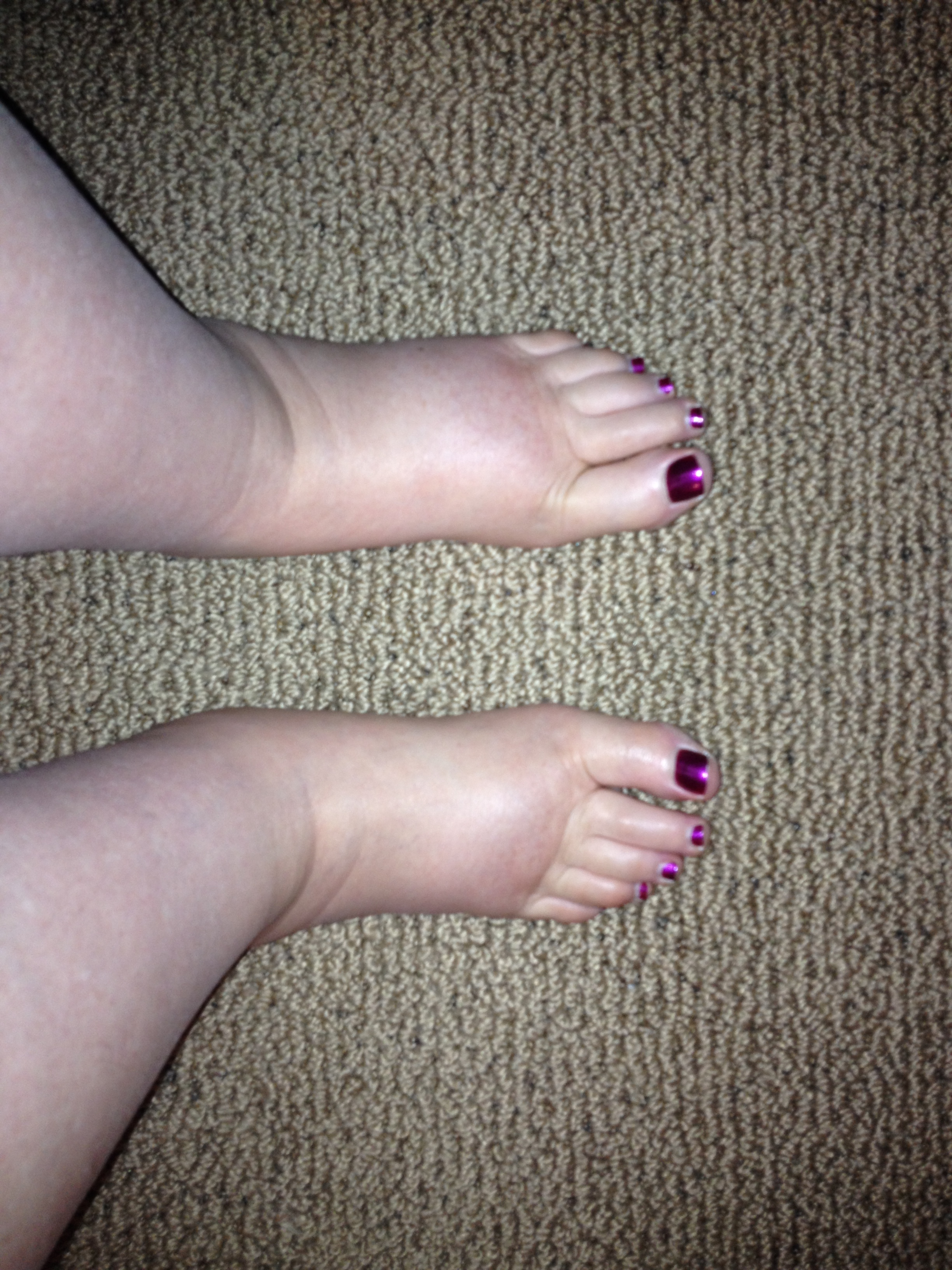
Fat piggies (2014-09-30)

Apparently my edema doesn’t agree with my new diet.  Sigh.

Why Aren’t Never Smokers Screened for Lung Cancer with LDCT?

As you’ve probably heard, 25% of lung cancer patients worldwide are never smokers.  Like all lung cancer patients, the majority of never smoker LC patients are diagnosed with metastatic lung cancer, even though they often have no real symptoms.  How come lung cancer screening guidelines don’t suggest never smokers get screened for lung cancer?

Well, it’s all a matter of risk reduction.

Medical practitioners (and those who pay for their services) do not like to run a medical test when the patient might be put at risk for little benefit.  This is a concern if a test is not 100% accurate and follow-up procedures for a positive result are potentially invasive.  This is the situation with LDCT screening.  With today’s technology, a lung cancer diagnosis can only be confirmed with a biopsy, which is invasive and does carry some risk.  And, lung biopsies are not guaranteed to detect a cancer, even if one is present.  Lung cancer screening with low dose CT might generate a false positive (meaning the test says the patient has lung cancer when they really don’t). False positives could result in unnecessary invasive follow-up procedures with some risk to the patient.

For this reason, LDCT screening is only recommended for those who are at HIGH RISK for lung cancer. At this time, “high risk for lung cancer” means current or past heavy smoking history and age 55 to 75. These risk factors were not chosen due to stigma or discrimination. To date, these are the only two risk factor scientifically demonstrated to have a HIGH correlation with lung cancer in several studies. A very large clinical trial (the National Lung Screening Trial, or NLST) showed people who had these risk factors were likely to benefit from lung cancer screening with LDCT despite the risks of false positives.

For these patients at high risk for lung cancer, the benefits of screening outweigh the risks.  LDCT screening reduced their lung cancer deaths by 20% compared to screening with x-rays, simply by detecting the lung cancer before it spread and getting it treated early.  By the way, NO deaths due to LDCT screening occurred in the 53,000+ participants enrolled in the NLST.

Since lung cancer occurs in a low percentage of the never smoker population, the risk of screening doesn’t make sense for never smokers unless they have another high risk factor.

We know of other risk factors associated with lung cancer–radon gas in homes, air pollution, previous cancer treatments (especially radiation treatment to the lungs), exposure to certain hazardous materials, even an inherited gene.  However, analysis to date hasn’t shown any of these factors have as strong a correlation with lung cancer, possibly because it’s harder to track those risk factors in a controlled study.  As we learn more about how lung cancers get started, and how they differ from each other, we are likely to discover more HIGH risk factors that can be validated by objective analysis.

This definition of “high risk” and this method of screening are just the first steps in early detection for lung cancer. As more high risk factors (like the inherited version of the T790M gene) are validated by objective studies, people who have those risk factors should also be included in covered lung cancer screening, whether or not they have a smoking history.

As more accurate and less expensive lung cancer screening technologies become available, testing will become more accessible to everyone.  Someday–hopefully in our lifetimes–accurate lung cancer screening will be as easy as a blood test or spitting into a test tube, without the need for a biopsy.

So keep supporting more research!  We need accurate, affordable early detection of lung cancer in never smokers.

Why Advocates Seem to Talk So Much About Lung Cancer Screening

On Thursday, September 25th, 8PM ET/ 5PM PT, #LCSM Chat will discuss the existing barriers in lung cancer screening in late 2014.

Recently I’ve heard some lung cancer patients say they feel abandoned by lung cancer advocacy groups.  These patients think the groups are focusing too much on early detection with lung cancer screening, and have abandoned those who already have the disease.

As a metastatic lung cancer patient, I don’t feel abandoned.  I feel lung cancer advocacy has never been more vibrant or successful than it’s been in the past year.  In the past year, lung cancer advocacy has featured:

  • Wide-spread national media coverage about lung cancer: Valerie Harper on “Dancing with the Stars” and other national shows, national news coverage of testimony on Capitol Hill about the need for lung cancer research funding, the “Turquoise Takeover” of prominent landmarks, and Molly Golbon’s cancer journey documented on NBC, for example.
  • Print and online articles discussing the need to eliminate lung cancer stigma and featuring the hope offered by new treatments and clinical trials.
  • More advocates, patients, doctors, and researchers posting and collaborating with the #LCSM hashtag on Twitter.
  • An increase in lung cancer bloggers compared to last year.

The focus of lung cancer advocacy hasn’t shifted away from research or treatments.  By my count, there are more new treatment options offered or announced this year for a wider range of lung cancer types than in any previous year: two new FDA-approved targeted therapies,  immunotherapy trials for all lung cancer types, an innovative new trial for squamous cell LC, a new study of Young Lung Cancer, new targeted drugs for mutations, newly-discovered mutations … the list is long.

Lung cancer screening with LDCT is a big deal because it is projected to save 18,000 lives PER YEAR by catching lung cancer before it spreads.  That’s more lives than most new targeted lung cancer treatments will save in a year.

We’re seeing more public discussion of lung cancer screening than treatments for four reasons:

(1) Lung cancer screening with LDCT gained major support at the end of 2013.
In December 2013, the US Preventative Services Task Force recommended lung cancer screening with LDCT.  As a result, the ACA now requires private insurance plans to cover LDCT as of January 2015.

(2) LDCT is becoming more available.
More hospitals and clinics are beginning to offer LC screening with LDCT, and are advertising that fact.

(3) The need for support is urgent.
The majority of lung cancer patients are over age 65.  In February, the Centers for Medicare and Medicaid (CMS) began evaluating whether to provide insurance coverage for LC screening with LDCT.  CMS will decide in November.   We must act NOW.

(4) Individual advocates have a chance to make a difference that will save lives.
The CMS decision is being made by a branch of the US government.  Our voices are needed to ensure those over 65 have access to LC screening, since most of them have Medicare as their primary insurance.  Lung cancer advocacy organizations are leading the charge.

The lung cancer community is still dedicated to raising awareness for ALL lung cancer patients and increasing research that will allow more lung cancer patients to be cured or to live with lung cancer as a chronic illness.   Advocating for LC screening is just one way to help more patients survive.  It’s part of the 2014 sea change in lung cancer.

Hyperintensities

Last Monday and Tuesday, September 8-9, I was in Denver for my clinical trial at University of Colorado Hospital (UCH). I had my once-every-eight-weeks PET-CT scan along with a once-every-six-months brain MRI.

I’m happy to report that both scans were clean. I’m now twenty months with No Evidence of Disease of metastatic lung cancer.  That Xalkori is great stuff for those of us with ROS1 NSCLC!

I’ve been in my clinical trial for 22 months, and the trial has been running for over three years. The medical journal article summarizing trial results is due out sometime in the next two weeks.  Judging from the response to Xalkori of several ROS1ers I’ve met online, I expect the news will be positive.  Can’t wait to read it–I’ll probably hustle to the University of Washington Library and download it first chance I get.  Yes, besides being a science geek, I’m an INTENSE science geek.  One of those “complete response” lines on the waterfall plot will be ME!

The scanxiety for this visit was different than my previous visits to Denver. It’s been a very busy summer for me.  As I posted previously, before flying to Denver I attended the Stanford Medicine X conference in Palo Alto September 4-7.  I gave my speech on lung cancer stigma on the main stage Sunday morning, left the conference a couple of hours early to fly to Denver Sunday night, and had my clinical trial labs and scans Monday.  I was so focused on the conference and my speech that I barely noticed any scanxiety –it was difficult to distinguish from the intensity that precedes my speaking publicly.  The only real indication of any anxiety was my increasing inability to focus during the conference and three hours of lost sleep the first night in Palo Alto (although my husband might have a different perspective about my intensity in the days before I flew to Palo Alto).

A few other things were different about this clinic visit:

  • On the day of my visit, I spent an hour talking with the American Lung Association of Colorado’s office about LUNG FORCE.
  • A pleasant UCH oncology Fellow conducted my clinic visit. My primary oncologist Dr. Camidge came in to chat with us both for a few minutes afterwards–he knows I always have a list of questions for him. We talked about an exciting new clinical trial design at UCH for FGFR-positive NSCLC (more on that in a future post).
  • UCH had recently installed new software for their MRI machine, so the report of my brain MRI was not available at the time of my clinic visit. However, Dr. Camidge and the Fellow both reviewed the scan itself and reassured me it was normal.
  • After Dr. Camidge completed his clinic hours on Tuesday, he joined me, Dora (an online friend of mine who is also his lung cancer patient), and Dora’s husband Bill for a chat at a restaurant near UCH. How many world-renown lung cancer doctors do that? Well, yes, I did bribe him with a cup of coffee and a pastry. Here’s a selfie we took:

selfie with Camidge

Something else was also new to me after this clinic visit. I had a headache after I arrived home.  Since I’d just had a clean brain scan two days before, I knew the cause could not possibly be a brain met.  Somehow this reinforced the feeling that I was more a normal person than a cancer patient at this point.  Sometimes a headache is just a headache.

The brain MRI report appeared in our mail yesterday. It didn’t say much except “normal,” but a few terms were new to me.  I was Googling the new terms when an infolinks box popped up with this message:

“Searching for T2 hyperintensities in white matter? Try Kelley Blue Book!”

Maybe Kelley Blue Book can tell me how my hyperintensities affect the resale value of my brain.

Relax, Recoup and Regroup

Today is my day to relax, recoup and regroup.  Just for today.

Yesterday I pitched, hit, threw, and ran (a very short distance) in a relaxed, laughter-filled softball game at my 40th high school reunion in Tacoma’s Cheney Stadium.  Both during the game and the reunion dinner in the evening, I had a chance to visit with people who grew up with me.  I appreciated renewing and reinforcing friendships, especially since I likely will not be around for my 50th reunion.  As the “Faithful Scribe” of the Reunion and Softball Committees, it was a wonderful to see so many people enjoy the months of work that went into making these events happen.  I was also surprised (and pleased) to learn how many classmates have been following my lung cancer journey on my blog.  It was a terrific day!

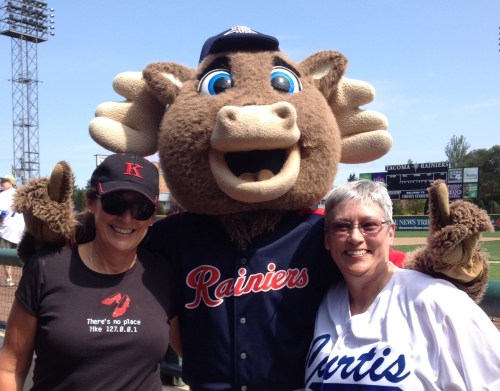
My sister Karen and me with Rhubarb, mascot of Tacoma Rainiers Baseball in Cheney Stadium

Now that the reunion is over, I’ve hit a turning point in the summer.  The looming deadlines imposed by outside events and projects have been met.  In addition to helping plan my high school reunion, I have been up to my eyeballs in lung cancer patient advocacy projects over the past three months:  working on the first-ever LUNG FORCE walk, collaborating with a group of metastatic patients on changes in lung cancer treatment guidelines, attending the big ASCO clinical oncology meeting in Chicago, preparing and giving speeches at conferences and events, writing articles and guest blog posts, and generating panel proposals about lung cancer for upcoming medical conferences.  Somewhere in there, I wrote blog posts, contributed to #LCSM Chat activities, researched new lung cancer developments, and communicated online with others in the lung cancer community.  I’m reminded why I’ve been feeling stressed this summer!

So, just for today, I’m resting up from all that exercise and socializing at the reunion, as well as reviewing what I want to do next.  I still have a long list of projects that don’t have externally-imposed deadlines.  I don’t handle pressure as well as I did before cancer (not that I handled it particularly well before) and need to wind down a bit and set priorities before jumping back into action.

And I MUST jump back into action.  I feel a pressing need to complete family and advocacy tasks ASAP, while I am able.  Even though I’m feeling pretty good right now, I can’t forget that my cancer might recur at any time, and people—including my friends—are dying of this disease every day.

But for now, I’ll bask in the fact that I just wrote blog post #100 for Gray Connections.

Tomorrow hubby Gerry and I start cleaning out the garage for the first time in 22 years.  No stress there.