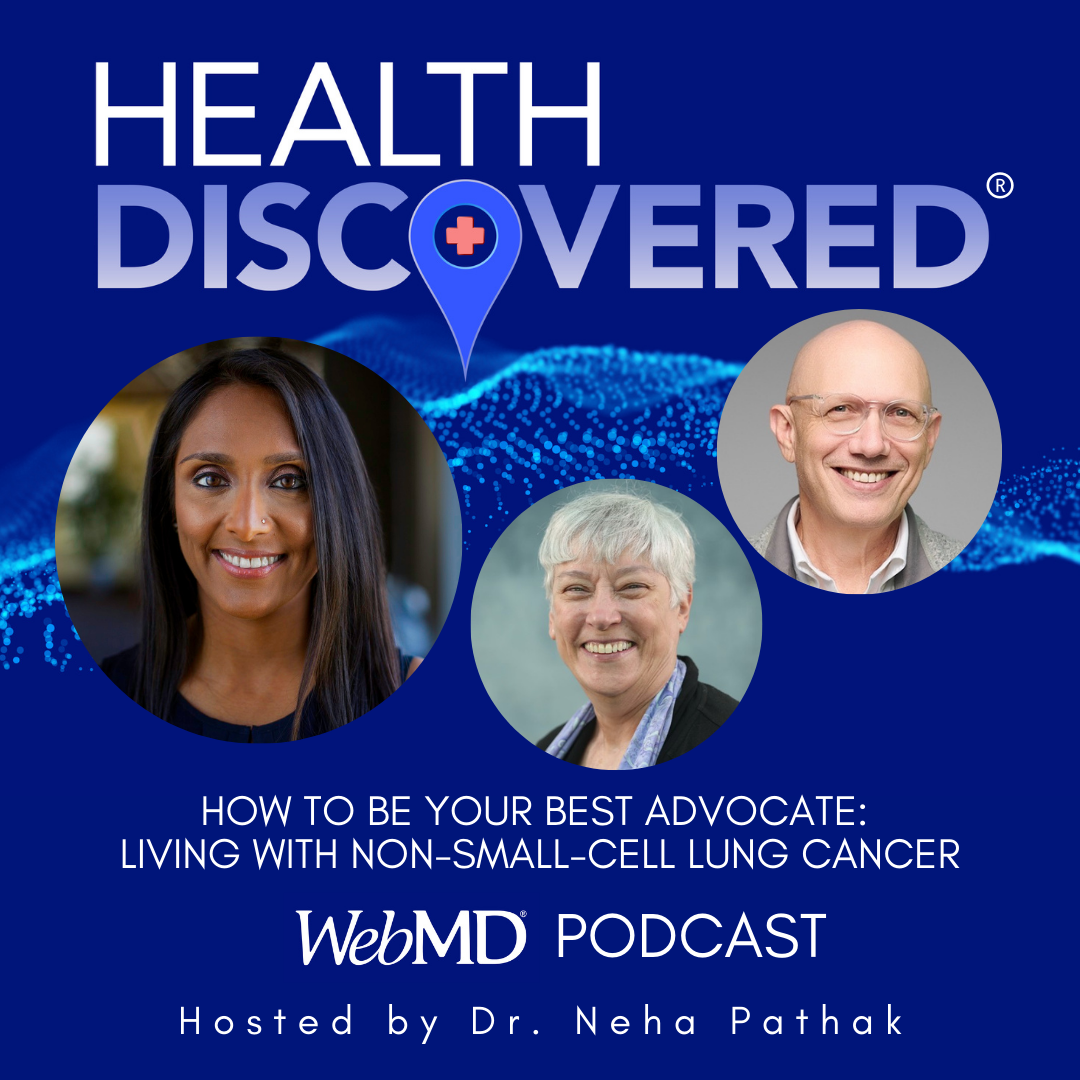
WebMD interviewed me for their Health Discovered podcast. The episode has good information about coping with a diagnosis of non-small cell lung cancer and the emotions it generates. My “patient experience” content is in the first 4 minutes; the rest is an interview with a psychiatrist who works with cancer patients (recorded separately).
Thirteen years ago today, I experienced a revival of hope. In mid September 2012, I had learned my cancer had grown despite two different lines of chemotherapy plus radiation. But on this date, the University of Colorado notified me that my tumor tissue tested positive for a gene rearrangement called ROS1, and I was eligible for a clinical trial of the targeted therapy pill crizotinib. I had options again!
Today I’m still on the same daily pill. Cancer research is awesome.
Once a person is medically diagnosed with having metastatic cancer (cancer that has spread to other organs), some people accuse that person of lying when the person says they didn’t know they had cancer. Because some cancers might grow for years before spreading to other organs, people think the person with cancer would had to have known they had it.
After more than a decade of living with metastatic lung cancer and serving as a patient research advocate, I have seen plenty evidence this need not be the case. Here are some important factoids about lung cancer that also hold true for other types of cancer:
1. Not all cancers have symptoms while they are growing. Lung cancer rarely has symptoms until it has spread to other organs. Lungs don’t have nerves to say “ouch!” when a tumor is growing. For this reason, the vast majority of lung cancers were not detected until the cancer had spread elsewhere before the advent of lung cancer screening. But not everyone is eligible for lung cancer screening. Screening is limited to people who are at increased risk of developing cancer and who can benefit from treatment–this is to minimize the risk of overdiagnosing and treating people who don’t need cancer treatment.
2. Not all cancer grows at the same rate. When I was diagnosed in 2011, I was told my non-small lung cancer did not grow fast and would have taken years to create the 2.5 inch tumor in my lung. I had months of combined chemo and radiation treatments designed to cure me of my cancer. Yet three months after a CT scan said my tumors were almost gone, I had grown a new three-inch tumor at the base of my neck. Some types of cancers are much more aggressive than others.
3. Best practice medical care might not be looking for cancer. Another friend (age in mid-20s) reported shortness of breath when running. Because they were so young, their doctor took a conservative approach to treatment. My friend was treated for allergies, and then pneumonia. By the time doctors prescribed a CT scan, the lung cancer had spread to several other organs. You can’t find something when you’re not looking for it.
4. Not all cancer is detectable with current technology. A friend who had lung cancer had a brain scan using magnetic resonance imaging (MRI). The scan showed their brain was clear of cancer. Three weeks later they began leaning slightly to one side while walking. A second brain MRI scan found sizeable tumors in their brain that didn’t show up just a few week earlier. The seeds of those tumors likely existed when they had the first brain scan, but scan technology is not sensitive enough to detect cancer that small.
My take-away message Don’t assume that someone must have known they had cancer just because it had spread to other organs by the time it was officially diagnosed. Many people honestly had no idea they had cancer before they were diagnosed. I didn’t.
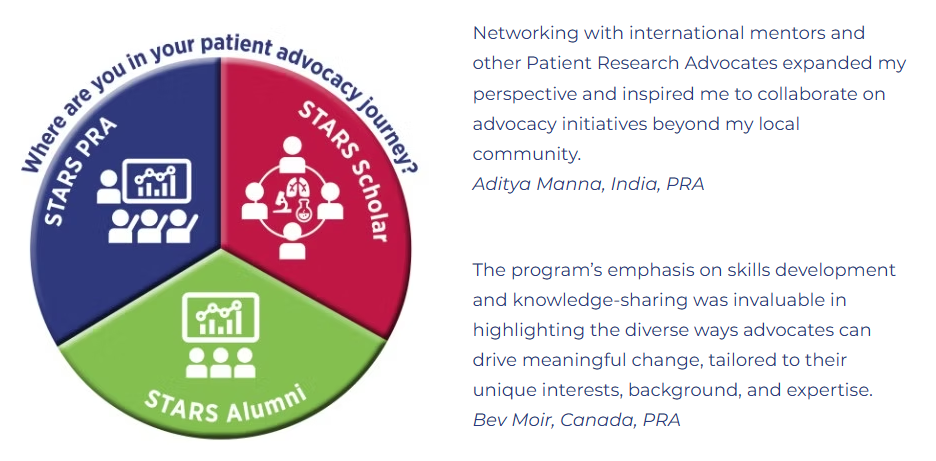
Take steps to amp up your lung cancer patient advocacy! Applications are now open for the 2025 IASLC STARS PRA & Scholar Programs. STARS (Supportive Training for Advocates on Research and Science) can help you develop and enhance research advocacy skills needed to provide a patient perspective to research.
If you or a loved one has been affected by lung cancer, and you are an active lung cancer patient advocate, you are eligible to apply. Learn more on the STARS website.
I’ve been living with and communicating about lung cancer for over 13 years. Since 2011 (the year I was diagnosed) I’ve been active in one or more online lung cancer patient groups. Since 2012, I’ve been blogging and on social media, connecting with the lung cancer community and learning/sharing developments in cancer research. In 2013, I cofounded #LCSM (lung cancer social media) Chat on Twitter and became a co-moderator of its weekly chats. As an active lung cancer patient research advocate, I’ve presented at national and international oncology conferences about using social media in the lung cancer community to improve education, clinical trials., and patient care.
Nowadays I spend most of my social media time in the private “ROS1 Positive (ROS1+) Cancer” Facebook group I cofounded (my ROS1+ cancer is a rarer form of lung cancer) and related online accounts. I know there are data security risks in sharing my cancer journey on public and private social media platforms, but it’s one of the most effective ways to reach other people who are living with lung cancer, especially for rarer subtypes.
All of that is to give you some background about my participation in social media. I’ve been very active online. I don’t sift through random posts about celebrities or debates about news events, but I have been known to spend hours online following developments in cancer research, posts from people attending oncology conferences, and discussions about cancer care from the patient perspective.
I used to do a lot of my research and outreach on Twitter. But due to evolving policies, algorithms, and accounts on X, I now spend almost no time on that platform. The Elon era substantially reduced its usefulness for this lung cancer patient advocate. I’ll try to explain why.
While cancer social media has always had to contend with medical misinformation, it became significantly worse on X after moderation was cut back. I’ve also seen a dramatic increase in hateful comments, personal attacks, and anti-science sentiment. I don’t want to waste my time reading that stuff while trying to find the content I value.
A blue checkmark on an account used to mean that account was owned by a validated organization, agency, or individual that had significant public impact. Patients could distinguish which accounts shared trusted, evidenced-based medical information . Now anyone can buy a blue checkmark, impersonate whoever they want, and spread medical disinformation that is not helpful or safe. While not all patients are successfully treated, the survival rate for lung cancer has increased significantly over the past decade. I’m not the only metastatic lung cancer patient who has survived for more than 10 years thanks to newer treatments like targeted therapies and immune checkpoint inhibitors. Yet I know people who died because they decided to forego an evidenced-based new cancer treatment in favor of some “cure” they found online that had only a few anonymous anecdotes to support it.
When you blocked someone on Twitter, you could no longer see them and they could no longer see you. Now when you block someone on X for malicious behavior, they can still see your posts. I prefer to have more control over who sees my content.
The platform terminated its free API (Application Programming Interface). This disrupted a lot of applications and websites that patient advocates and others used to interact with the platform and archive material from online chats. I have to spend more time to accomplish less.
My X feed used to be filled with content from people I chose to follow. Now it’s filled with ads and people I never chose to follow that don’t interest me in the slightest. I can’t find the content I want, and those who follow me don’t see the content I generate. The only way I can find useful cancer-related content is by using hashtags like #lcsm, but even hashtag-curated content is greatly reduced because so many members of the cancer community have stopped posting on the platform.
As of today, any content posted on X can be used to feed AI engines. While I’ve always known my posts on Twitter/X were publicly visible, it does bother me that the platform would deliberately hijack my content for their own uses without any acknowledgment or compensation.
So, there it is. I want to make a difference in the cancer space, and I have a limited amount of time and energy available to do it. Wading through uncurated content, hostile posts, and medical misinformation isn’t how I want to spend my days.
It’s sad to see the era of Twitter cancer communities end. Twitter was the one place where all stakeholders–patients, caregivers, advocates, clinicians, academic cancer centers, researchers, government agencies, industry, and the general public–could meet and exchange ideas on something that had life-and-death implications for so many (lung cancer is the #1 cancer killer). I hope someday another platform will attract enough participants to once again enable discussions across silos.
The International Association for the Study of Lung Cancer (IASLC) is celebrating its 50th Anniversary! As part of the #IASLC50 celebration, the Lung Cancer Considered podcast takes a look at the past, present & future of the organization. In this episode, host @StephenVLiu focuses on the IASLC today and some of the ongoing efforts of the IASLC & its members. W/@ChristianRolfo, @JFreemanDaily & Dr. Emily Stone: https://bit.ly/LCC50IASLC#LCSM
For more information about the IASLC STARS program, visit iaslc-stars.org.
There’s still time to register for the STARS Webinar on “Advancing Trustworthy Artificial Intelligence for Cancer Research.” Hope you’ll join us tomorrow, Thursday, August 29 at 3 pm MDT (Denver time). Once you register, the Zoom link will be emailed to you.
Tomorrow (January 10, 2024) I will speak on an FDA panel as one of the patient advocates, along with clinical investigators and oncologists. The discussion will highlight transformative oncology drug approvals in 2023 including one for ROS1+ cancer (my type of cancer).
Topics we will discuss include patient and investigator perspectives on their experiences with these drugs, impact on patient’s prognosis and quality of life, how these drugs will change the treatment landscape, and barriers to access.
This year’s Targeted Therapies in Lung Cancer Patient Forum is happening online Saturday June 15, and it’s FREE! Great way to learn about current treatment options for those eligible for targeted therapy.
This signature, live, virtual, interactive patient education event includes presentations and panel discussions covering general subjects relevant to all targets as well as breakout sessions on specific mutations of lung cancer. Save your spot here: [https://give.cancergrace.org/…/targeted…/e490332](https://t.co/8TDXsdjyp5)
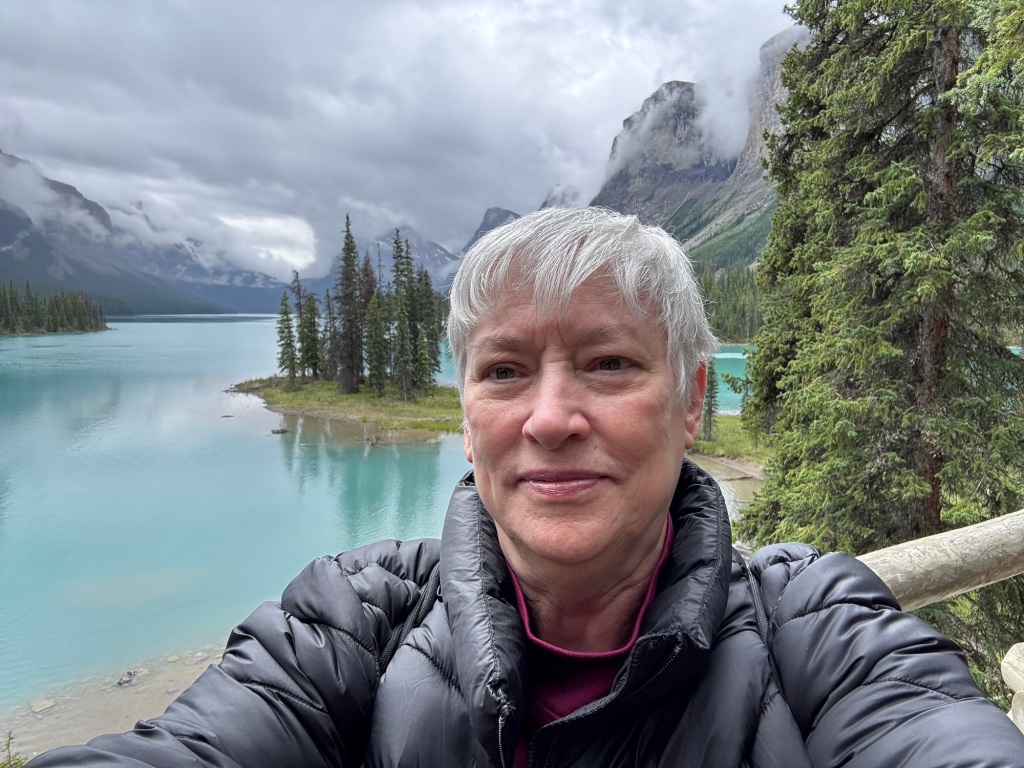
Cancer research advocacy encompasses several types of activities and a broad range of skills. The needs of the lung cancer patient population alone are HUGE, and no one person or organization has the time, skills, or bandwidth to address them all. The featured image on this post is a range of tall mountains for a reason.
I believe that the only way to stay engaged in cancer research advocacy over the long haul is to employ skills you enjoy using on projects that have personal meaning for you. I try to focus on activities that allow me to use my unique skills and (hopefully) improve outcomes for the greatest number of patients.
Some activities require multiple hours every week–these are my primary projects. Some have intense demands of several hours over a few days or weeks; examples are advisory boards, preparing a talk, grant reviews, or journal articles. Others may only require an hour or two each month, such as a serving as a patient advocate for a research committee.
To give you a sense of what one cancer research advocate’s activities might be, I’ve listed below those in which I’m currently involved. If this looks like a lot, please keep in mind that each advocate has a unique set of health and personal circumstances that influence how much of their energy and other resources they are able to give to advocacy. In my case:
I am retired, no longer have children at home, and have the luxury of choosing what I want to do with my time.
I’m on a cancer therapy that has tolerable side effects and leaves me with energy to do more than focus only on my own healthcare.
I get to use skills I enjoy (e.g., writing, speaking, analyzing), work with smart people who are dedicated and compassionate, and learn about subjects I love (science and technology).
The connections and reputation I’ve developed over ten+ years of lung cancer patient advocacy have brought me opportunities about which I wasn’t even aware when I first began advocacy work.
Primary Projects (several hours every week)
The ROS1ders nonprofit (co-founder, president, and board chair) A global group of patients and caregivers living with ROS1+ cancer that seeks to improve outcomes for all ROS1+ cancers through community, education, and research.
IASLC STARS program (co-developer and consulting staff)* STARS aims to increase the number of patient research advocates (PRAs) equipped to provide accurate scientific translation and patient perspective for lung cancer research and policy.
Advisory Panels
Fred Hutch/UW/Seattle Children’s Cancer Consortium External Advisory Board*
National Cancer Institute (NCI) PE-CGS Network External Advisory Panel
International Association for the Study of Lung Cancer (IASLC), Patient/Survivor member
American Society of Clinical Oncology (ASCO), Patient Advocate member
American Association for Cancer Research (AACR), Affiliate member
——————————-
Disclosures
When advocates provide value to projects, I believe they should be paid for their time, just as any other professional would be. I receive compensation for some activities (such as an honorarium for speaking); these are marked with an *. If an organization requires me to travel for a meeting, I receive compensation for travel expenses and often free conference registration.








 Gray Connections