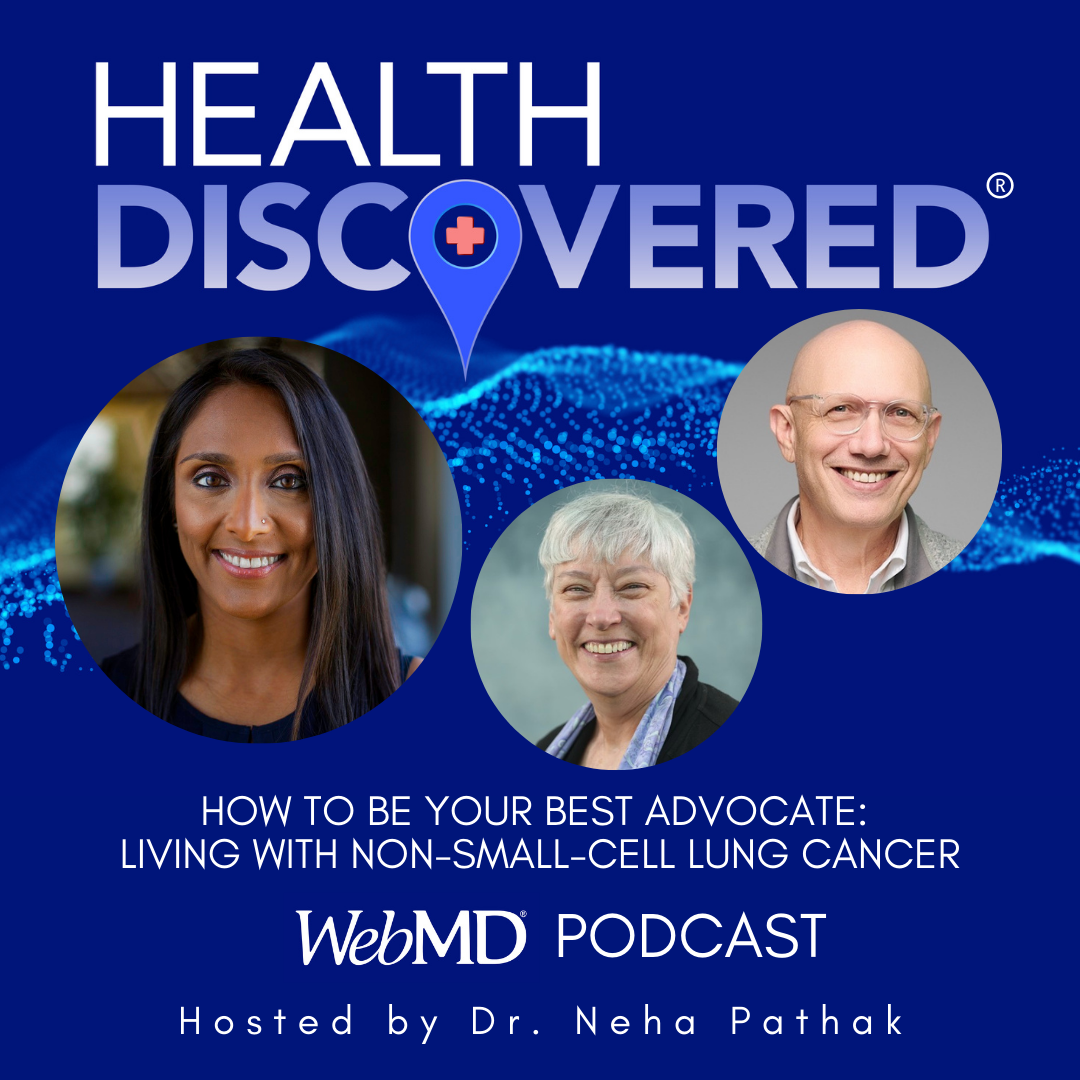
WebMD interviewed me for their Health Discovered podcast. The episode has good information about coping with a diagnosis of non-small cell lung cancer and the emotions it generates. My “patient experience” content is in the first 4 minutes; the rest is an interview with a psychiatrist who works with cancer patients (recorded separately).
Thirteen years ago today, I experienced a revival of hope. In mid September 2012, I had learned my cancer had grown despite two different lines of chemotherapy plus radiation. But on this date, the University of Colorado notified me that my tumor tissue tested positive for a gene rearrangement called ROS1, and I was eligible for a clinical trial of the targeted therapy pill crizotinib. I had options again!
Today I’m still on the same daily pill. Cancer research is awesome.
Chances are strong that at least one person you know and love (or even you) will have cancer at some point. Why should you care? Because people are dying for better cancer treatments.
We still do not know how to cure most cancers. Now the funding that has fueled so many new discoveries in recent years—like the targeted therapy I’m taking, which has kept my cancer in check for nearly 13 years—is being throttled. Training programs at universities are being defunded. Labs are closing. Scientists are leaving the US for countries where their research is valued. We’re losing years of painstaking research that cannot be replaced.
The 2025 World Conference on Lung Cancer (WCLC) in Barcelona, Spain, concluded on September 9, 2025. I was there as part of the admin team for the IASLC STARS Scholar Program (STARS = Supportive Training on Research and Science). It was wonderful to see the number of lung cancer patient research advocates actively participating in the scientific panels and presentations. It was also exciting to see my rare type of lung cancer have a plenary session presentation–ROS1+ cancer wasn’t even in the diagnostic guidelines when my lung cancer was first diagnosed in 2011.
Six years ago (2019) I also attended WCLC in Barcelona. It was the first-ever STARS program, and several of my friends in the lung cancer advocacy community were there; a few were even presenting. However, that’s a bittersweet memory. Of the thirteen patient/advocates in the WCLC 2019 pictures in this post, six are no longer with us, including Linnea Olson (one of the first lung cancer bloggers and a dear friend who encouraged me to become an advocate). I can’t think of WCLC in Barcelona without thinking of them. They all ran out of time before new treatments became available.
While it is encouraging to see lung cancer research continue to make strides over the past 15 years, people are still dying of the disease. Cuts in research funding at the National Cancer Institute and other organizations threaten to slow the pace of progress for all cancers This New York Times gift article titled “Trump is shutting down the war on cancer” (free to read) gives a more detailed description of the dire funding situation facing cancer research in the USA.
I don’t want to lose more friends to cancer. Please support efforts to restore funding for medical research in the federal budget. The life of someone you love may depend on it.
He’s a world famous lung cancer doctor. He’s an expert in my rare type of cancer (ROS1+ lung cancer). He is the person who started the oncology remote second opinion program at University Of Colorado. He is on the scientific advisory board of the nonprofit I cofounded (The ROS1ders). He is a principal investigator on the clinical trial that saved my life. I’m proud to say he is a personal friend.
On Monday September 8 I learned he is also a person living with lung cancer.
I applaud him for going public with his story. It also breaks my heart.
Once a person is medically diagnosed with having metastatic cancer (cancer that has spread to other organs), some people accuse that person of lying when the person says they didn’t know they had cancer. Because some cancers might grow for years before spreading to other organs, people think the person with cancer would had to have known they had it.
After more than a decade of living with metastatic lung cancer and serving as a patient research advocate, I have seen plenty evidence this need not be the case. Here are some important factoids about lung cancer that also hold true for other types of cancer:
1. Not all cancers have symptoms while they are growing. Lung cancer rarely has symptoms until it has spread to other organs. Lungs don’t have nerves to say “ouch!” when a tumor is growing. For this reason, the vast majority of lung cancers were not detected until the cancer had spread elsewhere before the advent of lung cancer screening. But not everyone is eligible for lung cancer screening. Screening is limited to people who are at increased risk of developing cancer and who can benefit from treatment–this is to minimize the risk of overdiagnosing and treating people who don’t need cancer treatment.
2. Not all cancer grows at the same rate. When I was diagnosed in 2011, I was told my non-small lung cancer did not grow fast and would have taken years to create the 2.5 inch tumor in my lung. I had months of combined chemo and radiation treatments designed to cure me of my cancer. Yet three months after a CT scan said my tumors were almost gone, I had grown a new three-inch tumor at the base of my neck. Some types of cancers are much more aggressive than others.
3. Best practice medical care might not be looking for cancer. Another friend (age in mid-20s) reported shortness of breath when running. Because they were so young, their doctor took a conservative approach to treatment. My friend was treated for allergies, and then pneumonia. By the time doctors prescribed a CT scan, the lung cancer had spread to several other organs. You can’t find something when you’re not looking for it.
4. Not all cancer is detectable with current technology. A friend who had lung cancer had a brain scan using magnetic resonance imaging (MRI). The scan showed their brain was clear of cancer. Three weeks later they began leaning slightly to one side while walking. A second brain MRI scan found sizeable tumors in their brain that didn’t show up just a few week earlier. The seeds of those tumors likely existed when they had the first brain scan, but scan technology is not sensitive enough to detect cancer that small.
My take-away message Don’t assume that someone must have known they had cancer just because it had spread to other organs by the time it was officially diagnosed. Many people honestly had no idea they had cancer before they were diagnosed. I didn’t.
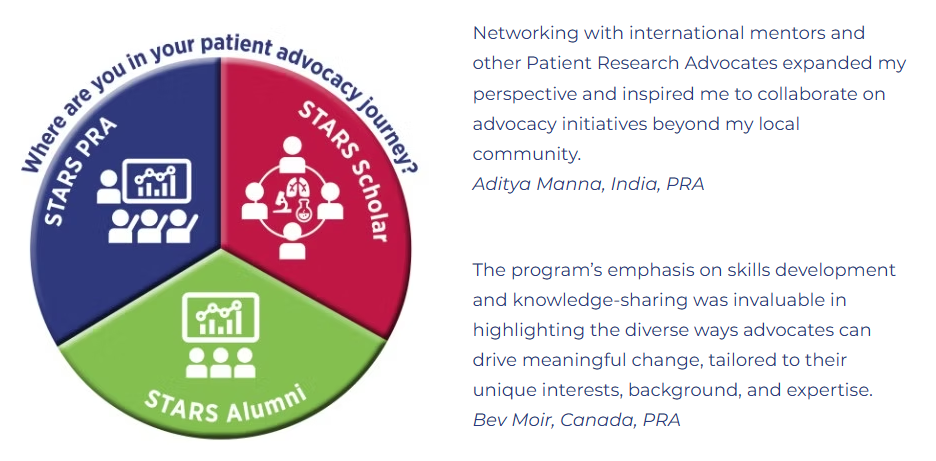
Take steps to amp up your lung cancer patient advocacy! Applications are now open for the 2025 IASLC STARS PRA & Scholar Programs. STARS (Supportive Training for Advocates on Research and Science) can help you develop and enhance research advocacy skills needed to provide a patient perspective to research.
If you or a loved one has been affected by lung cancer, and you are an active lung cancer patient advocate, you are eligible to apply. Learn more on the STARS website.
I’ve been living with and communicating about lung cancer for over 13 years. Since 2011 (the year I was diagnosed) I’ve been active in one or more online lung cancer patient groups. Since 2012, I’ve been blogging and on social media, connecting with the lung cancer community and learning/sharing developments in cancer research. In 2013, I cofounded #LCSM (lung cancer social media) Chat on Twitter and became a co-moderator of its weekly chats. As an active lung cancer patient research advocate, I’ve presented at national and international oncology conferences about using social media in the lung cancer community to improve education, clinical trials., and patient care.
Nowadays I spend most of my social media time in the private “ROS1 Positive (ROS1+) Cancer” Facebook group I cofounded (my ROS1+ cancer is a rarer form of lung cancer) and related online accounts. I know there are data security risks in sharing my cancer journey on public and private social media platforms, but it’s one of the most effective ways to reach other people who are living with lung cancer, especially for rarer subtypes.
All of that is to give you some background about my participation in social media. I’ve been very active online. I don’t sift through random posts about celebrities or debates about news events, but I have been known to spend hours online following developments in cancer research, posts from people attending oncology conferences, and discussions about cancer care from the patient perspective.
I used to do a lot of my research and outreach on Twitter. But due to evolving policies, algorithms, and accounts on X, I now spend almost no time on that platform. The Elon era substantially reduced its usefulness for this lung cancer patient advocate. I’ll try to explain why.
While cancer social media has always had to contend with medical misinformation, it became significantly worse on X after moderation was cut back. I’ve also seen a dramatic increase in hateful comments, personal attacks, and anti-science sentiment. I don’t want to waste my time reading that stuff while trying to find the content I value.
A blue checkmark on an account used to mean that account was owned by a validated organization, agency, or individual that had significant public impact. Patients could distinguish which accounts shared trusted, evidenced-based medical information . Now anyone can buy a blue checkmark, impersonate whoever they want, and spread medical disinformation that is not helpful or safe. While not all patients are successfully treated, the survival rate for lung cancer has increased significantly over the past decade. I’m not the only metastatic lung cancer patient who has survived for more than 10 years thanks to newer treatments like targeted therapies and immune checkpoint inhibitors. Yet I know people who died because they decided to forego an evidenced-based new cancer treatment in favor of some “cure” they found online that had only a few anonymous anecdotes to support it.
When you blocked someone on Twitter, you could no longer see them and they could no longer see you. Now when you block someone on X for malicious behavior, they can still see your posts. I prefer to have more control over who sees my content.
The platform terminated its free API (Application Programming Interface). This disrupted a lot of applications and websites that patient advocates and others used to interact with the platform and archive material from online chats. I have to spend more time to accomplish less.
My X feed used to be filled with content from people I chose to follow. Now it’s filled with ads and people I never chose to follow that don’t interest me in the slightest. I can’t find the content I want, and those who follow me don’t see the content I generate. The only way I can find useful cancer-related content is by using hashtags like #lcsm, but even hashtag-curated content is greatly reduced because so many members of the cancer community have stopped posting on the platform.
As of today, any content posted on X can be used to feed AI engines. While I’ve always known my posts on Twitter/X were publicly visible, it does bother me that the platform would deliberately hijack my content for their own uses without any acknowledgment or compensation.
So, there it is. I want to make a difference in the cancer space, and I have a limited amount of time and energy available to do it. Wading through uncurated content, hostile posts, and medical misinformation isn’t how I want to spend my days.
It’s sad to see the era of Twitter cancer communities end. Twitter was the one place where all stakeholders–patients, caregivers, advocates, clinicians, academic cancer centers, researchers, government agencies, industry, and the general public–could meet and exchange ideas on something that had life-and-death implications for so many (lung cancer is the #1 cancer killer). I hope someday another platform will attract enough participants to once again enable discussions across silos.
The International Association for the Study of Lung Cancer (IASLC) is celebrating its 50th Anniversary! As part of the #IASLC50 celebration, the Lung Cancer Considered podcast takes a look at the past, present & future of the organization. In this episode, host @StephenVLiu focuses on the IASLC today and some of the ongoing efforts of the IASLC & its members. W/@ChristianRolfo, @JFreemanDaily & Dr. Emily Stone: https://bit.ly/LCC50IASLC#LCSM
For more information about the IASLC STARS program, visit iaslc-stars.org.
There’s still time to register for the STARS Webinar on “Advancing Trustworthy Artificial Intelligence for Cancer Research.” Hope you’ll join us tomorrow, Thursday, August 29 at 3 pm MDT (Denver time). Once you register, the Zoom link will be emailed to you.








 Gray Connections