A tale of decluttering, or managing old passwords in the age of AI vulnerabilities

A white key icon on a dark blue background.

This is a story of an aging techie forced to wrangle with decades worth of passwords in an age of fast-moving cyber threats. It is suspiciously similar to finding decades of paperwork and various forms of records storage in a packrat’s 50-year-old house, but with substantially more urgency.

First, the setting. Last week cybersecurity experts announced a flaw in PHP (Personal Home Page) software that made about 70% of the world’s websites vulnerable to hacking. The flaw was uncovered by AI agents, and has existed for decades. Many organizations took their websites offline while they installed patches, as evidenced by the spike in offline web services a day or two later.
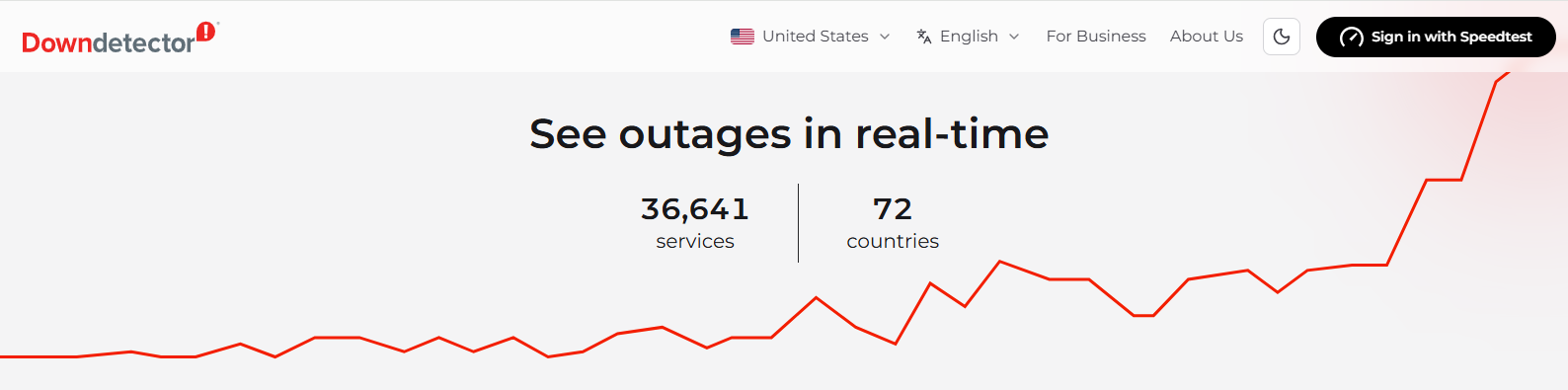
DownDetector website displaying real-time outage information with statistics: 36,641 services monitored across 72 countries, featuring an upward trending graph.

In light of this new vulnerability, cybersecurity experts posted reminders to use password managers and review entries for duplicate, weak and no-longer-needed logins. I’d received an increasing number of alerts that my usernames and passwords had been compromised recently, so I decided it was time to declutter my pile of account logins.

I’ve been on the interwebs for over three decades and accumulated over 600 login entries, some of which have been sadly ignored. I created my first passwords in the early 90s, when the Internet was young. Back then, passwords were only allowed to contain letters, sometimes numbers, and had to be short. I kept track of passwords in my head by reusing them or creating them with a simple mnemonic. The unique ones I kept written in a little notebook that I kept close.

Password complexity has increased with time; the longer and more complex a password is, the longer it takes to decipher it with sophisticated hacking software. When password managers became available, I gradually transitioned all my passwords into a manager to simplify dealing with that complexity. I update my most critical logins every six months. Given that updating those 15 or so passwords take a couple of hours, I wasn’t looking forward to tackling 600.

Supposely a password manager makes updating passwords easier. Some password managers tell you if your password has been compromised, and most of them will generate a complex, unique password quickly. But you have to go on a snipe hunt to discover where each website has hidden its “update password” link, and every website has its own requirements for password length and allowable characters. This means when the password manager creates a new password, I may have to edit it to make it compatible with a site’s requirements. And I have to save the new password in the manager after updating (a task I have occasionally omitted, much to my later chagrin). I tried to teach my octogenerian spouse this process, but he threw up his hands after the third attempt and exclaimed, “I’m unteachable.” So I inherited the task of updating his 120 passwords too.

When I started password decluttering, I discovered several were only 8 characters long and looks suspiciously like words, some were amazingly old (one said it was created 56 years ago?!), and many were duplicated, although some of those were multiple entries for the same website. I discovered websites I no longer used, and others that no longer existed. Some websites accepted my login, but didn’t contain any of my data–not even my name.

My first impulse was to delete the entries for those useless logins. However, with so many websites going down to install PHP patches last week, I couldn’t always tell whether the website was dead, or, like the Monty Python parrot, just resting. I tried the recommended process of sending an email to request those accounts be deleted. The few responses I received told me to look in the website’s messaging system for a new message (wish I’d known that BEFORE I deleted its login) or asked me why I wanted to delete an inactive account. Hopefully any hacker who steals that login will discover they wasted their time.

Too many hours later, the process was finished. Decluttering cruft accumulated over decades has never been my favorite thing, but I feel virtuous for having done it. And increasingly inclined to think thrice before creating any new accounts.

So much for automation simplifying record keeping.

No AIs were used or harmed in creating this blog post.

A ROS1+ lung cancer survivor and patient research advocate shares her story at STAT Summit 2026

On October 14 I gave a brief talk at the STAT Summit in Boston, Massachusetts. You can watch the video here. The text of the talk is behind a paywall on the STAT site, so I’m sharing it here along with the sllides projected during my talk. Hope you find it valuable.


In May I celebrated my 15-year cancerversary. Back in 2011, when I learned I had advanced lung cancer, the majority of people with lung cancer died within a year of diagnosis.  I was 55, younger than the average lung cancer case, and otherwise healthy with no known risk factors. When I first heard my diagnosis, my world turned upside down.

I was considered curable and was treated with chemotherapy combined with radiation. Being a writer and a science geek, I sought to learn as much as I could about my disease. The online lung cancer patient forum I joined informed me about symptoms and side effects, clinical trials, and the newly emerging field of molecular testing.

During a treatment break to allow my blood counts to recover, a 3-inch mass grew on my collarbone. I arranged to get molecular testing through a clinical trial, but all tests were negative. I had more chemo and more radiation. The post-treatment scan showed my cancer had metastasized to my other lung.

A person in the online group was in a clinical trial in Boston and told me I fit the profile of patients who might have cancer driven by a ROS1 rearrangement which occurred in 1-2% of non-small lung cancer cases. I asked my local oncologist about ROS1 testing, but he didn’t know anything about it.  He said I would be on chemo for the rest of my life, which probably would be short.

And then, to quote a favorite Far Side comic, a miracle occurred.

I was visiting my nephew in Denver when I realized the cancer center that had done my molecular testing was nearby. I emailed to ask if I could drop in to say thank you. The researcher who had led the trial met me in the lobby. He told me their lab had developed and validated a test for ROS1, and they had some of my tumor tissue left.

I gave him permission to test my remaining slides. A few weeks later, he called to tell me my tumor tested wildly positive for ROS1, and they were holding their last slot in the ROS1 clinical trial for me.

I started a daily pill called crizotinib on November 6, 2012. I have had no evidence of disease on every scan since. I am not cured. I must continue taking the drug, but I am alive and have a good quality of life.

I hope someday every person living with this cancer will have access to a miracle. Alas, not all people have such good outcomes. Not all are offered biomarker testing or treated by doctors familiar with their subtype of lung cancer. Not all are informed about or have access to clinical trials. Not all respond to treatment or experience long responses.

I decided to give back.  I became a patient research advocate.

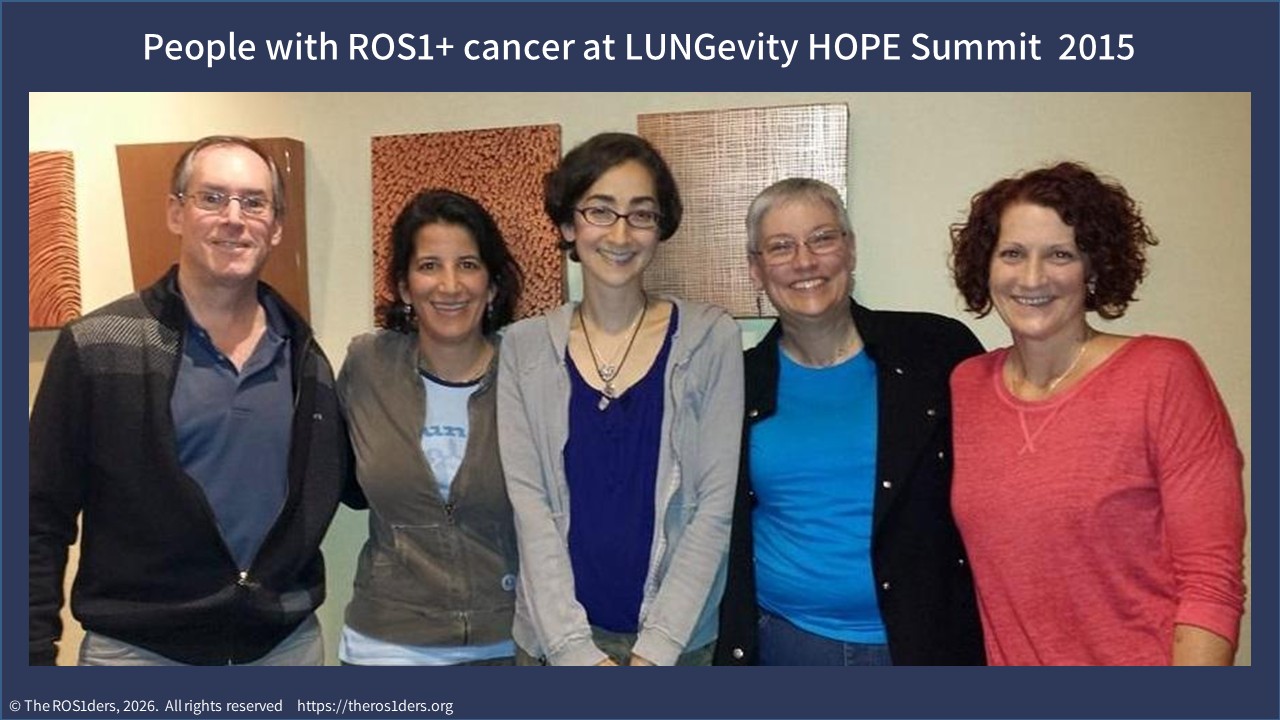
A group of five people smiling together at the LUNGevity HOPE Summit in 2015, showing support for those affected by ROS1+ cancer.

In 2015, five people with ROS1+ cancer met in a bar at an advocacy event. We were all on crizotinib, we all had kids at home, and we all had no other treatment options except chemo.  We chose to act.

We started a global Facebook group for people who have ROS1+ cancer, created a website, and began looking for research partners. This evolved into The ROS1ders, a global group of patients and caregivers that seeks to improve outcomes for all ROS1+ cancers through community, education, and research.

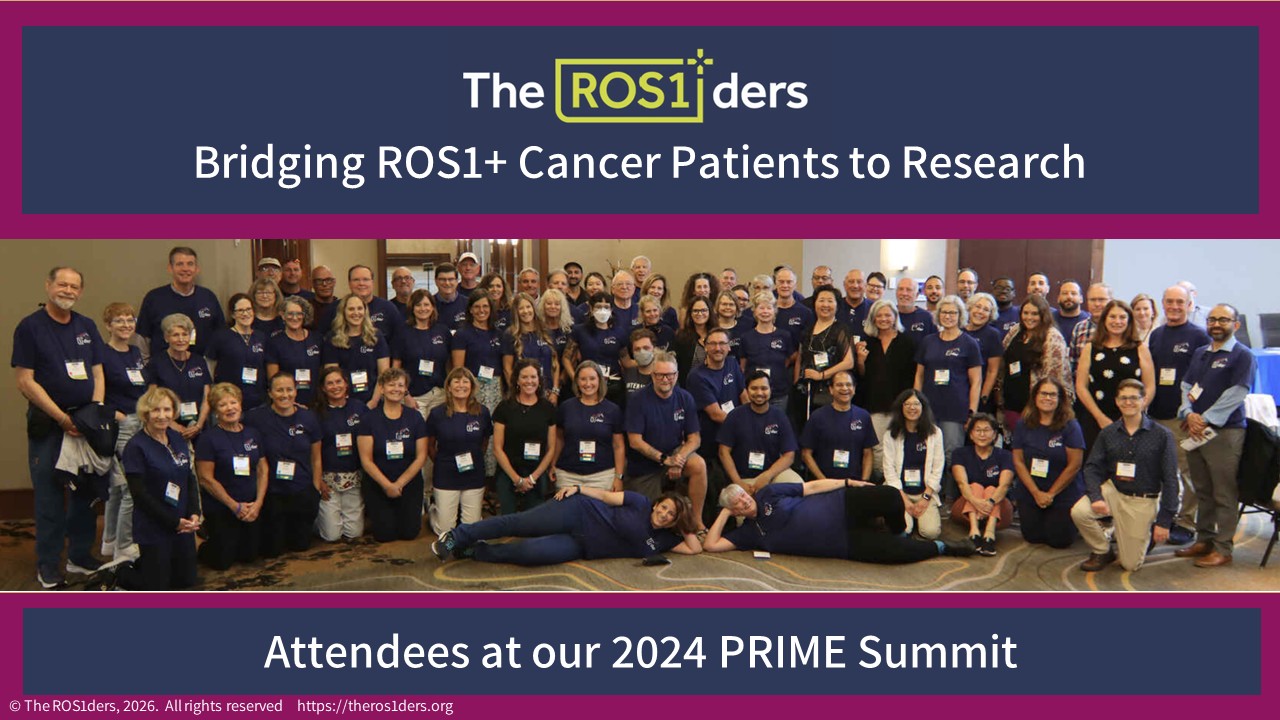
In 2017 we co-created the ROS1 Cancer Model Project in partnership with nonprofits and researchers. Back then, only a few ROS1+ cancer models existed. The project helped create 12 new patient-derived cell lines that have been widely distributed and used for research into acquired resistance, surface-omics, and drug development. Another project, our PRIME Summit, brings our community together to learn about ROS1 treatments and research.

Group photo of attendees at the 2024 PRIME Summit, featuring participants wearing matching blue shirts, gathered together in a conference setting.

But it’s not enough. Two of our founders and many members have died. And living on treatment for years isn’t easy. I’ve had two TKI dose reductions and take prescriptions to cope with side effects. I’m also on a GLP-1 to lose the 70 pounds I gained on crizotinib.

This highlights a challenge of living on the cutting edge of cancer treatment.  Research is big on tracking survival stats, but quality of life for survivors—not so much.

It’s hard to stay in the lung cancer advocacy space long term when you watch friends die on a regular basis.  We advocates do it because so many unmet needs remain. More research needs to incorporate the patient perspective early in the process. More clinical trials need to use Patient Reported Outcomes. More sponsors need to own their toxicities. 

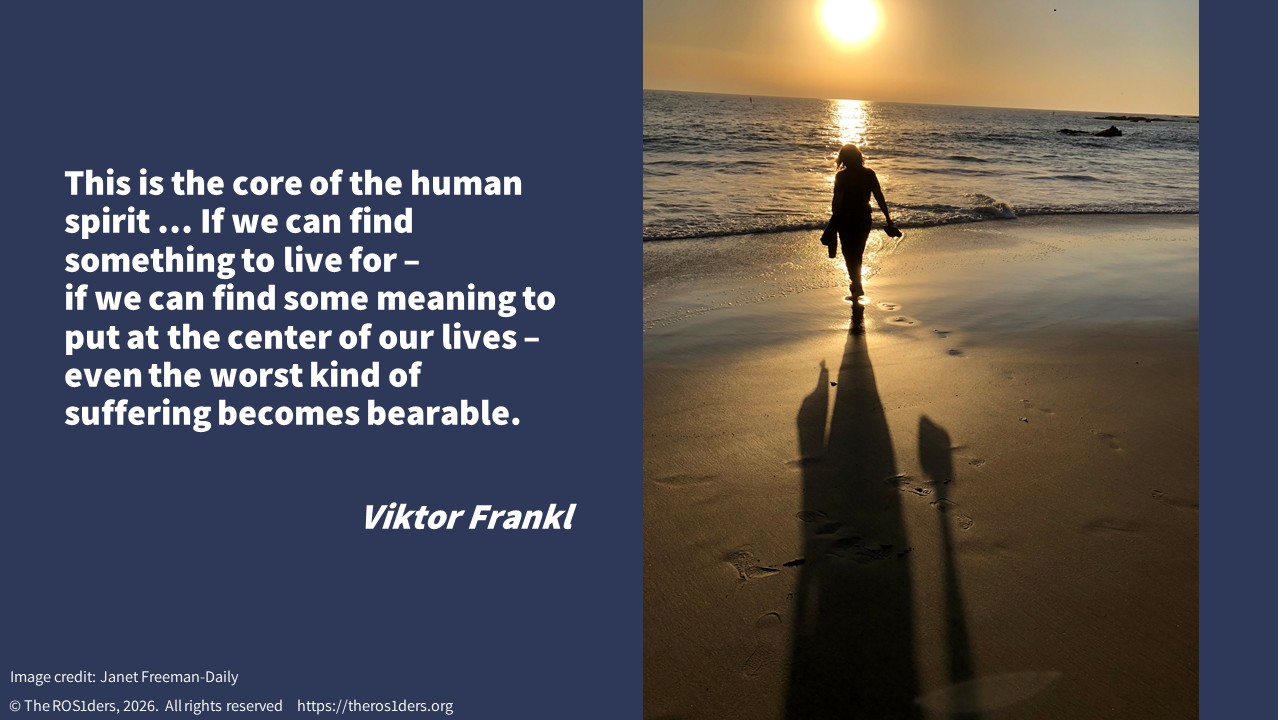
We stay in the cancer space because helping others gives life meaning.

Thank you.

A silhouetted figure walking along a beach at sunset, with soft waves lapping at the shore and a warm glow from the sun in the background.