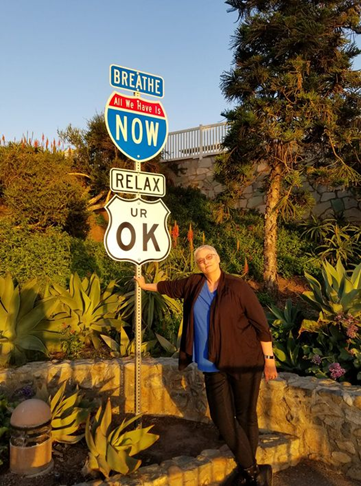
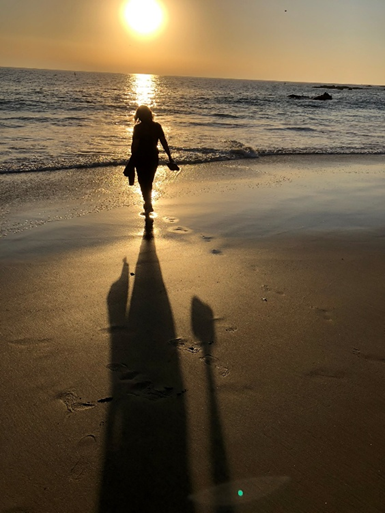
Today is a milestone I didn’t think I’d reach. Today I’ve been living with advanced lung cancer for FIFTEEN YEARS.
That diagnosis redefined my life. I am now a full-time cancer research advocate who helps run a cancer nonprofit for ROS1+ cancer and manage an education program for lung cancer research advocates. Today seems a good time to look back on the miraculous progress in lung cancer research that helped me survive, and how I got to this place in my advocacy. I’m not as visible as I once was, but I think I’m making better use of my time and skills, and I’m more satisfied with life.
In 2011, when I learned I had lung cancer, most LC patients were diagnosed when their cancer had already spread beyond its original site. The majority of LC patients died within a year of diagnosis. I was fortunate that my cancer had not yet spread outside my chest, so my doctor and I decided to go for a cure. I received concurrent chemotherapy and radiation for two months. I had side effects from treatment, but they were manageable compared to what would likely happen without treatment—I wanted this cancer GONE. The treatment shrank my existing tumors, and initial scans looked hopeful. However, a new tumor popped up outside my chest a few months after treatment ended. A PET scan detected “hot” lymph nodes on my collarbone, and a biopsy confirmed they contained lung cancer.
The reality hit hard: no one really knew how to cure me.
I was a puddle of tears for about an hour. Then my science geek/writing research genes kicked in and I decided to learn as much as I could about my disease.
I was lucky. I had been diagnosed at the beginning of a revolution in lung cancer care. The Internet and social media had enabled online cancer communities that shared experiences and information. The Inspire community I had joined taught me about biomarker testing (called molecular testing back then) and clinical trials. The first FDA approval for a targeted lung cancer therapy guided by biomarker testing had come out just three months after I was diagnosed. Recent research talked about potentially curing oligometastatic disease—cancer that had spread to just one site outside the lungs.
My oncologist said we could try again for a cure. I had more chemo followed by radiation to the single site of cancer progression. All the known tumors disappeared, but alas, my cancer was particularly aggressive and spread again shortly after treatment stopped, this time appearing my other lung. My cancer was now definitely metastatic, and considered uncurable.
Again, I was lucky. About 8 months before, I had sent my biopsied lymph node tissue to a laboratory at the University of Colorado for biomarker testing. Unfortunately, my results did not show any actionable biomarkers. But a research paper published about the same time as I started my second line of treatment described a new biomarker called ROS1, and the amazing results obtained in a clinical trial for a new oral therapy targeting ROS1+ non-small cell lung cancer. As I’ve documented elsewhere, a series of amazing coincidences and good timing resulted in my cancer testing positive for the ROS1 biomarker and my getting one of the last slots in the associated clinical trial, which I started in November 2012 in Denver. I’ve been on the same oral therapy (with a couple of dose reductions) for over thirteen years. My scans have shown no sign of cancer since I started on that drug.
In 2011, no one dreamed such a long survival was possible for a person living with lung cancer.
The first year or so after starting the trial, my energies were consumed with flying back and forth between Seattle and Denver for the trial, dealing with side effects, and coping with scanxiety every couple of months. After my body adjusted to the drug and my “new normal,” I started feeling better. I was incredibly grateful to still be alive, especially when so many others were not.
I began looking for ways to give back. I realized I had skills that could be helpful to other patients. Among them were my geeky curiosity about LC science and research, my writing and communications training, and an ability to translate complex science, research and experience into language that made sense to other people. Lung cancer research continued to accelerate, and many people did not understand all the new developments and how those could affect patient care.
I started blogging about topics that people asked about in my online communities. In 2013 I joined #LCSM (Lung Cancer Social Media) Chat on Twitter and moderated scheduled online chats with a wide variety of lung cancer stakeholders—people living with, treating, researching, and making products for the disease. I advocated for lung cancer screening and spoke about reducing stigma. I attended and spoke at oncology conferences. I engaged in volunteer activities for lung cancer advocacy nonprofits. I posted prolifically on social media. For years I was an active patient advocate, telling my story, increasing awareness, and fundraising for research. I accepted every advocacy opportunity I was offered. One year I traveled away from home more days than I was at home.
I also started interacting with researchers and research organizations. I found I really enjoyed learning about the science and explaining it to others. My systems engineering background came in handy for analyzing research questions and protocols to find ways the patient perspective and online communities could help improve outcomes.
New biomarkers were being discovered. New targeted therapies and immunotherapies were being developed. Screening, diagnostic, and treatment options were evolving quickly. Many clinicians—even lung cancer oncologists—couldn’t keep current with all the changes. Many patients hadn’t heard about or weren’t able to access the best care.
In 2015, I co-founded a small group that became The ROS1ders, a non-profit comprised of a global group of patients and caregivers living with ROS1+ cancer. We created a ROS1-focused online community, website, educational opportunities, and research focused on ROS1+ cancer. The medically vetted information we provide helps people find better treatment options and improve their quality of life (and sometimes even survival). Today it has thousands of members. Many have said the group gives them hope, as well as information that makes a positive difference in their cancer care.
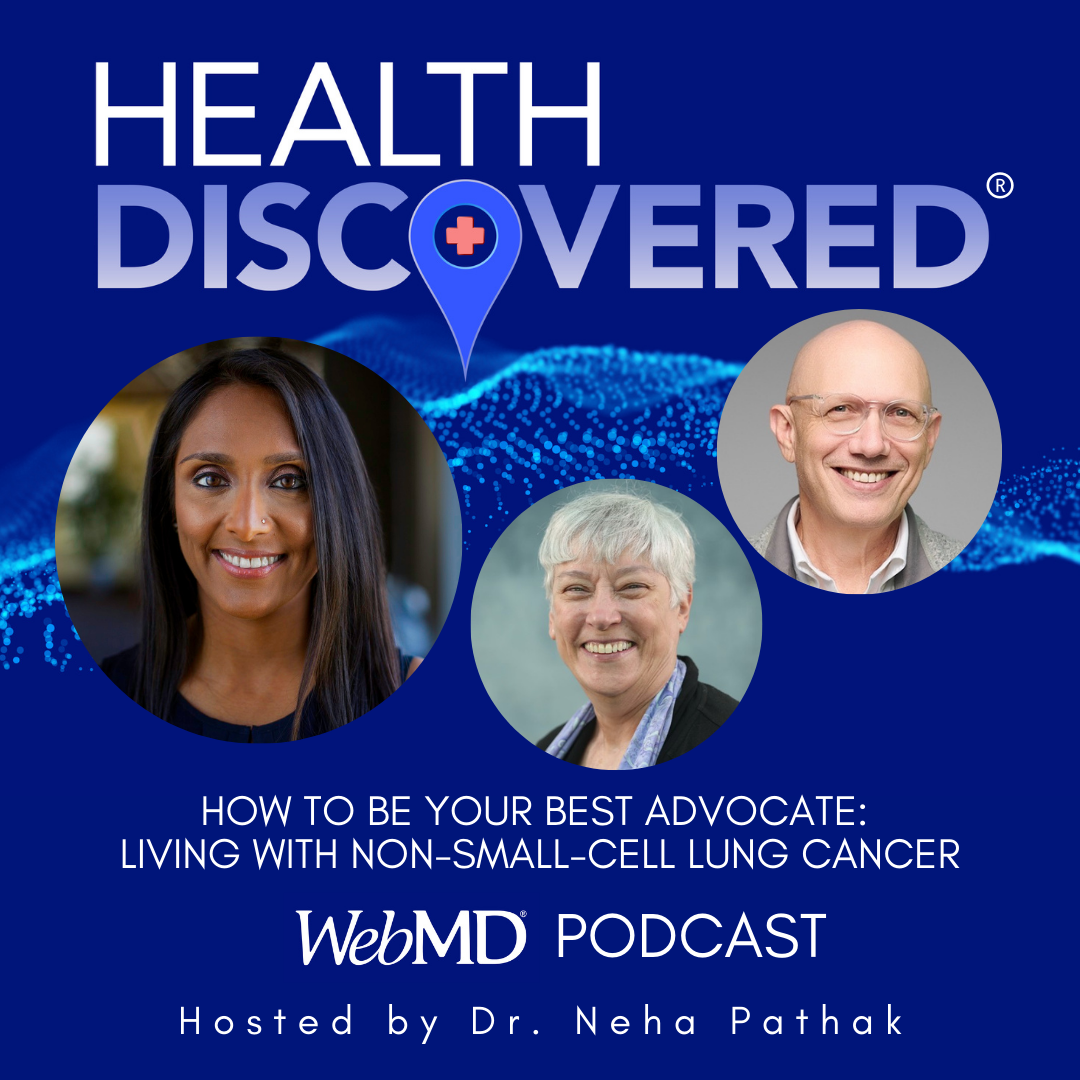
In 2019, I co-founded the IASLC STARS program that empowers lung cancer survivors and their loved ones to evolve into active research advocates. To date dozens of people have completed the STARS PRA (Patient Research Advocate) and STARS Scholar programs. Participants have said the program helped them focus their advocacy and take on new challenges.
For many years my cancer advocacy kept me quite busy. Lung cancer research kept accelerating. But life evolved. Close friends who were long-time patient advocates ran out of time. Family and aging took more of my energies. COVID-19 devastated the lung cancer community and taught me hard lessons about public perceptions of science. The nature of Twitter and other social media changed, not always for the better. Unanticipated shifts in policy and financial support undercut cancer research and care.
I was now receiving more requests for patient advocacy commitments than I could possibly fulfill. Which ones should I accept? Which ones should I turn down? I had frequent discussions with other long-term cancer advocates about how to decide which advocacy opportunities would move the needle the most. The answers required a careful assessment of my own skills, how much energy I had for advocacy, what brought me joy, and who else is available to take the opportunities that I turned down.
A long vacation with family made me realize I was not enjoying the frantic pace of my advocacy. I was not taking care of myself. My sleep was disturbed. I had developed heart arrythmias. Advocacy had begun to feel like a chore rather than a purpose.
I had begun cancer advocacy with a simple goal: to give back and make a difference for others. Somewhere along the line, my subconscious drive had shifted to trying to stop lung cancer. The problem was bigger than me, and I was killing myself trying to tackle it.
I decided to reprioritize.
I knew The ROS1ders and STARS were making a difference because patients and caregivers told me so. If I took time away from those projects, few other advocates were available to pick up the slack. In the meantime, many capable lung cancer patient advocates had arisen with a passion for telling their stories, creating awareness, and raising funds. I could in good conscience allow most non-research advocacy opportunities I was offered to pass to them while I focused on those projects for which I was uniquely well-suited. I would spend more time on family, my health, and exploring this one life that I alone can live.
So here I am today, over a decade living a life I wasn’t really expecting to have. I still have side effects from cancer treatment, but I’m OK with them. I’m spending more time living. I’ve cut back on lung cancer advocacy travel, projects, and its more visible aspects. I’m healthier. I’ve found more joy.
And I’m still making a difference. That’s my purpose. I think having a purpose is part of why I’m still here.
In the end, all patient advocates must define goals for themselves: the best way to use their unique set of energies, time, skills, and interests to make a difference for others. We can’t help everyone, but we help some. And we can do it without losing ourselves.
Here’s to more time for LIVING and making a difference—whatever that means to you.
Image credits: Janet Freeman-Daily
No AIs were used or harmed in creating this blog post.